REVIEW · BOGOTA
Breaking Borders: Bogota Gansters Story
Book on Viator →Operated by Impulse Travel · Bookable on Viator
This tour flips Bogotá on its head. Breaking Borders takes you from Chorro de Quevedo in La Candelaria to Barrio Egipto, where former gang leaders explain how their neighborhood is rewriting its own future.
I love two things right away. First, the graffiti and murals aren’t just decoration. They’re a map of what happened, who lived through it, and why the community keeps working. Second, you get a bilingual guide (English/Spanish) plus a personal Egipto guide, so you’re not stuck guessing meanings or context.
One thing to consider: this is not a casual, bright-and-breezy sightseeing stroll. You’ll hear straight talk about violence, loss, and the hard reality of change—plus you’ll be moving uphill on neighborhood streets.
In This Review
- Key takeaways before you go
- Why Barrio Egipto’s story feels so real in 3 hours
- Chorro de Quevedo to the murals: the start that gives you context
- Egipto on foot: churches, a community football field, and the uphill reality
- The guides: the difference between hearing facts and hearing a life
- Food, chicha, and small comforts that make the walk easier
- Safety and respect: how to get the most without acting like an observer
- Price and value: is $91 worth it?
- Who this tour suits best (and who might want something else)
- Should you book Breaking Borders: Bogota’s Gang Story?
- FAQ
- How long is the Breaking Borders Bogotá tour?
- Where does the tour start and where does it end?
- What stops are included during the tour?
- What does the tour price include?
- Is there an admission fee for the sights?
- Can I cancel for a full refund?
Key takeaways before you go
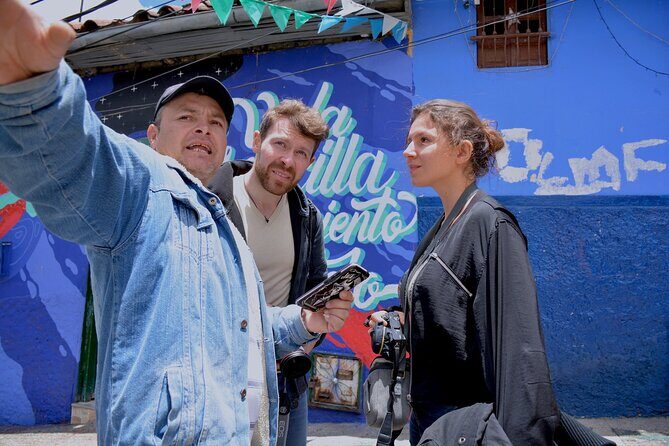
- Former gang members guide the story and share why they left that life behind
- Murals at Chorro de Quevedo connect directly to Egipto’s transformation
- You visit key community spaces, including the Iglesia de Egipto and a new football field
- A bilingual expert guide keeps it clear in English or Spanish
- Snack and traditional chicha are included, so you’re not hunting for food mid-walk
- You’ll be in a private group with your own tour team, not mixed into a crowd
Why Barrio Egipto’s story feels so real in 3 hours
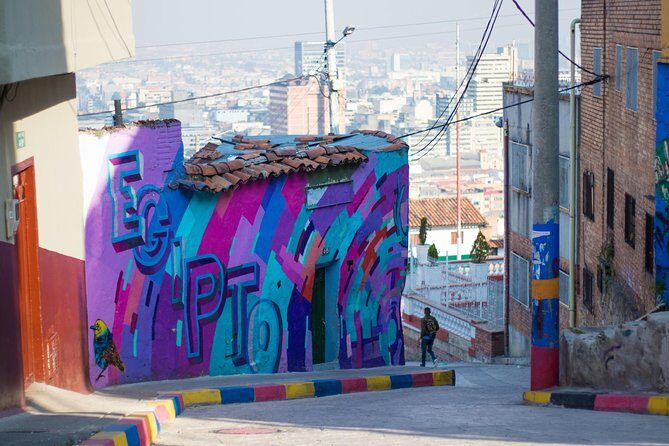
Egipto sits on hills above Bogotá’s center. From a distance, it can look like any other neighborhood on a hillside. Up close, you see why it’s different: this is a place where people rebuilt their lives in the middle of ongoing challenges, and tourism has played a role in shifting the neighborhood’s image.
What makes Breaking Borders hit harder is the point of view. Instead of you watching a “before and after” from the sidewalk, you get people’s explanations, in plain language, about what went wrong and what’s working now. The tour frames this as a transformation led by community members themselves—not as outside saviors swooping in.
In other words, you don’t just see Egipto. You learn how the community thinks about safety, youth, and opportunity.
If you're still narrowing it down, here are other tours in Bogota we've reviewed.

Chorro de Quevedo to the murals: the start that gives you context
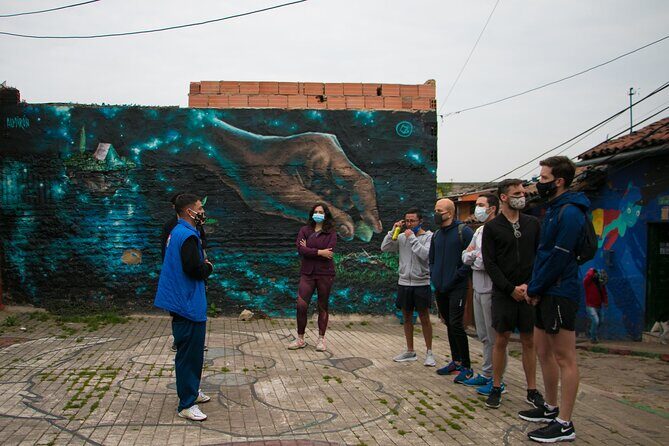
You begin at Plazoleta Chorro de Quevedo in La Candelaria, widely treated as a founding point for Bogotá. That location matters because it anchors your walk in the city’s origins before the tour heads into a neighborhood that many visitors never experience firsthand.
From there, you focus on one big theme: murals as memory.
As you stroll, you’ll see impressive graffiti art that tells the story of Egipto’s transformation—moving from a dangerous past toward hope, supported by the Breaking Borders initiative and the power of community tourism. Your guide explains what the artwork means, and you get the sense that each mural is doing double duty: preserving history while also pointing toward what people want next.
You also head toward Nuestra Señora de Egipto, the church located near the entrance of Barrio Egipto. If you happen to time your visit around January 6, this is tied to local festivities. Even if you’re not there for the holiday, it helps you understand that the neighborhood’s identity isn’t only about hardship—it’s also about faith, gatherings, and youth culture.
Practical note: this stop is about 60 minutes on the walk side. It’s short enough to keep energy up, but long enough to let murals and street-level details land.
Egipto on foot: churches, a community football field, and the uphill reality
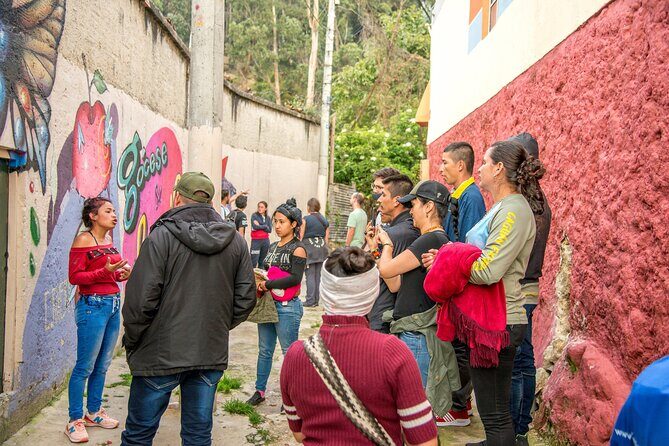
The second leg takes you up the hills of Egipto. This is where the tour earns its name: breaking borders means leaving the usual tourist route and letting you see the neighborhood from the inside.
You’ll visit Iglesia de Egipto and then continue through the area with your Egipto guide. Expect a mix of community spaces and symbols of progress. One of the most meaningful stops is the new community football field. The guide presents it as more than sports. It’s described as a physical place where youth can gather, build routines, and reshape the social fabric.
That matters because “change” can sound abstract until you see what it costs and what it looks like day-to-day. A football field is visible. It also signals planning and long-term thinking—something many communities can’t sustain without consistent support and local leadership.
Timing here is about two hours, and the walk includes climbing streets. Wear comfortable shoes. If you’re the type who hates steep pavement under hot sun, you might want to pace yourself and drink water during the snack break.
The guides: the difference between hearing facts and hearing a life
This experience is built around people who lived the story—and now help change how it’s told.
In past tours, groups have been hosted by former gang members such as Harold, Monkey, Mr. Pumpkin, and Gildardo Arango, with bilingual support from guides like Raul or Gigio (names vary by date and team). Even when you’re in English, you’re still getting translation support when needed, plus direct explanation from someone from the neighborhood.
Here’s what I think you should pay attention to: you’re not just learning the timeline of crime and violence. You’re hearing the motivations behind decisions—how someone gets pulled in, what it costs emotionally, and why leaving wasn’t a single moment. It’s a process that depends on relationships, structure, and the chance to build a new identity.
A couple of specific moments that show up in the tone of the tour:
- You may hear personal, hopeful stories about what replaced gang life (for example, community gatherings that create a safer rhythm on evenings).
- In some groups, the tour includes a local cultural ending, like a freestyle rap performed for the group.
Both of those details point to the same takeaway: people aren’t only surviving. They’re creating alternatives.
Food, chicha, and small comforts that make the walk easier
A good community tour isn’t only about what you see. It’s also about not being hungry and not feeling rushed.
This one includes a local snack and traditional chicha. That’s a nice touch because it keeps your energy steady while you’re walking and listening for hours. Chicha is also a small cultural link—something you taste while learning, not just something you hear about.
Alcoholic drinks aren’t included, but they can be purchased. So if you want that, plan to buy it yourself.
Also plan on cash for personal expenses. Souvenir photo options are available to purchase. And if you’re thinking of tips, have a bit of flexibility. One review notes people sometimes wished they could tip more, especially when they wanted to spread support across both the visiting team and the neighborhood guides. That’s a personal decision, but having extra cash lets you follow your instincts.





Safety and respect: how to get the most without acting like an observer
A tour like this asks you to do something simple but important: behave like a guest, not a spectator.
You’ll be led by bilingual guides and a personal guide from Egipto, and that matters for comfort and context. You’re walking with the people who understand the neighborhood, not wandering on your own. The tour format keeps you on a route designed for visiting respectfully and learning what matters.
What helps most during the walk:
- Keep questions focused on stories and community change, not shock value
- Take in the mural meanings before snapping photos
- Remember the topic is heavy—your listening matters as much as your attention
If you want a Bogotá experience that doesn’t flatten real life into postcard views, this is one of the strongest ways to do it.
Price and value: is $91 worth it?
At $91 per person for about 3 hours, the first question is whether you’re paying for a walk or for access.
You’re paying for access—real access—to a neighborhood perspective, plus two levels of guiding:
- a bilingual expert guide (English/Spanish)
- a personal guide from the Egipto neighborhood
- and, if you choose it, private transport with hotel pick-up and drop-off
That combination is exactly why this price can feel fair. You’re not just buying a route. You’re buying interpretation, translation, and community-based storytelling that would be difficult to piece together alone.
It’s also not an all-day excursion. You’re getting a lot of meaning packed into a short window, which makes timing and pacing important. Since this is often booked in advance (on average, about 20 days out), I’d treat it like a priority stop. If it’s on your list, reserve early so you don’t end up chasing last-minute availability.
One practical caution from real-world feedback: some people felt the experience could run closer to the full 3 hours in practice. If you’re the type who hates feeling rushed, schedule it earlier in the day and don’t stack another time-sensitive activity right after.
Who this tour suits best (and who might want something else)
This fits best if you want Bogotá with a human voice.
You’ll enjoy it if you like:
- street-level storytelling
- culture that’s tied to everyday life
- learning from people who are working to change a narrative
It can also be a strong option for couples and solo travelers who want a structured, guided way to understand a neighborhood beyond headlines.
Families can do it too; children must be accompanied by an adult, and the tour is built for most travelers to participate. Still, I’d read the mood before booking if your group is sensitive to stories involving violence and trauma.
If you’re in town only for classic viewpoints and museums and you want everything light and easy, this may feel too serious. But if you want one of Bogotá’s most direct “what’s really happening here” experiences, this is the kind of tour that stays with you.
Should you book Breaking Borders: Bogota’s Gang Story?
Yes—if you’re ready for real stories and you want your Bogotá day to mean something beyond photos.
Book it if you value:
- first-person neighborhood context
- mural storytelling that connects past to present
- and a short, well-guided format that covers two key areas: Chorro de Quevedo and Egipto
Skip it if your idea of a perfect tour is mostly sightseeing with minimal emotional weight or if your group struggles with hills and walking time.
My best advice: choose comfort over style, bring an open mind, and come ready to listen. The most impressive part isn’t the location—it’s what people are building in the place they call home.
FAQ
How long is the Breaking Borders Bogotá tour?
It lasts about 3 hours.
Where does the tour start and where does it end?
It starts at Plazoleta Chorro de Quevedo (Cl. 12b #2-98) in Bogotá and ends back at the meeting point.
What stops are included during the tour?
You visit Caminata por el Chorro de Quevedo in La Candelaria, then go to Barrio Egipto to see Iglesia de Egipto and the community football field, with a stop near Nuestra Señora de Egipto.
What does the tour price include?
The price includes a bilingual expert guide (English/Spanish), a personal guide from the Egipto neighborhood, a local snack and traditional chicha, and private transport to and from your hotel if you select the transportation option.
Is there an admission fee for the sights?
Admission tickets are free for the tour stops listed.
Can I cancel for a full refund?
Yes. You can cancel up to 24 hours in advance for a full refund.