REVIEW · BOGOTA
Shared Tour of the Historic Candelaria in Bogotá
Book on Viator →Operated by Beyond Colombia Free, Group & Private Tours · Bookable on Viator
Bogotá’s historic Candelaria area tells stories everywhere you look. This 3-hour shared walk threads Colombia’s history, politics, and culture through gold artifacts, plazas, and major monuments, with short food stops along the way. I love the way it gives you a clear mental map of what you’re seeing, and I also like the practical add-ons like the free tour map you can use after the tour.
Two things helped this feel worth it: the route covers a lot of iconic places in a short time, and the guide also adds context so the sights click together instead of feeling like random stops. One possible drawback is group size can vary; most of the time it’s kept small, but I’ve seen at least one account where the group felt very large, which can slow photo stops.
In This Review
- Key Highlights to Know Before You Go
- Why La Candelaria Feels Like the Best First Day in Bogotá
- The 13-Stop Route: What You’ll See and Why It Matters
- Stop 1: Museo del Oro (Gold Museum)
- Stop 2: Santander Park
- Stop 3: Plazoleta del Rosario
- Stop 4: Jorge Eliécer Gaitán Monument
- Stop 5: District Market Square La Concordia
- Stop 6: Plazoleta Chorro de Quevedo
- Stop 7: Universidad de La Salle (Facultad Ciencias del Hábitat)
- Stop 8: Museos del Banco de la República (Botero Museum) + Hot Chocolate
- Stop 9: Coin and Bill Production Museum (Mint)
- Stop 10: Teatro Colón Bogotá
- Stop 11: Plaza de Bolívar de Bogotá
- Stop 12: La Puerta Falsa Restaurant (Traditional Dishes)
- Stop 13: Centro Cultural Gabriel García Márquez
- The Value: Why $13 Can Make Sense Here
- Guides and Group Size: What You Should Expect Day-Of
- What You’ll Eat and Drink (So You Can Plan Your Day)
- Who This Tour Fits Best
- Should You Book This Historic Candelaria Tour?
- FAQ
- Where does the tour start and end?
- How long is the Historic Candelaria walking tour?
- What is included in the price?
- What is not included?
- Do I get any food or drink during the tour?
- What are the main stops on the route?
- Is the tour in a shared group?
- What group size should I expect?
- Can I cancel for a refund?
Key Highlights to Know Before You Go
- Museo del Oro first: you start with pre-Columbian gold and cultural context, not just sightseeing
- Food and drink breaks built in: fruit juice, empanadas, fresh seasonal fruit, and more
- Major names in Colombian politics: the stop at the Gaitán monument gives the timeline meaning
- A classic old-Bogotá route: Parque Santander, Chorro de Quevedo, Plaza de Bolívar, and Teatro Colón
- Institution stops that explain how Colombia works: the Mint (coins/bills) and university/history sites
- Real guide consistency: many English- and Spanish-speaking guides (Jeff, Leo, Sergio, Byron, Natalia, and others) get strong praise for clarity and pacing
Why La Candelaria Feels Like the Best First Day in Bogotá
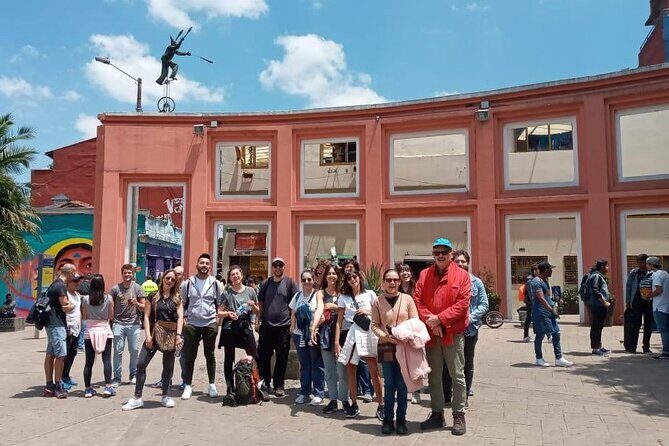
If Bogotá is your puzzle, La Candelaria is the box it came in. This tour focuses on the compact historic center, where churches, government buildings, old squares, museums, and neighborhood streets all sit close enough to connect with your feet instead of a car. You get a storyline for what you’re seeing, not just a list of landmarks.
I like that the tour starts with artifacts and ends with ideas and literature (the Gabriel García Márquez cultural center). It’s a smart arc: the morning begins with early indigenous craftsmanship, and the walk steadily shifts toward modern Colombian identity. That pacing matters, because by the time you reach Plaza de Bolívar, you’re not just looking at buildings—you know why they’re there.
The other reason I’d put this near the top of your Bogotá plan is practical: it helps you understand where things are. When you finish with a map and a route you’ve walked, you can choose your next neighborhood visits with more confidence.
Other La Candelaria walking tours we've reviewed in Bogota

The 13-Stop Route: What You’ll See and Why It Matters
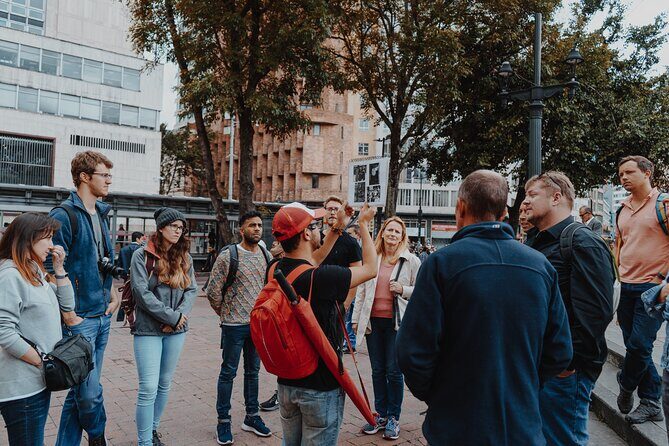
This is a 3-hour walking loop with short stops (often around 10 to 15 minutes each). The tour is designed so you can keep moving, but still pause enough to take photos and ask questions when something clicks.
Stop 1: Museo del Oro (Gold Museum)
You start at Museo del Oro, where the focus is pre-Columbian goldsmiths and what the pieces meant to indigenous communities. The ticket note in the tour plan says admission is free for this visit, which is a nice bonus because museums can add cost fast in Bogotá.
Why I like this opening: it’s grounding. Before you hit politics and plazas, you get perspective on what existed long before the modern city. Even if you’re not a museum person, you’ll likely remember the feeling of seeing objects made for culture and belief, not just decoration.
Stop 2: Santander Park
Next comes Parque Santander, described as a green pause in the historic center. This stop includes a refreshing fruit juice break, which is more than a snack stop—it gives you a moment to slow down and reset your energy mid-walk.
This park also works as a transition. After the museum’s indoor context, you shift to open air monuments and city rhythm, so the historic center starts feeling like one connected place instead of separate attractions.
Stop 3: Plazoleta del Rosario
Here you’ll find Plazoleta del Rosario, where the tour adds legends and anecdotes tied to the square. You’ll also get empanadas, a very common savory Colombian snack.
The best part of a food stop like this is that it makes the story stick. Empanadas aren’t just a free bite; they’re a way to experience Bogotá street-level flavor while your guide points out why this square matters.
Other historical tours in Bogota



Stop 4: Jorge Eliécer Gaitán Monument
One of the more emotionally charged stops is the monument to Jorge Eliécer Gaitán, a political leader assassinated in 1948. The tour ties this to how it shaped Colombia’s history, which helps you understand why certain public spaces and statues feel so loaded.
Practical tip: if you care about politics and modern history, this is your moment to ask the guide how events like 1948 connect to later periods. The monument stop is short, so questions help you get the most value.
Stop 5: District Market Square La Concordia
La Concordia Market Square is where the tour turns from monuments to senses. You’ll be surrounded by the usual market mix—fruits, vegetables, meats, and local products—and you’ll taste a fresh seasonal fruit.
This stop is valuable because market life is how a city stays real. It also gives you an easy mental reference for where to eat afterward. If you enjoyed this part, you’ll probably love continuing your own exploration in other nearby markets.
Stop 6: Plazoleta Chorro de Quevedo
Plaza del Chorro de Quevedo is one of Bogotá’s emblematic spots, and the tour includes a legend about the water jet. You’ll also get a liquid tamale, a warm drink that feels comforting on a walking tour.
This stop blends story and atmosphere. It’s the kind of place where a legend makes a square feel alive, instead of like another photo wall. If you’re the type who likes urban folklore, you’ll likely spend extra time looking up at details the guide points out.
Stop 7: Universidad de La Salle (Facultad Ciencias del Hábitat)
The route then hits the Universidad de La Salle. The tour explains its history and its role in training professionals across areas.
Why it’s worth a quick stop: universities are part of how Bogotá builds its future. Even if you only get 10 minutes here, it’s a reminder that culture isn’t only museums and churches.
Stop 8: Museos del Banco de la República (Botero Museum) + Hot Chocolate
At the Botero Museum, you’ll see works by Fernando Botero. After that, the plan includes hot chocolate with churros.
This is a good “sit for a minute” rhythm in the middle of the walk. Botero’s style is instantly recognizable, and the chocolate-and-churros break helps you keep the tour enjoyable rather than exhausting. If you’re a sweet-toothed traveler, this stop alone may be worth the $13 price.
Stop 9: Coin and Bill Production Museum (Mint)
The Mint stop is all about how currency was produced, with a look at the history of coins from New Granada. The itinerary notes admission is free.
This is one of those stops that sounds niche until it clicks. Currency is politics you can hold. You’ll get a sense of how economic systems show up physically in a country’s artifacts and infrastructure.
Stop 10: Teatro Colón Bogotá
Next is Teatro Colón, one of Latin America’s important theaters, with a focus on architecture and history. Admission is listed as free for this part of the tour plan.
Teatro Colón works well after the Mint because it shifts from systems (money, production) to art systems (performance, culture). Even if you don’t go to a show during your visit, you’ll have context for why this building matters.
Stop 11: Plaza de Bolívar de Bogotá
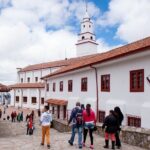
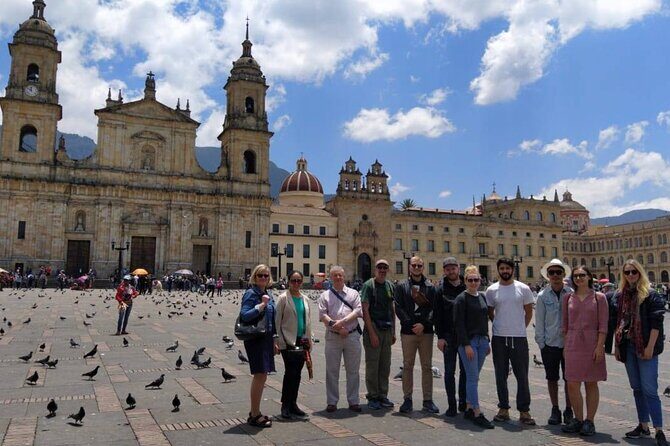
Plaza de Bolívar is the heart of Bogotá. Here, you’ll see the Primate Cathedral, the Palace of Justice, and the National Capitol. The tour ends with Colombian coffee in one of the surrounding cafes.
This is where your background knowledge starts paying off. Because you’ve had politics and history explained earlier, the architecture in Plaza de Bolívar doesn’t just look impressive—it makes sense. And the coffee stop is a smart finish line before you move into final sights.
Stop 12: La Puerta Falsa Restaurant (Traditional Dishes)
At La Puerta Falsa, you’ll try classic Bogotá dishes like chocolate tamale or changua. This is another “history through food” moment, and it helps connect earlier tastings into one overall sense of what the city considers comfort.
One consideration: the tour plan says lunch isn’t included, so think of these meals as tastings rather than a full lunch replacement. If you’re hungry, you’ll want to plan a real meal later.
Stop 13: Centro Cultural Gabriel García Márquez
The tour finishes at the Gabriel García Márquez Cultural Center, a space dedicated to García Márquez’s life and work.
This ending feels fitting because it completes the story from pre-Columbian culture to modern Colombia and then into literature. If you read García Márquez already, you’ll likely feel extra connection here. Even if you don’t, this stop makes the cultural picture bigger.
The Value: Why $13 Can Make Sense Here
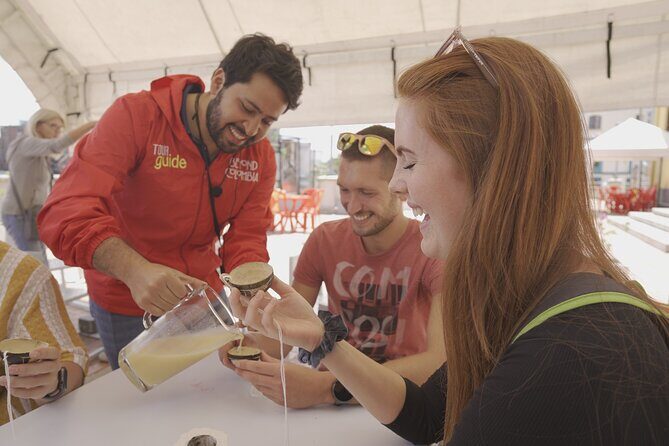
At $13 per person, the “cost per hour” is hard to beat, especially when you factor in the stops that include snacks and drinks. You’re not paying only for walking and photo time; you’re paying for a guide who helps you interpret why these locations matter.
Also, the tour includes a free tour map. That sounds small, but maps can save you time and detours later. If you’re only in Bogotá a short time, saving time is part of the value equation.
One more thing: the reviews reflect strong satisfaction with pacing and communication. Multiple guides are credited for making the tour easy to follow and for answering questions during the walk. Names that came up include Jeff, Leo, Rafa, Sergio, Byron, Daniel, Hector, Natalia, Cami, Santiago, and Erik. Different languages show up too, including English and Spanish, so it can work even if you’re not fully fluent.
Guides and Group Size: What You Should Expect Day-Of
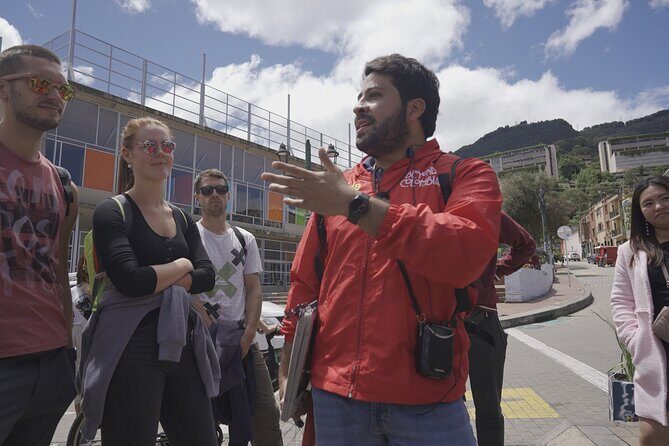
Most people seem to get a good experience with clear meet-up instructions and a pace that allows photos. Guides like Jeff and Natalia are repeatedly praised for clear communication and keeping the walk moving at a comfortable tempo. Sergio and Byron also show up in reviews as strong hosts who keep the history grounded in real life.
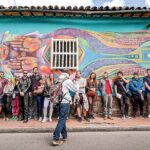
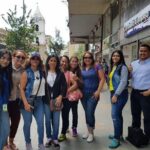
That said, group size is the only piece that feels like it can shift. The tour data indicates a maximum of 4 travelers, but at least one review describes a much larger group, around 41 people. If you’re someone who hates big groups, bring flexibility. In a large group, you may have less individual attention and more waiting between stops.
If you want the best experience regardless of group size, come with a few questions ready:
- What event changed Colombia’s direction most?
- How does the city’s layout reflect its history?
- What should I see next after Plaza de Bolívar?
What You’ll Eat and Drink (So You Can Plan Your Day)
This tour includes a string of small tastings rather than one sit-down meal. Based on the tour plan, you can expect:
- fruit juice at Santander Park
- empanadas at Plazoleta del Rosario
- fresh seasonal fruit at La Concordia Market Square
- a liquid tamale at Chorro de Quevedo
- hot chocolate with churros at the Botero Museum stop
- Colombian coffee near Plaza de Bolívar
- chocolate tamale or changua at La Puerta Falsa
Because lunch is not included, I’d treat this as “snack lunch,” not a full meal. If you have dietary needs, double-check what’s being served at each food stop.
Who This Tour Fits Best
This is a strong pick if you want:
- a first orientation walk in Bogotá
- a route that ties history to the places you’ll actually visit
- an easy way to see multiple major landmarks in one morning/afternoon window
- food tastings that feel local, not touristy
It’s also ideal if you like guides who mix context with personal perspective. Reviews frequently mention that guides add anecdotes and connect events to how Bogotá works today.
If you’re short on time and you’re choosing between “random monument photos” and “guided context,” choose guided context. It makes everything afterward easier, from deciding where to go next to understanding what you’re looking at.
Should You Book This Historic Candelaria Tour?
Yes, if you want a practical, story-driven introduction to Bogotá’s core. For $13, the included tastings, the free map, and the packed itinerary make it a good deal—especially if you’re using your limited time wisely.
I’d book it sooner rather than later in your trip, since this tour helps you navigate afterward. And if you care a lot about quiet, small-group experiences, keep an eye on the group size situation day-of by choosing your meet-up time and arriving early.
If you want to feel Bogotá’s history in the same space where it happened, this shared walk is an efficient way to get there.
FAQ
Where does the tour start and end?
It starts at the Gold Museum (Museo del Oro) on Cra. 5 #15-82, Santa Fé, Bogotá, and it ends at the Gabriel García Márquez Cultural Center (Cl. 11 #5-60, Bogotá).
How long is the Historic Candelaria walking tour?
The tour lasts about 3 hours.
What is included in the price?
The tour includes a certified professional guide and a free tour map. The tour plan also lists free admission tickets for several stops.
What is not included?
Lunch and tips are not included.
Do I get any food or drink during the tour?
Yes. The itinerary includes fruit juice, empanadas, fresh seasonal fruit, a liquid tamale, hot chocolate with churros, Colombian coffee, and traditional dishes at La Puerta Falsa like chocolate tamale or changua.
What are the main stops on the route?
Key stops include Museo del Oro, Santander Park, Plazoleta del Rosario, the Jorge Eliecer Gaitán monument, La Concordia Market Square, Chorro de Quevedo, Universidad de La Salle, the Botero Museum (Museos del Banco de la República), the Coin and Bill Production Museum (Mint), Teatro Colón, Plaza de Bolívar, La Puerta Falsa, and the Gabriel García Márquez Cultural Center.
Is the tour in a shared group?
Yes, this is a shared tour experience.
What group size should I expect?
The tour info lists a maximum of 4 travelers.
Can I cancel for a refund?
You can cancel for a full refund if you cancel at least 24 hours in advance of the experience start time.