REVIEW · BOGOTA
Armed Conflict and Violence Tour in Bogotá, Colombia
Book on Viator →Operated by Cesar Tours Bogota Free Walking Tours · Bookable on Viator
History in the streets of Bogotá can hit hard. This walking tour takes you from political violence to media pressure to cartel power, with a local guide who focuses on the human story behind the headlines. It’s timed to move at a steady pace and focused on landmarks that help you connect events to place, not just dates.
I especially like the personal, local perspective. The guide approach is built around real struggles and the reasons people acted the way they did, so you’re not just memorizing what happened. I also like that the stops are free to visit, which keeps the cost realistic while still giving you major context.
One caution: the themes are serious. If you’re sensitive to stories about armed conflict and violence, go in knowing you’ll be facing that topic head-on, not politely sidestepped. Good weather matters too, since the experience is weather-dependent.
In This Review
- Key things to know before you go
- Why This Walk Through Bogotá Feels Personal
- Price and What $12 Buys You in Real Terms
- Your 2h15 Route: How the Walk Builds the Story
- Stop-by-Stop: Gaitán’s Monument and the Bogotazo Aftershock
- Stop-by-Stop: Journalists’ Park and Why Information Matters in Conflict
- Stop-by-Stop: Chorro de Quevedo and the City’s Deeper Roots
- Stop-by-Stop: Bank Museums and the Cartel Growth-and-Downfall Story
- Stop-by-Stop: The Ministry of Foreign Affairs and State Power in Stone
- Stop-by-Stop: Plaza Bolívar and the Meeting Place of Institutions
- Stop-by-Stop: Centro Cultural Gabriel García Márquez and Cultural Reflection
- Group Size, Timing, and Getting the Most Out of It
- About That One Rough Experience: What It Teaches You
- Who Should Book This Tour (and Who Might Skip It)
- Should You Book This Armed Conflict and Violence Tour?
- FAQ
- What is the duration of the Armed Conflict and Violence Tour in Bogotá?
- How much does the tour cost?
- Is the tour guided, and are there English options?
- Where does the tour start and end?
- Do the stops require paid admission?
- What group size should I expect?
- Is this tour affected by weather?
Key things to know before you go
- 2 hours 15 minutes: short enough for a meaningful orientation, long enough to connect multiple eras.
- Bilingual guide: in-person Spanish and English speaking support throughout.
- Mobile ticket: easy to bring on your phone for the walk.
- Max 20 people: small group size, better chance to ask questions.
- Free-entry stops: every listed stop has free admission.
- Built for public-transport access: the meeting point is near transit.
Why This Walk Through Bogotá Feels Personal
Bogotá can feel like a city of viewpoints and monuments. This tour nudges it into something else: a map of decisions, conflicts, and pressure points. You’re not treated to a generic sightseeing circuit. Instead, you’re guided through key locations tied to political shocks, the role of journalists during conflict, and the rise-and-fall story of major drug groups.
The biggest value is how the tour keeps turning history into explanations you can actually use. You’ll hear how political violence escalated into a broader period of violence, and you’ll also get the media angle through the journalists-focused park stop. That combo matters, because conflict isn’t only bullets and borders. It’s also information, fear, and what gets said out loud.
And yes, you’ll end in a classic power center. Plaza Bolívar is the kind of place where it becomes obvious how government and public life overlap. Even if you’ve seen the square before, the tour frames what surrounds it as part of a living story, not just a photo backdrop.
If you're still narrowing it down, here are other tours in Bogota we've reviewed.
Price and What $12 Buys You in Real Terms
At $12 per person, this is priced like a city orientation plus guided storytelling, not a museum splurge. That matters because Bogotá has plenty of paid attractions. Here, you’re mostly paying for interpretation—what the guide connects, the sequence of stops, and the bilingual walkthrough.
A second value point: the experience includes an in-person Spanish and English speaking guide. For an English speaker, that kind of support can be the difference between passing a landmark and understanding why it’s there. For Spanish speakers, it’s a chance to hear the same story with clarity and context.
Finally, the route uses stops with free admission. That doesn’t mean the tour is “cheap and light.” It means your money goes toward learning, not ticket fees. If you’re trying to balance a travel budget with depth, that’s a solid deal.
Your 2h15 Route: How the Walk Builds the Story
This tour runs for about 2 hours 15 minutes and moves stop to stop in a way that keeps the narrative flowing. It’s also designed for a small group: up to 20 travelers. In a group that size, you’ll likely feel the guide’s pace land better, and questions won’t get lost.
The meeting point is Journalists’ Park Gabriel García Márquez. You’ll start there and, after the last stop, the walk ends back at the same meeting spot. The tour uses a mobile ticket, which is handy because it keeps you from digging for printed papers while you’re moving around central Bogotá.
Two practical notes for your planning:
- You’ll want to dress for walking because it’s a walking format (even if the listed time per stop is short).
- Since the experience requires good weather, have a plan for rain—know you may be offered another date or a refund if it’s canceled due to weather.
Stop-by-Stop: Gaitán’s Monument and the Bogotazo Aftershock
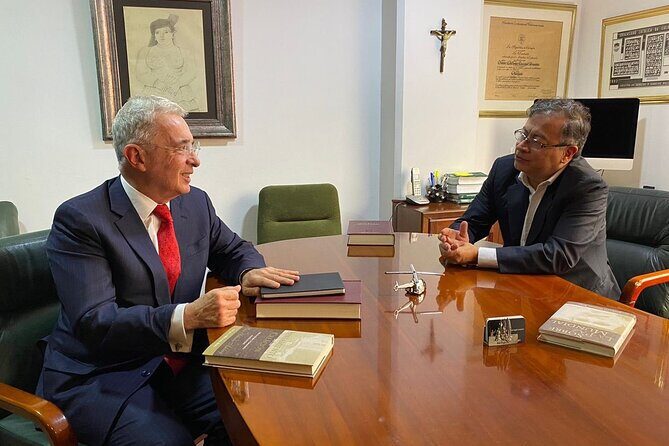
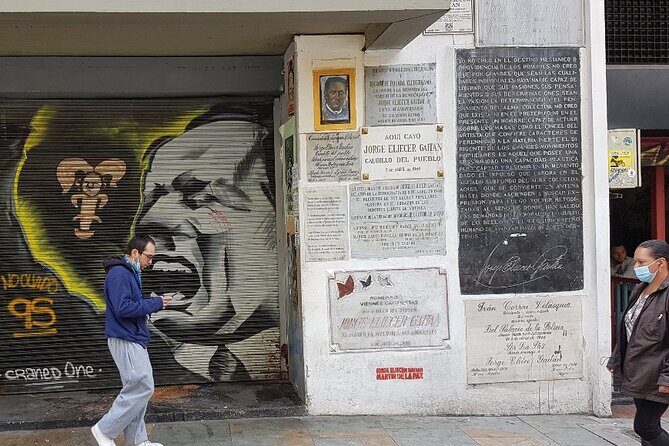
You begin with the Jorge Eliécer Gaitán Monument. The tour ties the site to April 9, 1948, when Gaitán was assassinated. That assassination triggered the Bogotazo riots and helped escalate the period known as La Violencia.
This stop matters because it’s a clear origin point for the tour’s theme of political violence. The guide can use the monument as a kind of timeline marker: one event, then the explosion that followed. Even if you know a little Colombian history, the way this stop is positioned gives you a starting frame for everything that comes next.
A drawback to consider here: if you prefer a tour that moves gently through history, this opening may feel heavy. It’s not a problem for everyone, but it’s worth knowing that the tour starts with a real spark point in the violence story.
Stop-by-Stop: Journalists’ Park and Why Information Matters in Conflict

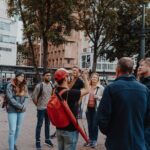
Next comes Parque de los Periodistas Gabriel García Márquez. The tour uses this park to talk about freedom of expression and the struggles faced by the media during times of conflict.
That media-focused stop is more than a detour. It changes how you read the rest of the story. When conflict intensifies, what gets published, what gets censored, and what journalists can safely report all become part of the conflict itself. By putting this stop early, the tour gives you a lens: violence isn’t only physical. It’s also about controlling narratives and limiting truth-telling.
Also, if you’ve ever wondered why writers and reporters matter in political crises, this is where the tour starts answering that question, in a concrete place you can stand in.
Stop-by-Stop: Chorro de Quevedo and the City’s Deeper Roots

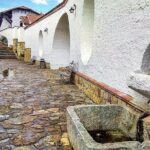
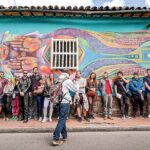
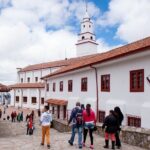
Then you’ll reach Plaza del Chorro del Quevedo. Here the guide shifts to the foundation of Bogotá and connects it to a wider history of the continent.
This stop is useful because it broadens the story beyond the modern armed-conflict era. It gives you “time depth.” When you understand where a city began, it becomes easier to see why certain institutions, public squares, and cultural spaces later become stages for conflict and governance.
A possible downside: if you’re only interested in the most recent violence and cartel era, you might find this stop less directly tied to that part. Still, it’s an important reset in the walk.
Stop-by-Stop: Bank Museums and the Cartel Growth-and-Downfall Story
One of the most concrete learning stops is at the Museos del Banco de la República. The tour focuses on Medellín and Cali cartels, explaining how these groups grew and what led to their downfall.
This is also where the tour links domestic power struggles to international pressure, including why members of the Cali cartel were extradited to the United States. That kind of explanation helps you connect why cartel history isn’t only local. It’s also tied to cross-border legal and political action.
If you’re traveling with someone who likes crime history but hates messy explanations, this is where you’ll likely appreciate the structure: growth, then decline, then consequences.
Stop-by-Stop: The Ministry of Foreign Affairs and State Power in Stone
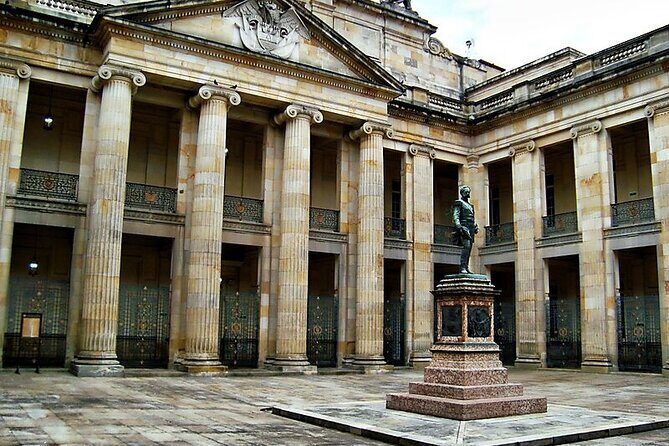
After that, you go to Passport Office North Headquarters – Ministry of Foreign Affairs. The tour points out that this government building has been central to Colombia’s diplomatic efforts and was the first presidential palace.
This stop turns the spotlight onto the state. After discussing media and cartels, it’s a smart shift to look at diplomacy and official power. It also helps you understand how violence and international relationships collide—especially when you’ve just heard about extradition and the reach of outside governments.
One practical consideration: government buildings can feel more formal than plazas and parks. You may want to keep your phone away and pay attention to what the guide is explaining, rather than drifting into sightseeing behavior.
Stop-by-Stop: Plaza Bolívar and the Meeting Place of Institutions
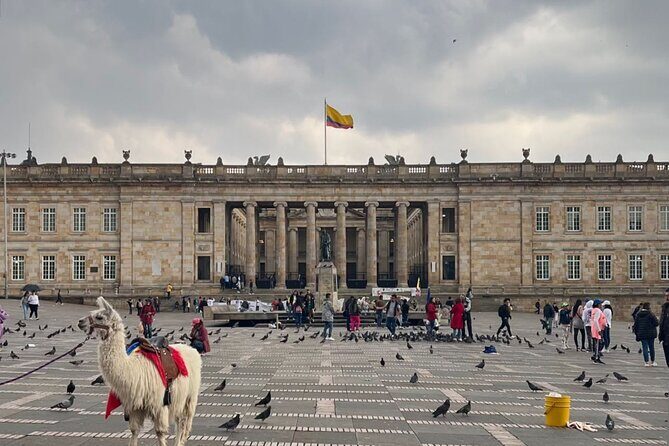
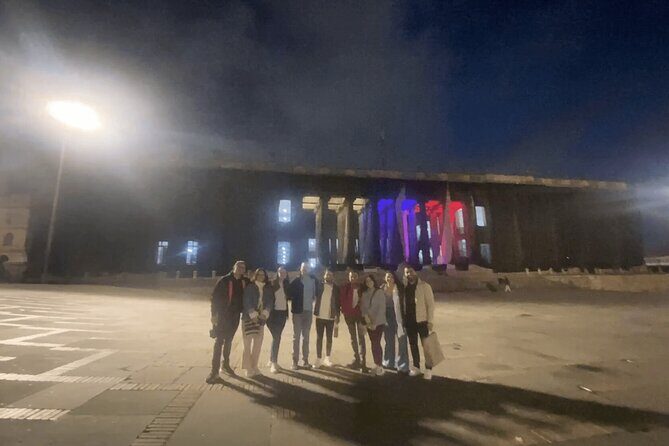
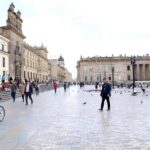
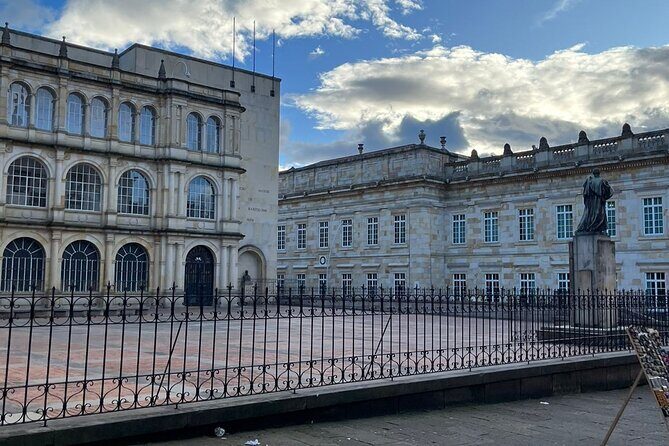
The tour finishes at Plaza de Bolívar de Bogotá, the main square. The guide frames what surrounds it as key national buildings: the National Capitol, the Supreme Court, and the Presidential Palace.
This is a classic “look at the map” moment. When you stand in Plaza Bolívar after hearing about conflict, media pressure, cartels, and diplomacy, the square becomes more than architecture. It becomes a visual summary of how a country tries to govern, adjudicate, legislate, and lead—sometimes under extreme stress.
If you love public spaces for people-watching, this is a nice end point. And because you return to the meeting point afterward, you don’t have to think about getting stranded across town.
Stop-by-Stop: Centro Cultural Gabriel García Márquez and Cultural Reflection
The final cultural stop is Centro Cultural Gabriel García Márquez. The tour highlights the way the center offers insight into cultural and literary reflections of Colombia’s turbulent history.
This closing stop gives the “so what now” feeling. After political violence and criminal power, you end with culture and literature—ways people process trauma and keep discussing what happened. It’s not just educational. It’s also a reminder that societies respond to conflict with art, writing, and interpretation.
Even if you don’t plan to enter lots of museums later, this kind of stop helps you understand how Colombians keep talking about turbulent history in public.
Group Size, Timing, and Getting the Most Out of It
With a maximum of 20 travelers, you’re in a good sweet spot. Large enough to meet people, small enough to keep the guide’s attention on the story rather than rushing everyone through. The duration, about 2 hours 15 minutes, makes it compatible with a day of sightseeing without swallowing your whole schedule.
Since this is a walking tour, plan for realistic stamina. Don’t stack it back-to-back with long museum days. If you’re also doing a high-energy tour later, give yourself a gap. You’ll be mentally digesting heavy topics, and your energy matters.
You’ll also want to arrive a few minutes early. The meeting point is specific—Journalists’ Park Gabriel García Márquez—and this matters for a tour that runs on time.
About That One Rough Experience: What It Teaches You
There’s a cautionary note from a recorded incident where the tour reportedly didn’t operate as expected for someone who felt the organization failed to show up. The provider response indicates that a full refund was processed when the customer didn’t show and the team didn’t see them at the stated time and place.
So here’s the practical takeaway: be on time at the correct meeting point, and keep your confirmation handy. If something looks off, contact the operator promptly rather than waiting. Tours at this price point can still be professionally run, but timing and meeting points are where problems usually start.
Who Should Book This Tour (and Who Might Skip It)
This tour is a strong match if you want more than sightseeing. Book it if you’re interested in:
- How political violence shaped a broader period of conflict
- The role of journalists and freedom of expression during conflict
- How major drug cartels grew and then fell
- How state power and public institutions relate to these stories
It may be a less ideal fit if you want a light, carefree walking afternoon. The topic is inherently serious, and the storytelling is built around that reality.
Also, if you’re a solo traveler who enjoys structured learning, the small group size can feel friendly. If you’re traveling with kids or looking for family entertainment, you’ll have to judge your comfort level with the subject matter—nothing in the provided details suggests it’s designed as a kid-friendly history lesson.
Should You Book This Armed Conflict and Violence Tour?
I’d book it if you want a guided, place-based understanding of conflict-era Colombia that you can grasp in a single morning or afternoon. The $12 price is reasonable for a bilingual guide and a route that connects politics, media, criminal power, and institutions.
I’d think twice if you:
- Prefer lighter history themes
- Don’t do well with topics about violence and armed conflict
- Need guaranteed weather-free plans, since the tour depends on good weather
If you decide to go, come prepared to walk, arrive on time, and treat the stops like checkpoints in a story rather than quick photo stops. That’s when this tour delivers its best payoff: you leave with a clearer sense of how Colombia’s past connects to its institutions and cultural reflection today.
FAQ
What is the duration of the Armed Conflict and Violence Tour in Bogotá?
It lasts about 2 hours and 15 minutes.
How much does the tour cost?
The price is $12.00 per person.
Is the tour guided, and are there English options?
Yes. The tour includes an in-person guide who speaks Spanish and English.
Where does the tour start and end?
It starts at Journalists’ Park Gabriel García Márquez in Bogotá and ends back at the meeting point.
Do the stops require paid admission?
All listed stops show free admission.
What group size should I expect?
The tour has a maximum of 20 travelers.
Is this tour affected by weather?
Yes. It requires good weather, and if it’s canceled due to poor weather, you’ll be offered a different date or a full refund.