REVIEW · BOGOTA
Fun Graffiti Workshop: The Art of Aerosol and Color
Book on GetYourGuide →Operated by Capital Graffiti Tours · Bookable on GetYourGuide
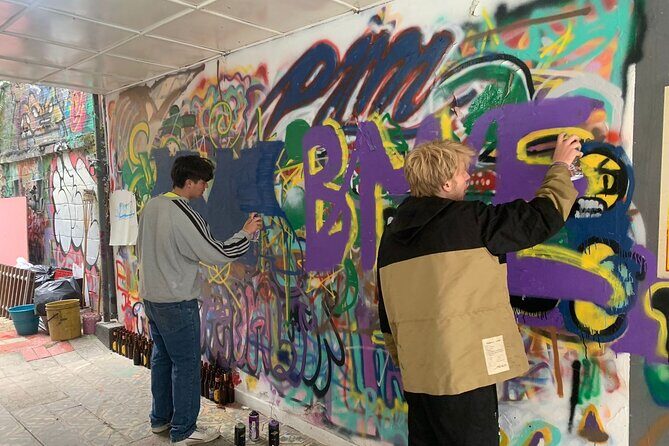
Graffiti can look effortless from far away, but learning it close up is the fun. In this Bogotá workshop, I like how you start with marker drawing basics and quickly move to spray control for color, gradients, and even a 3D effect on the wall. One heads-up: spray paint can drop and splatter, so plan to dress like you’re working, not sightseeing.
The class runs for 2 hours inside a cultural house and garden in the Macarena area, with murals all around to set the mood. Instructors (including Diego, per one memorable one-on-one experience) guide you from sketching fundamentals to a finished piece you can actually be proud of, even if you’re not sure you have talent. If you want something super laid-back with no mess and no creativity required, this might feel a bit intense.
In This Review
- Key highlights worth your attention
- A two-hour color reset in Bogotá’s Macarena
- Markers, basics of drawing, and getting your outlines clean
- Spray can control, gradients, and the 3D trick with contrast
- Painting on a wall (or thick paper) without fear
- Chromotherapy and imagination games (yes, really)
- Your graffiti name and throw-up: art as identity
- Beginner vs advanced street art workshop options
- Where you meet and how to find your guide
- What’s included, what’s not, and what to bring
- Price and value: why $115 can make sense here
- Who this workshop is best for
- Should you book the Fun Graffiti Workshop?
- FAQ
- How long is the graffiti workshop?
- Where does the workshop meet in Bogotá?
- How much does it cost?
- What languages are the instructors available in?
- What materials are included?
- Is food included?
Key highlights worth your attention
- Marker-to-spray progression that builds confidence fast
- Color tricks like opposite-color contrasts to create a 3D look
- A real wall space or thick paper, so you’ll work beyond practice sheets
- Chromotherapy and imagination games to keep learning playful
- Your own graffiti name and throw-up as the end goal
A two-hour color reset in Bogotá’s Macarena
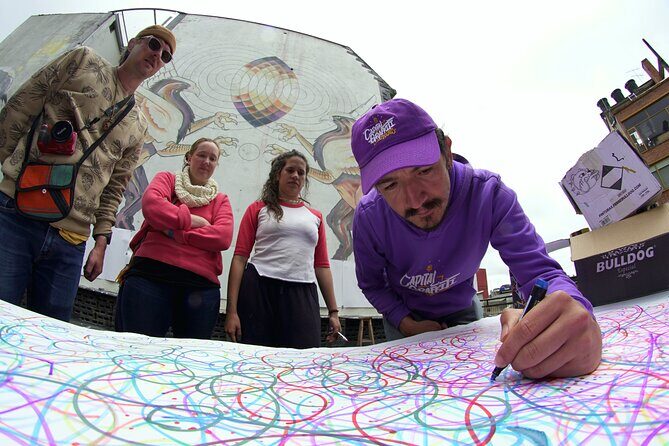
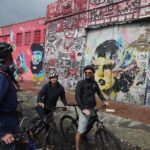
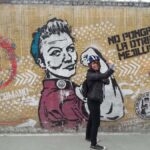
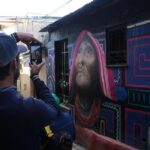
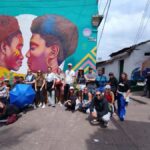
This workshop happens in downtown Bogotá’s Macarena neighborhood, in and around a cultural house and garden filled with murals. The setting matters more than you might think: you’re not learning in a classroom that feels sterile. You’re surrounded by the kind of street-art energy that makes drawing and color theory feel practical, not academic.
The experience is designed for beginners and for people who simply want to try spray paint with guidance. The tone is playful, and the structure still has a clear goal: you learn the fundamentals and then apply them to your own graffiti-style piece within the time window.
You’re also not stuck doing only one thing. The flow moves from markers to spray, so your hand gets warmed up before you chase the fun stuff like gradients and dimension. That’s a big part of why the results feel satisfying.
Other graffiti and street art tours in Bogota
Markers, basics of drawing, and getting your outlines clean
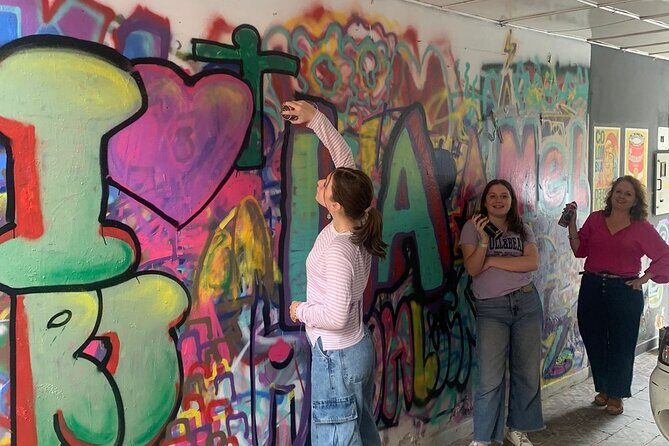
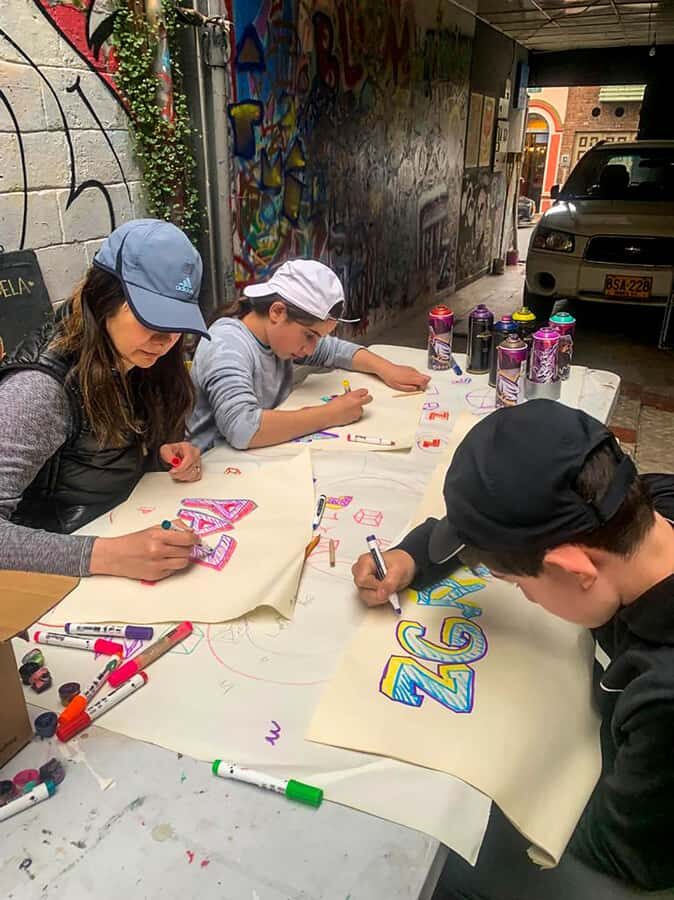
You’ll begin with markers and core drawing foundations. Even if you’ve never sketched, you’ll learn practical ways to get your lines under control, plus how to think about letters and shapes before adding color. This is the part many people underestimate, but it makes the spray-painting step much less stressful.
From there, you sketch with markers so you can plan your design. Your instructor helps you translate that sketch into a graffiti name style, and you start learning what your letters need to look like on a wall (not just on paper).
One reason I like this approach is that it reduces the guesswork. You’re not “winging it” with spray cans; you’re making decisions step by step.
Spray can control, gradients, and the 3D trick with contrast
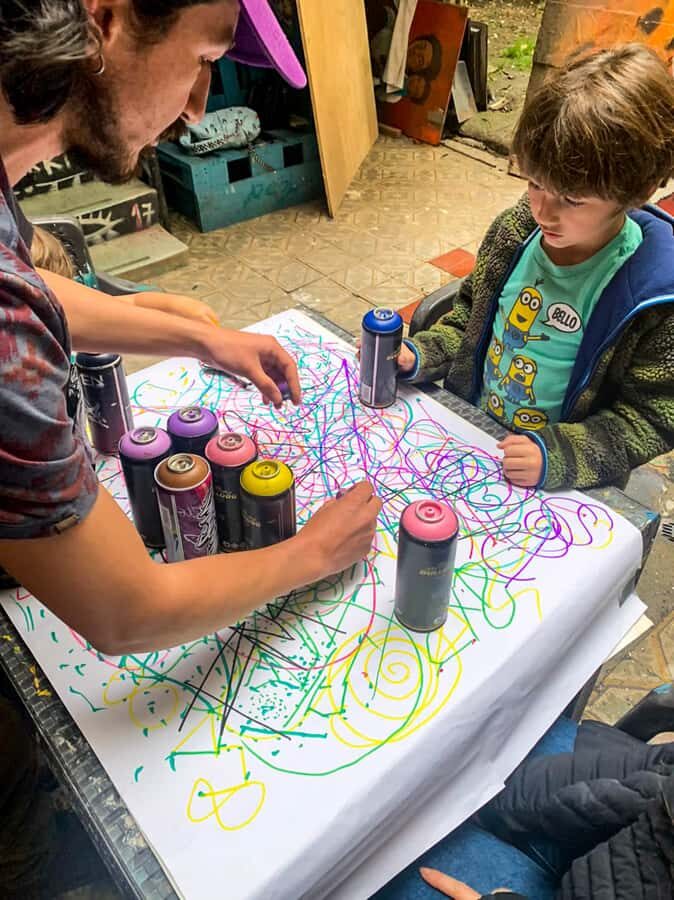
Then the workshop shifts into aerosol skills: can control is the key topic. You’ll practice how to hold the spray can, how to judge distance, and how to fill areas so the color looks intentional instead of blotchy. If you’ve ever sprayed paint without technique, you’ll immediately understand why this matters.
A major learning focus is gradients. You’ll work on how to transition between tones so the piece feels shaded, not flat. That’s one of the quickest ways to make graffiti look “real,” even when you’re still a beginner.
The workshop also teaches dimension using opposite colors and contrast. The idea is simple: when your color choices fight (in a good way) on the wall, your letters look like they pop forward instead of sitting on the surface. Even if your drawing started basic, this technique can level up the final look dramatically.
Painting on a wall (or thick paper) without fear
You’ll get either wall space or thick paper to create your piece. That flexibility is useful because it lets the instructor match your output to what the space allows and what you’re working on during the class.
Spray on a wall is different from spray on paper. On the wall, you have to think about scale and coverage. On thick paper, you can focus more on clean technique without the same wall-size pressure. Either way, the point is to apply what you learn right away instead of saving it for later.
There’s also a nice psychological benefit here: once you see your design take shape in a real graffiti style, your confidence changes. One of the review experiences highlighted how a guide took a student from marker basics all the way to a 3D design on the wall, and that progression is exactly what you can expect from the workshop structure.
Chromotherapy and imagination games (yes, really)
This class includes chromotherapy and imagination games as part of the learning. That might sound fancy, but what it does in practice is keep the session playful and reduce the pressure of “getting it perfect.” You’re learning color relationships while also staying engaged.
Instead of treating color theory like homework, you’ll use games and quick exercises that connect colors to mood, contrast, and visual impact. It’s a way to help your eye understand what looks good together, which then helps you choose color combos for your name and throw-up.
If you’re the type who freezes when someone says color theory, this section is there to get you moving.
Other cooking classes and workshops in Bogota
Your graffiti name and throw-up: art as identity
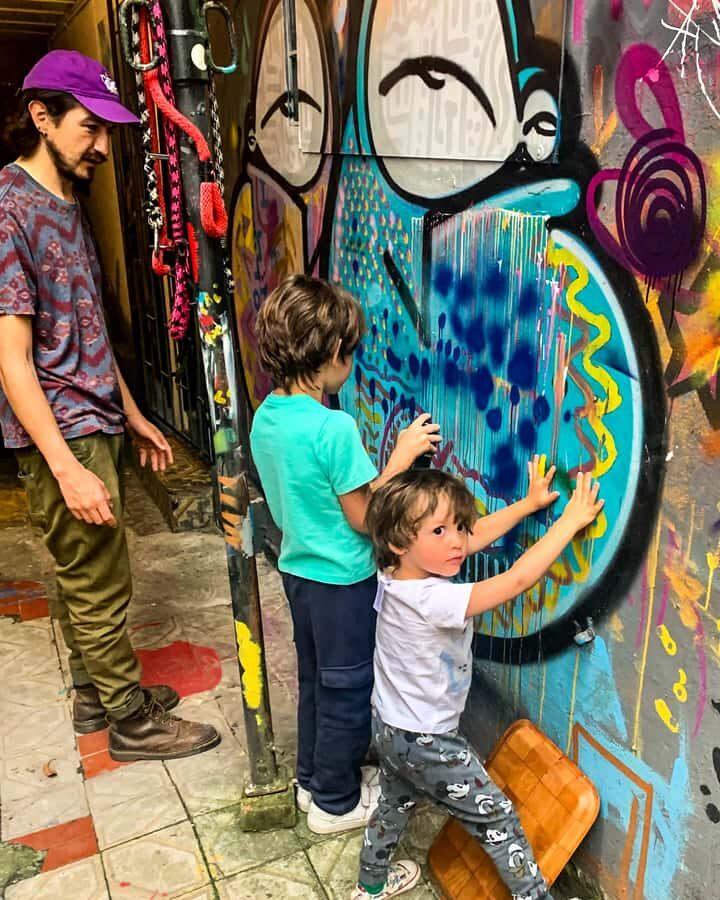
The main objective is to create your own graffiti name and a throw-up—that bold, signature graffiti style that’s meant to be recognizable at a distance. You’re not just learning technique in isolation. You’re aiming for a finished result that reflects your identity.
This is where the workshop becomes more than “spray paint lessons.” You’ll be guided to think about art as self-expression, which is one reason graffiti has such a strong cultural presence in cities like Bogotá.
Your instructor helps you bring your design together, and the end product feels personal because it carries your name, your color choices, and your letter shapes. That sense of ownership is often what makes people say the class was worth it, even if they went in unsure.
Beginner vs advanced street art workshop options
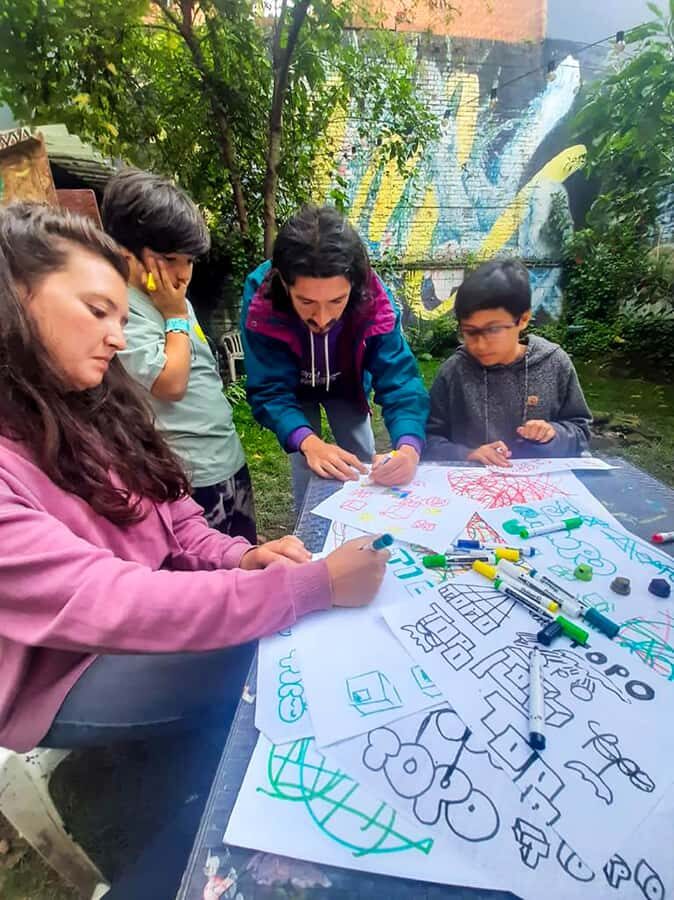
The activity offers two paths: a basic workshop and an advanced street art workshop. The basic option is for beginners or anyone with no previous spray paint experience. That’s the safest entry if you want to learn without feeling behind.
The advanced workshop is for people who want more control and deeper exploration, and it can be customized. Depending on what you want, you might refine realism with spray paint, work on political stencil art, or focus on character creation alongside renowned artists.
So here’s the practical way to choose:
- If you’re new or you want a confidence-building creative session, start with the basic format.
- If you already know the basics and want a more specific style target, ask for the advanced customization.
In both cases, you’ll be working with instructors who adjust the session to your skill level and goals, especially since the experience is offered as private or small groups available.
Where you meet and how to find your guide
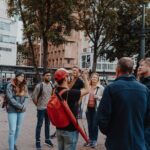
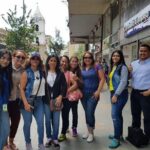
You’ll meet in front of Tapas Macarena at Calle 26b #4 13. Look for your guide wearing a purple hoodie (plus a cap or umbrella, depending on how they show up).
This matters because the workshop is in a specific neighborhood and the setting includes a cultural house and garden. If you arrive late or wander around without finding the group, you’ll lose valuable time when the instruction is already flowing.
Plan to arrive a few minutes early so you can get oriented, meet your instructor, and settle in before you start drawing.
What’s included, what’s not, and what to bring
The workshop includes the gear and space you need to make art:
- Spray cans, graphic markers, nozzles
- Thick paper and wall space
- A visit to a cultural house with murals and pictures from the experience
What’s not included is equally important:
- No pickup service
- No food or drinks
You should also come prepared for paint. One review specifically recommended wearing old clothes because color can drip. I’d take that advice seriously. Spray sessions can get messy in ways you can’t fully control, and you’ll feel calmer if your clothes are already protected.
If you tend to carry light gear, bring a simple bag you don’t mind leaving slightly paint-adjacent.
Price and value: why $115 can make sense here
At $115 per group (up to 1), the price isn’t low in a “drop-in activity” sense. But it can be good value because the class isn’t just talk—it includes tools, materials, and guided instruction focused on technique.
You’re paying for:
- A structured lesson that goes from marker drawing to spray skills
- Real application time on a wall or thick paper
- Instructor feedback as you build your design
- Included materials like spray cans, markers, and nozzles
For the price, the big question is whether you want guided practice or you’d rather freestyle on your own. This is clearly not a freestyle event. It’s a teach-and-make class, which is why beginners can leave with a piece that looks surprisingly strong.
Also, the private or small group format typically means you get more attention than you would in a large group setting. That can be the difference between spraying random color and learning how to build a gradient and dimension intentionally.
Who this workshop is best for
This is a great fit if you:
- Want a hands-on creative activity in Bogotá that doesn’t require prior art experience
- Like step-by-step instruction, especially when learning a new medium like spray paint
- Prefer learning through doing rather than reading
- Want a cultural-art setting with murals and a real local vibe in Macarena
It’s also a strong choice for a couple of different travel styles. If you’re the type who likes crafts and skills, you’ll enjoy the technique. If you’re more of a city-explorer, you’ll still get a sense of place because the workshop is tied to street-art culture and mural surroundings.
If you hate mess, or you absolutely need a “clean hands” experience, consider that practical drawback. Wear old clothes, plan for droplets, and you’ll be fine.
Should you book the Fun Graffiti Workshop?
I’d book it if you want a short, structured creative class in Bogotá that takes you from first marker strokes to real spray techniques. The biggest wins are the progression and the practical payoff: you’re not just learning how to spray; you’re producing a graffiti-name throw-up with color choices that actually look dimensional.
Skip it if you want something purely observational, or if you’re traveling with no tolerance for paint splatters. This is an art workshop, not a museum stop.
If your goal is to leave with a finished piece and a new set of skills you can use again, this one is a strong bet.
FAQ
How long is the graffiti workshop?
The workshop lasts 2 hours.
Where does the workshop meet in Bogotá?
You meet in front of Tapas Macarena at Calle 26b #4 13. Look for your guide wearing a purple hoodie (and possibly a cap or umbrella).
How much does it cost?
The price is $115 per group (up to 1).
What languages are the instructors available in?
Instructors are listed as available in English, Spanish, German, French, and Italian.
What materials are included?
Spray cans, graphic markers, nozzles, thick paper, and wall space are included. You also get a visit to a cultural house with murals and pictures of the experience.
Is food included?
No. Food and drinks are not included, and there is no pickup service.