REVIEW · BOGOTA
Experience the joy of Salsa. Have fun while learning
Book on Viator →Operated by Walking tour bogota by (The True Colombian Experience) · Bookable on Viator
Two left feet can still dance here.
A 7:00 pm salsa lesson in Barrio La Candelaria turns a tough “I can’t dance” moment into a real rhythm workout, with step-by-step guidance in Colombian salsa style. The class is beginner-friendly, runs about an hour (or two if you want more time), and starts with a complimentary alcoholic beverage so you’re ready to move and laugh.
What I like most is that the focus stays practical: learn the basics of salsa rhythm and steps, then practice enough that your body starts to remember. Add the touch of taking home a USB with popular salsa music, and you’ve got something to replay when you’re back in your room.
One consideration: the included drink is alcoholic, with options like a cuba libre or national beers. If you don’t drink alcohol, plan ahead for that before you book.
In This Review
- Key Highlights to Know Before You Go
- Salsa Basics in Bogotá’s La Candelaria: A Fast, Joyful Skill Builder
- What You’re Paying for: $25, a Pre-Class Drink, and a USB
- Meeting Point and Timing: Plan for a 7:00 pm Start
- The Lesson Flow: Rhythm, Basics, and a Bit of Salsa Backstory
- Stop in Barrio La Candelaria: Why This Neighborhood Matters
- Instructors Who Teach Without Making You Feel Awkward
- Group Size and Class Vibe: Small Enough to Feel Human
- Who Should Book This Salsa Lesson (and Who Might Skip It)
- Making It Worth Your Time: How to Get More From Your Hour
- Should You Book This Salsa Lesson in Bogotá?
- FAQ
- Where does the class start?
- What time does it start?
- How long is the salsa lesson?
- How much does it cost?
- What’s included before the class?
- Do I get to take music home?
- Is dinner included?
- Is the lesson only for experienced dancers?
- What’s the maximum group size?
- Is free cancellation available?
- What about service animals and getting there?
Key Highlights to Know Before You Go

- La Candelaria start point: you meet in the neighborhood and keep things grounded in Bogotá’s everyday streets
- One hour, or two if you want: more practice time is available if you’re enjoying it
- Drink before dancing: a cuba libre or two national beers are included to get you loose
- Basics + history, not just steps: you’ll learn the origin story behind salsa alongside the moves
- Take-home USB music: you can keep practicing with a simple playlist to match the lesson
- Small-feel instruction: multiple instructors are described as patient and encouraging, with some classes feeling close to private
Salsa Basics in Bogotá’s La Candelaria: A Fast, Joyful Skill Builder
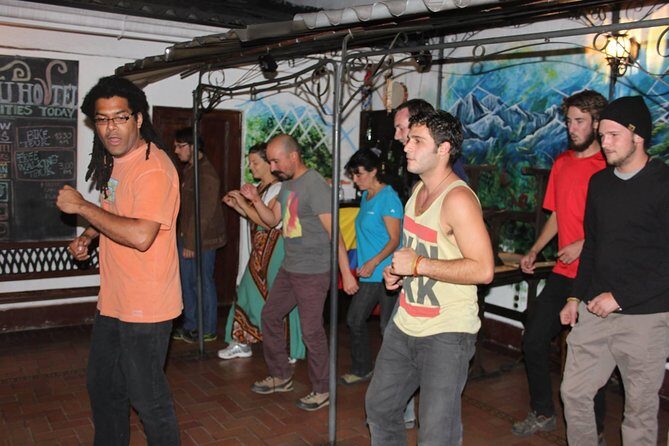
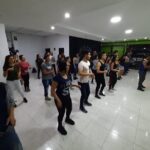
Salsa sounds big and intimidating until you get the rhythm in your body. This class keeps it beginner-shaped: you learn the foundational timing and the basic moves, then practice them with encouragement rather than pressure. The goal isn’t perfection. It’s getting you comfortable enough to feel the Latin rhythm while you’re still learning.
I also like that the vibe is social without being chaotic. You’re in a real neighborhood area, and the lesson structure gives you clear steps to follow. That matters because salsa is physical. If you don’t get the rhythm early, the rest turns into guesswork.
And yes, the class is designed to help you feel like you can actually dance salsa, not just watch others do it. The instruction is aimed at building from basics toward a stronger “I get it” moment, in a style tied to Colombia.
Other tejo and salsa cultural experiences in Bogota

What You’re Paying for: $25, a Pre-Class Drink, and a USB
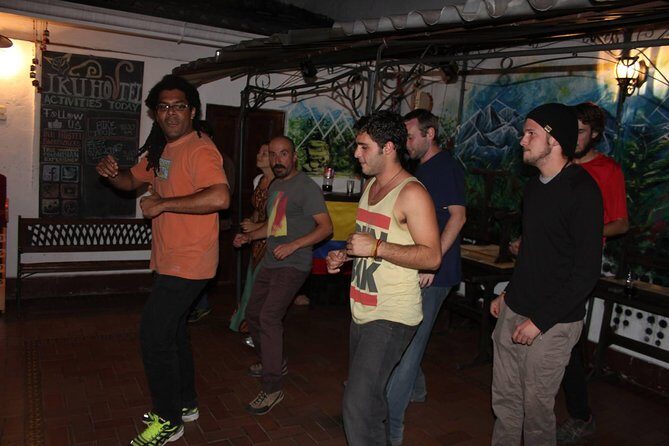
At $25 per person, this is the kind of activity that works as a low-stakes cultural experience. You’re not paying for a fancy venue or a long day tour. You’re paying for time with an instructor, a clear salsa lesson, and a couple of thoughtful add-ons.
Here’s what’s included:
- An alcoholic beverage before the class starts (either a cuba libre or two national beers)
- A USB with popular salsa music to help you replay what you learned
- The guided lesson itself, focused on salsa basics and rhythm
That drink inclusion is more than a perk. It’s basically a confidence booster for your first time dancing. You arrive tense, you leave loosened up, and you’re more likely to actually try the steps instead of hovering in the background.
The USB also changes the value. Many beginner classes end with applause and then… nothing to practice later. With the USB, you can keep rhythm and songs going after the session and refresh what you practiced.
Meeting Point and Timing: Plan for a 7:00 pm Start
This runs out of Cranky Croc Hostel, Cl. 12d #3-56, La Candelaria. The start time is 7:00 pm, and the activity ends back at the same meeting point. It’s also described as near public transportation, which makes it easier to slot into an evening without a big transit puzzle.
Duration is listed as about 1 hour, with the note that you can get a second hour depending on you. That’s a good setup if you’re unsure how much you’ll want. You can keep it short if you’re tired after sightseeing, or extend it if you’re in a dancing mood.
One practical thing: because it’s a night class, treat it like part of your evening plan. Don’t schedule it so tightly that you’re sprinting from one place to another. The lesson is built around getting you into rhythm right away.
The Lesson Flow: Rhythm, Basics, and a Bit of Salsa Backstory
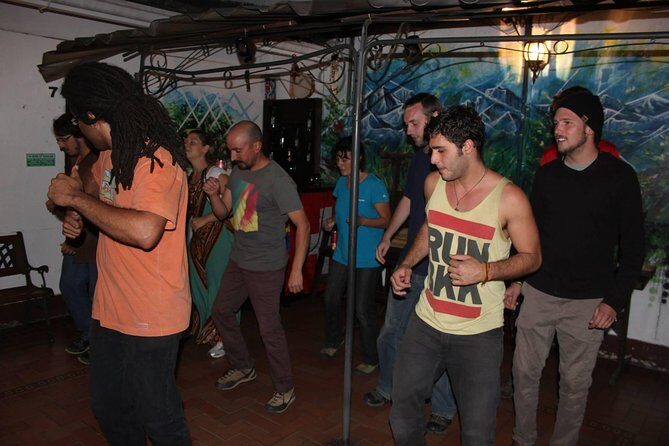
The class is built around learning salsa rhythm and turning it into movement. You start with the foundation—what to do, how to count it, and how to practice the basics until they feel less like foreign language and more like muscle memory.
You can expect instruction that moves from basics to confidence. Even if you’ve never danced before, the approach is set up for learning step-by-step. The descriptions of instructors highlight patience and encouragement, so you’re not thrown into complicated choreography.
A standout element is that the session includes salsa history and where the dance comes from. That matters because salsa isn’t just steps. The rhythm and the feel have cultural roots. A little context makes the moves less random and more meaningful.
In plain terms, you’ll leave knowing:
- the basic salsa rhythm you can clap or count
- a small set of core moves you can repeat
- enough practice to feel like dancing is doable, not scary
Stop in Barrio La Candelaria: Why This Neighborhood Matters
Your main “stop” is Barrio La Candelaria. This isn’t just a location tag. It’s part of why the experience feels grounded.
La Candelaria is an area where you’re more likely to blend into normal city life instead of being stuck in a tourist bubble. That helps salsa feel less like a performance and more like something people do with real energy.
Also, meeting in the neighborhood (rather than a remote studio) keeps the experience approachable. You’re not commuting across town and arriving stressed. You’re already in the place where the city’s culture shows up in everyday street life, then you jump into the lesson.
One small drawback: because it’s in a neighborhood setting, you should expect it to feel like an evening activity in real Bogotá streets—not a sterile, indoor-only experience. If you prefer totally controlled environments, this may feel more casual than you’re used to.



Instructors Who Teach Without Making You Feel Awkward
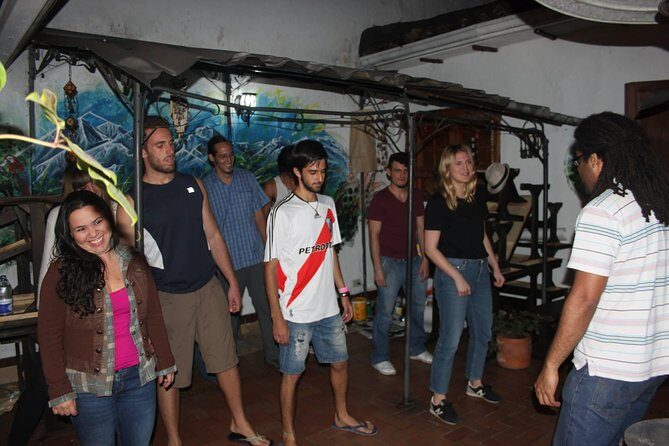
The highest praise in the descriptions centers on instructors who are patient and encouraging. Several names come up—Natalia, Andrea, Vivi, and Más—and the common thread is how they make beginners feel capable fast.
Here’s what those instructor styles translate to for you:
- Clear explanations of the steps, instead of vague “just follow along” teaching
- A calm pace that gives you time to correct mistakes
- Encouragement that nudges you to loosen up and actually dance
One person even notes that the lesson felt almost private because the class setup was small. That’s the best-case scenario for learning basics: more individual attention, less waiting, and faster feedback.
If you’re worried about embarrassment, pay attention to those details. The class is built around helping you learn salsa in a friendly way, with teachers described as sweet, patient, and super helpful.
Group Size and Class Vibe: Small Enough to Feel Human
The activity has a maximum of 50 travelers. That sounds big on paper, but the real question is how it feels in the moment.
Because the instruction is focused on basics—rhythm, core moves, and practice—classes like this often organize attention so beginners can follow. The strong pattern of “patient and encouraging” teaching suggests they keep the tone beginner-friendly, even when more people join.
That said, if you hate any kind of crowd energy, choose your expectations carefully. Even with good teaching, a bigger group can still mean less individual time than a truly private session.
Who Should Book This Salsa Lesson (and Who Might Skip It)
This is a great fit if:
- you’re a beginner who wants the fundamentals without intimidation
- you want an evening activity that feels cultural and social
- you’d like a playlist to practice later, since the class includes a USB
It’s also a smart book for couples or small groups, since salsa naturally works well in pairs and it’s easier to stay motivated when someone else is learning too.
You might want to look elsewhere if:
- you’re already comfortable with advanced salsa footwork and timing
- you’re specifically hunting for a performance night rather than a learning session
- you don’t want an alcoholic beverage included (the class includes it before dancing)
Making It Worth Your Time: How to Get More From Your Hour
Even though the class is beginner-focused, you’ll get more out of it if you treat the lesson like practice—not like sightseeing. Show up ready to move and pay attention to the rhythm cues, because that’s the part most beginners struggle with at first.
Also, if you can extend the session to two hours, it can be a smart move when you’re enjoying the teaching style. More time usually means more repetition, and repetition is how you turn salsa basics from “I kind of get it” into “I can do this.”
Finally, don’t underestimate the value of the USB. After the lesson, use it to replay the songs that match the rhythm you practiced. It’s the simplest way to reinforce what you learned and keep it from fading overnight.
Should You Book This Salsa Lesson in Bogotá?
If you want a real, learnable slice of Colombian dance culture without spending a fortune, I’d book this. The pricing makes it easy to try, the lesson is built for beginners, and the standout features—patient instructors, a pre-class drink, and a USB music take-home—are exactly the things that help you remember and keep practicing.
Book it especially if you like interactive experiences where you’re doing the activity, not just watching it. The tone described through instructor names like Natalia, Andrea, Vivi, and Más points to teaching that’s supportive and practical, which is what you want when you’re new to salsa.
Skip it only if alcohol is a deal-breaker for you, or if you’re already past beginner basics and want advanced training.
FAQ
Where does the class start?
The class starts at Cranky Croc Hostel, Cl. 12d #3-56, La Candelaria, Bogotá, Colombia.
What time does it start?
The start time is 7:00 pm.
How long is the salsa lesson?
It’s about 1 hour, with the option of 2 hours depending on what you choose.
How much does it cost?
The price is $25.00 per person.
What’s included before the class?
You’re given an alcoholic beverage before starting the class. Options include a cuba libre (rum and coca cola) or two national beers.
Do I get to take music home?
Yes. You’ll take home a USB of popular salsa music.
Is dinner included?
No dinner is included. After the class, there is a restaurant in the place where the class happens if you want a meal.
Is the lesson only for experienced dancers?
No. Most travelers can participate, and the focus is on learning salsa basics.
What’s the maximum group size?
The activity has a maximum of 50 travelers.
Is free cancellation available?
Yes. You can cancel up to 24 hours in advance for a full refund.
What about service animals and getting there?
Service animals are allowed, and the meeting point is near public transportation.