REVIEW · BOGOTA
Shared Tour Colombian Conflict: war, drug trafficking and peace
Book on Viator →Operated by Beyond Colombia Free, Group & Private Tours · Bookable on Viator
Bogotá has a way of teaching fast. This 3-hour walk through the Colombian conflict makes modern history feel close, using major landmarks as real talking points. I like how it’s interactive, with a licensed guide guiding discussions instead of lecturing at you. One fair consideration: the subject matter is heavy, so go in ready for difficult stories, not a casual sightseeing pace.
The other big win for me is how it gets you oriented quickly in central Bogotá. You’ll also get a free tour map, which helps you turn what you learn on the street into smarter choices afterward, especially around La Candelaria.
Key highlights you’ll feel right away
- A walking route built around political turning points, not random sights
- Licensed guide with strong Q&A energy, so you can ask what you actually want to know
- Landmarks connected to peace negotiations and state institutions, from ministries to court buildings
- Central Bogotá stops all in the core area, with mostly free entry points
- A genuine group size limit (max 25) that keeps the discussion manageable
In This Review
- A Three-Hour Walk Through Colombia’s Conflict and Peace
- What You’ll See: Landmarks With Political Weight
- Stop-by-Stop: Santander Park to Teatro Colón
- Stop 1: Santander Park
- Stop 2: Avenida Jiménez
- Stop 3: Jorge Eliécer Gaitán Monument
- Stop 4: Ministerio de Agricultura y Desarrollo Rural
- Stop 5: Edificio Murillo Toro
- Stop 6: Palacio de Justicia
- Stop 7: Palacio Lievano
- Stop 8: Colegio Mayor San Bartolomé
- Stop 9: Plazoleta del Rosario
- Stop 10: Teatro Colón Bogotá (the finish)
- Price and Value: Understanding the $13 Viator Figure
- Guides, Group Energy, and How the Tour Stays Fair
- Who This Walk Suits Best (and When to Skip It)
- Practical Bogotá Tips for a 10:00 Start
- Should You Book This Bogotá Conflict Walk?
- FAQ
- How long is the Bogotá conflict walking tour?
- What does the $13 per person price mean?
- Where does the tour start and end?
- Is Teatro Colón admission included?
- How big is the group?
- Is there free cancellation?
A Three-Hour Walk Through Colombia’s Conflict and Peace
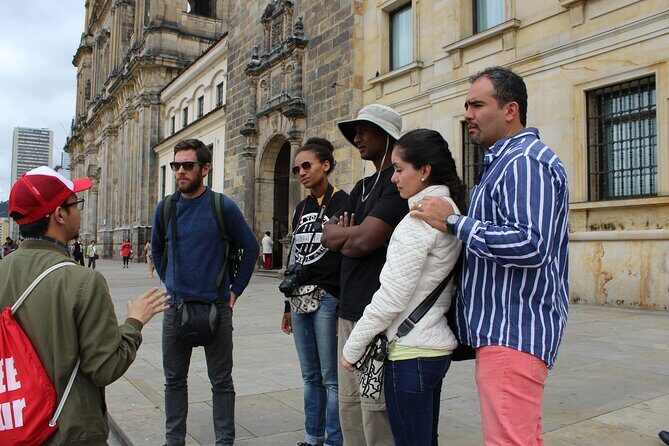
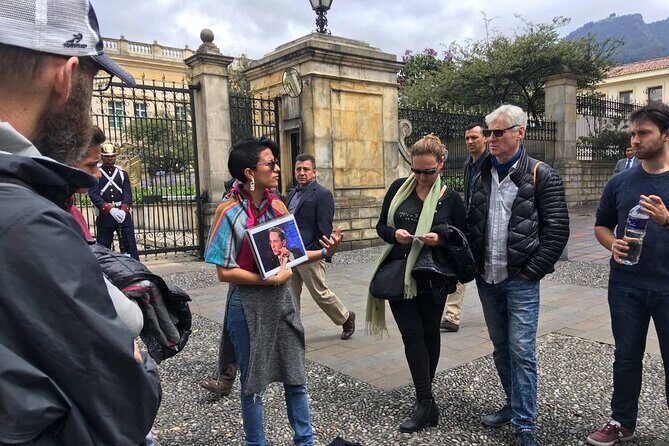
This tour is not trying to make history tidy. It uses Bogotá’s center—parks, avenues, monuments, government buildings, and cultural landmarks—to show how Colombia’s armed conflict grew, how it reshaped public life, and how peace efforts became part of the story.
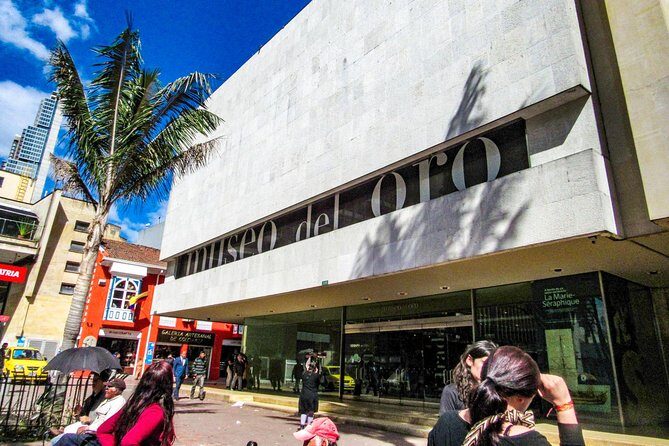
You’re walking for about three hours (plus a short stop-by-stop flow), starting at the Gold Museum in Santa Fé and ending at Teatro Colón in La Candelaria. Along the way, you’ll see why Bogotá isn’t only scenery. It’s the stage where political tensions, protests, assassinations, and negotiations played out.
Also, the price is unusually low for what you get. At $13 per person (via Viator), you’re not paying for attractions or a museum ticket bundle. You’re covering the tour value as a suggested tip, which matters for understanding how the whole experience works.
What You’ll See: Landmarks With Political Weight
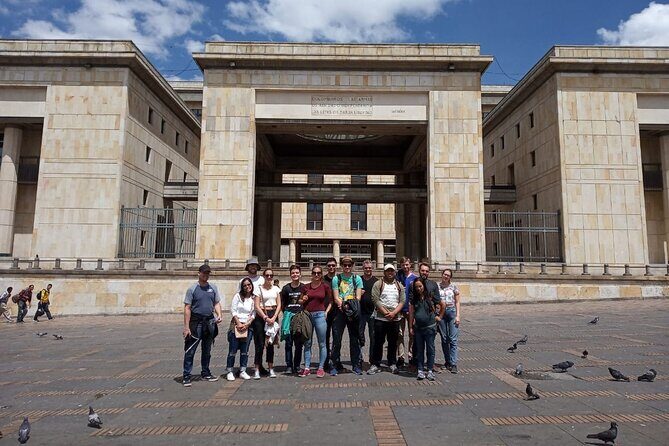
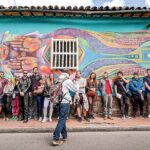
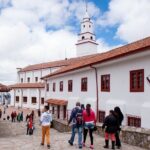
Instead of treating each stop like a photo op, the guide connects them to key moments and forces. Think of the route as a timeline you can physically walk through—one block at a time—so you start noticing patterns: where unrest gathered, which institutions held power, and how national decisions echoed in everyday streets.
Because the tour is focused on conflict and peace, the emotional tone changes across stops. Some places feel like public pressure and civic unrest. Others feel like institutions trying to manage the crisis. And then there are moments that shift toward peace-building and cultural identity.
A nice detail: most stops are free to enter, so you’re not constantly calculating fees while trying to follow the story.
If you're still narrowing it down, here are other tours in Bogota we've reviewed.
Stop-by-Stop: Santander Park to Teatro Colón
Stop 1: Santander Park
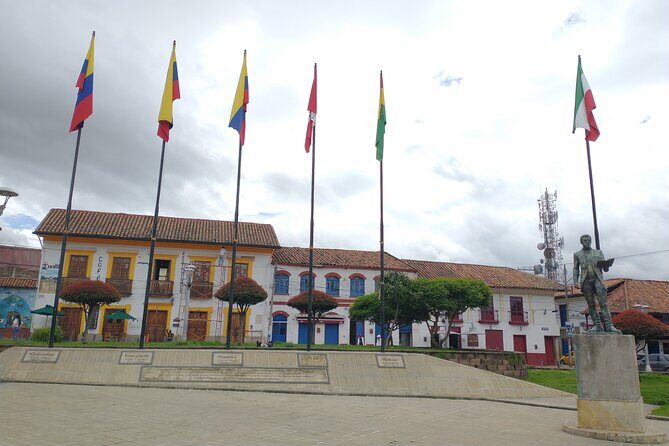
You begin at Santander Park, described as emblematic Bogotá where crucial historical moments unfolded. This is where the tour sets the baseline: the kinds of demonstrations and protests that marked early stages of the armed conflict. Even if you don’t know the timeline yet, the guide frames why this kind of public space becomes a political signal.
Why it’s worth your attention: parks can look neutral, but here the message is clear—politics spills into public life.
Stop 2: Avenida Jiménez
Next is Avenida Jiménez, a main axis of Bogotá life. The focus is on its role during clashes and demonstrations tied to the conflict. Walking this corridor helps you understand that political struggle wasn’t hidden—it moved through central streets where people lived, worked, and traveled.
Potential drawback: this section can feel like a history lecture while you’re moving fast—so if you like slower pacing, bring your questions early.
Stop 3: Jorge Eliécer Gaitán Monument
At the monument for Jorge Eliécer Gaitán, the tour slows down for one of the biggest turning points: his assassination in 1948. The guide explains why that event became a before-and-after moment and how the fallout influenced the path of the armed conflict. It’s a strong stop for learning cause-and-effect, because you’re shown the event and then connected to what followed.
What you’ll remember: it’s one of those “history changed directions here” moments.

Stop 4: Ministerio de Agricultura y Desarrollo Rural
This stop focuses on the Ministry of Agriculture and how it has been tied to peace negotiations. The guide’s angle is practical: when peace talks happen, they don’t float above real life. They require rooms, institutions, and decision-making channels.
Why it matters for first-timers: it gives you a peace lens, not only a war lens.
Stop 5: Edificio Murillo Toro
The Murillo Toro Building comes next, tied to Colombia’s political life through the institutions it has hosted. The tour connects the building’s government role with how the conflict affected state functions and political processes.
Good for your mental map: by now, you start seeing that Bogotá’s center holds both the drama and the machinery of power.
Stop 6: Palacio de Justicia
The Palace of Justice is one of the most intense stops. The tour visits the site and explains a violent seizure during the conflict and its consequences. This is where the guide’s balance becomes important, because the stories here are painful and politically complex.
Consideration: if you prefer a softer introduction to conflict history, be aware this stop is emotionally heavier than the rest.
Stop 7: Palacio Lievano
Then you move to Palacio Lievano, long home to the mayor of Bogotá. The story shifts to how the city evolved and how political changes in Colombia shaped local governance. It’s a reminder that national conflicts don’t stay national—they reshape municipalities, leadership, and public priorities.
Why it clicks: it links national history to daily city administration.
Stop 8: Colegio Mayor San Bartolomé
At Colegio Mayor San Bartolomé, you’re shown how education feeds political and social leadership. The guide explains the school’s long history and its role in training people who later shape civic life.
What to look for: listen for the connection between learning, institutions, and leadership during times of conflict.
Stop 9: Plazoleta del Rosario
Rufino Cuervo Square (Plazoleta del Rosario) becomes a small reset. The tour describes it as an oasis of tranquility in the heart of Bogotá, with a monument to a respected Colombian philologist. After the political intensity of earlier stops, this pause helps you absorb what you’ve been learning.
Tip for your pace: take a breath here. You’ve earned it.
Stop 10: Teatro Colón Bogotá (the finish)
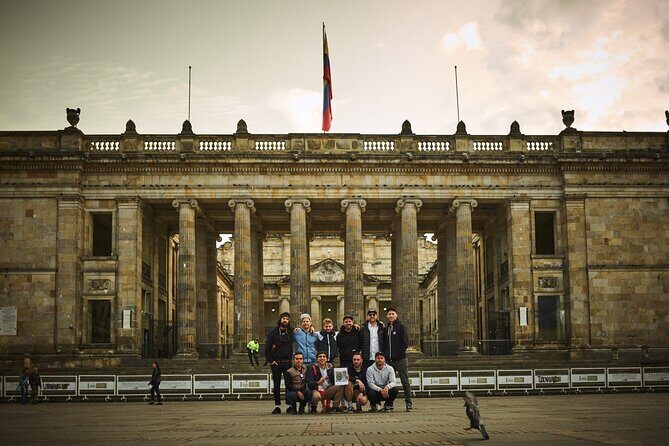
You end at Teatro Colón, one of Colombia’s major cultural symbols. The guide points out its neoclassical architecture and explains its importance in Bogotá’s cultural life. Admission to the theater is not included, so you’ll get the finish as a viewpoint and historical context, not a ticketed inside visit.
Nice payoff: closing with culture keeps the tour from feeling only grim.
Price and Value: Understanding the $13 Viator Figure
Let’s talk money plainly, because this tour’s pricing model can confuse people.
The tour cost shown as $13 per person through Viator is described as the equivalent of the suggested tip per person for the guide’s job (minus Viator’s commission). That means you’re not buying a standard ticket package. You’re paying what’s essentially guidance support for a free walking tour format.
In practice, that low price can be a great deal if you value local storytelling and interactive history. You’re paying for a licensed guide, a curated walking route, and a free tour map—then adding your own extra tip based on satisfaction.
One real-world consideration from participant feedback: some guests felt surprised by the guide’s in-person suggestion of 50,000 pesos per person. I can’t tell you what’s appropriate for every situation, but I do recommend you think about your tipping level in advance. Decide what you want to give, and be ready to discuss it without feeling pressured.
Guides, Group Energy, and How the Tour Stays Fair
This experience shines when you have a guide who can handle conflict history without turning it into propaganda or a script. The tour is designed to be question-friendly, and multiple guides working the route are praised for clear, balanced explanations and an openness to conversation.
You might meet guides with names like Leo, Sergio, or Santiago—each associated with storytelling that keeps modern history understandable and nuanced. Another guide named Angie is also noted for strong knowledge and friendliness, and Gina is mentioned for professional French guidance with a microphone that can make group listening easier.
Two things matter for you:
- You can ask questions. This is a history tour where your curiosity drives the shape of the discussion.
- You get both wartime context and the peace arc. That peace focus helps when you’re planning the rest of your trip, because you’ll be able to interpret what you hear elsewhere in Colombia.
Also, group size is capped at 25. That’s big enough to meet other travelers, but not so big that you get lost in a crowd.
Who This Walk Suits Best (and When to Skip It)
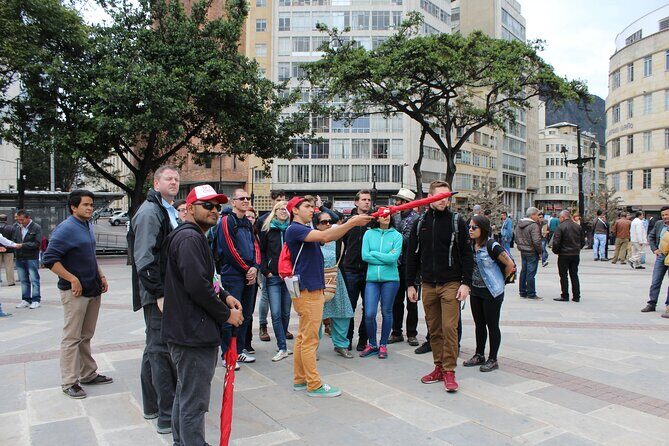
This tour fits best if you want context before you start visiting more of Bogotá. If you’re the type who reads the street signs and asks why certain buildings matter, you’ll get a lot out of this route.
It’s also a good match for travelers who like learning history through places. Instead of reading a book in a hotel, you’ll connect events to geography: where unrest gathered, which institutions held authority, and where peace negotiations took shape.
Skip or switch to a different option if conflict history is too hard right now. This is not a lighthearted tour, and at least one stop centers on a violent seizure with serious consequences.
If you need guidance in a specific language, check ahead. One participant reported being told that Spanish would require booking a private tour on-site. That doesn’t mean it’s always the rule, but it’s enough for me to recommend confirming language needs before you show up.
Practical Bogotá Tips for a 10:00 Start
You meet at Gold Museum, Cra. 6 #15-88, in Santa Fé, and the tour starts at 10:00 am. You’ll finish at Teatro Colón, Cl. 10 # 5-32, La Candelaria.
The tour is near public transportation, and service animals are allowed. It says most travelers can participate, which helps if you’re traveling with family or planning around mobility considerations.
Since it’s a walking tour that runs about three hours, plan for basic comfort:
- wear shoes you can walk in for a few hours
- bring water
- keep your phone charged for maps and follow-up reading later
Also, because the schedule is stop-based (short segments at each location), arriving on time matters. If you’re late, you can miss the initial framing of the conflict timeline.
Should You Book This Bogotá Conflict Walk?
I think you should book it if you want a fast, street-level understanding of Colombia’s conflict and peace effort, and you like asking questions. It’s also great value: $13 (as a suggested guide tip through Viator) is a small price for a guided, licensed, curated history route in central Bogotá.
I’d hesitate if you want only upbeat sightseeing, or if heavy conflict stories feel too intense for your current mood. And I’d confirm language options if Spanish (or another language) is a must for you.
If your goal is to understand Bogotá beyond colonial facades and café lines—this tour can give you the “why” behind what you see.
FAQ
How long is the Bogotá conflict walking tour?
It lasts about 3 hours.
What does the $13 per person price mean?
The tour is described as a free walking tour format, and the amount you pay through Viator is the same as the suggested tip per person for the guide’s job (minus Viator’s commission).
Where does the tour start and end?
It starts at Gold Museum, Cra. 6 #15-88, Santa Fé, Bogotá, and ends at Teatro Colón Bogotá, Cl. 10 # 5-32, La Candelaria.
Is Teatro Colón admission included?
No. Admission to Teatro Colón is not included.
How big is the group?
The maximum group size is 25 travelers.
Is there free cancellation?
Yes. You can cancel up to 24 hours in advance for a full refund.