REVIEW · BOGOTA
Shared Tour Colombian Conflict War, Drug Trafficking & Peace
Book on GetYourGuide →Operated by Beyond Colombia · Bookable on GetYourGuide
Bogotá’s conflict story hits hard. This tour strings together the origins of the Colombian Violence Era with real street-level context, and I like how it stays objective and doesn’t take sides while you learn.
You’ll also get a good “how did we get here” timeline, from independence through the Bogotazo (1948) and the later peace process. The main thing to keep in mind is depth: if you’re mainly hoping for very clear, detailed explanation of today’s political situation, the coverage can feel lighter depending on the guide and what you ask.
In This Review
- Key points before you go
- A history lesson on the streets of Bogotá
- Price and logistics: what $13 buys you
- Meeting point and how to get started fast
- The 150-minute flow: independence to today
- Bogotazo 1948: why one riot can shift a country
- Violence Era origins and the power struggle theme
- Guerrillas and paramilitaries: fighting reasons explained
- Peace agreement with FARC: what changed and what didn’t
- Where the guide makes or breaks it (and how to judge yours)
- Walking 9 km without getting worn out
- What you’ll see in the historic center (without ticket stops)
- Is this tour right for you?
- Should you book this conflict-history walk?
- FAQ
- How long is the tour?
- How much does it cost?
- Where do I meet the guide?
- Is the tour in English?
- What’s included in the price?
- What is not included?
- Do I need to buy tickets for any stops?
- What should I bring?
- What isn’t allowed during the tour?
- Can I cancel for a refund?
Key points before you go
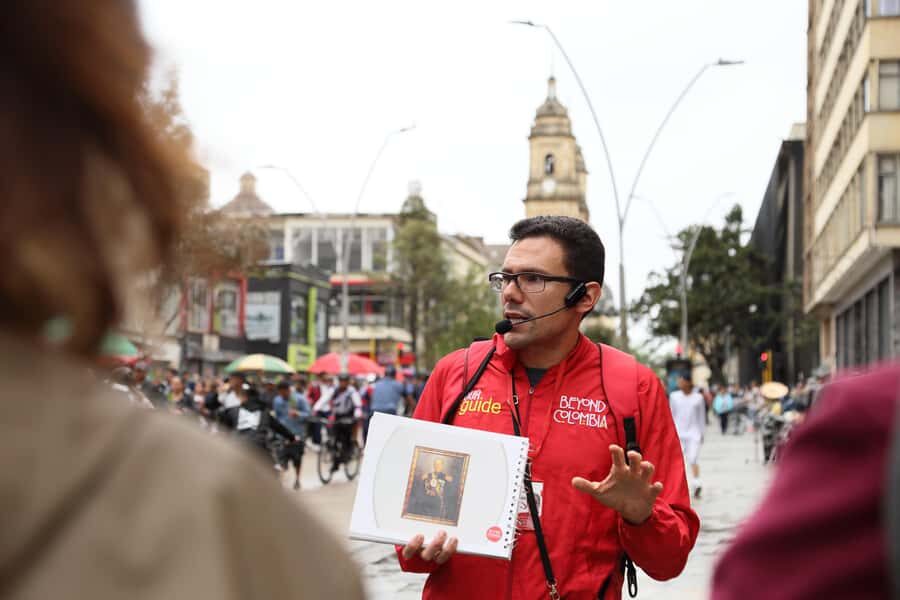
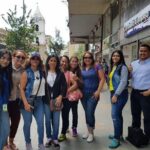
- Start right at Museo del Oro with Beyond Colombia’s red umbrellas, so it’s easy to find your group.
- A guided conflict timeline on foot: independence process, Bogotazo, military dictatorship, guerrillas, peace, and current political context.
- No-sides promise: the guide’s framing is meant to be accurate and impartial, even when the topics are emotional.
- English-speaking, interactive style: guides like Lorenzo, Hector, Santi, and Daniel are highlighted for involving the group and answering questions.
- Great value for history-focused travelers at $13, with no surprise ticket charges on the walk.
- Long walk, real weather risk: you’ll cover about 9 km, and you should plan for rain and hydration.
A history lesson on the streets of Bogotá
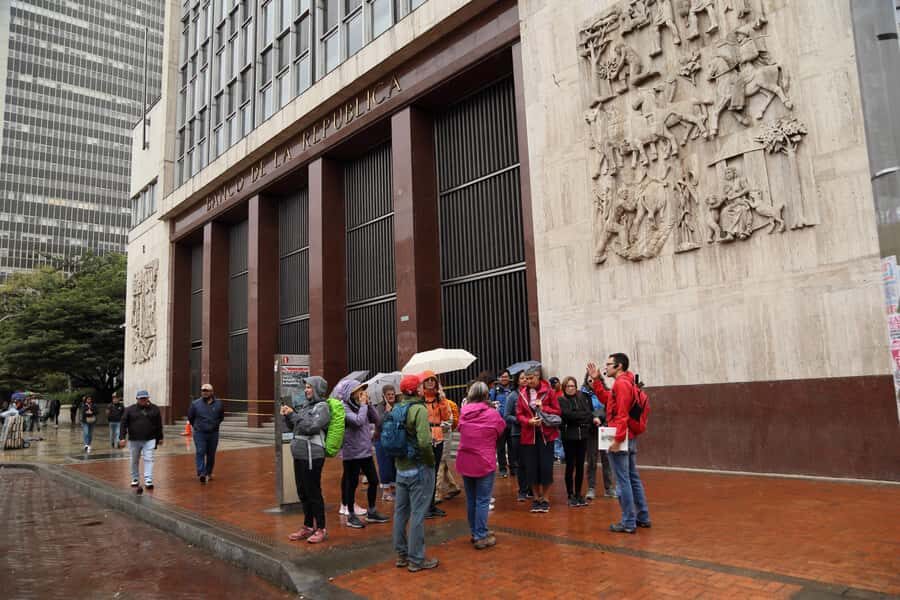
This is a shared walking tour in the historic center of Bogotá that focuses on how Colombia’s armed conflict shaped the country you see today. It’s not a casual “see the sights” stroll. You’re walking through political turning points, then connecting them to later armed groups and the peace process.
The payoff is perspective. Instead of treating Colombia’s violence as random tragedy, you get a timeline that explains where the conflict-era ideas and power struggles came from, and how those stories still echo in current discussions. If you want to understand why politics, armed actors, and drug trafficking became intertwined, this kind of guided structure is the fastest route.
The tour is led by Beyond Colombia, a large local guide team active since 2013 with many international and TripAdvisor recognitions. In practice, that matters because you’re not relying on a one-off guide who may or may not know the subject deeply. Your odds are higher that you’ll get a clear, guided narrative with time for questions.
If you're still narrowing it down, here are other tours in Bogota we've reviewed.
Price and logistics: what $13 buys you
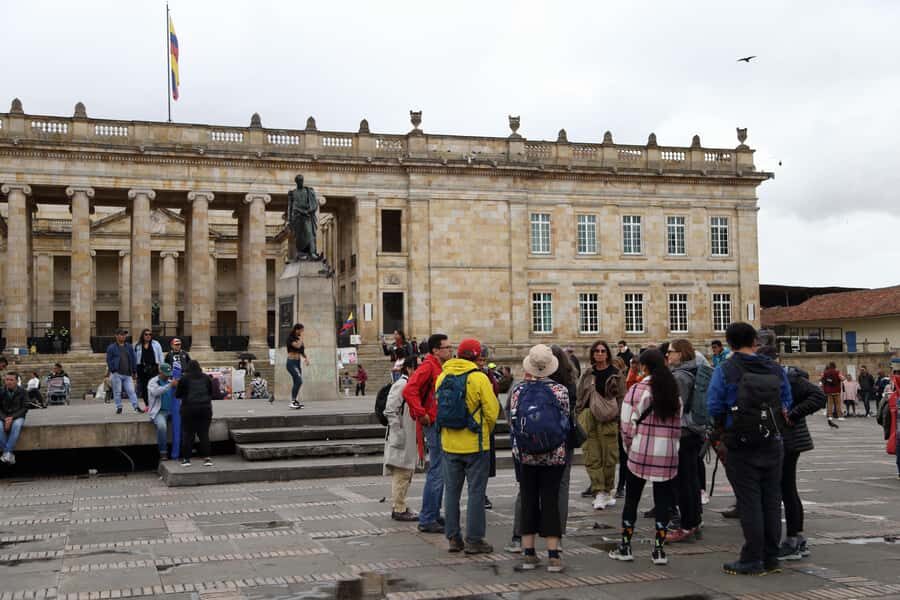
At $13 per person for about 150 minutes, this is priced like a true budget-friendly “must understand the context” tour. You’re paying for an English-speaking guide, a structured explanation of multiple conflict-era phases, and a route through essential historic-center spots without ticket shopping.
What makes the value work is what’s not included and still handled well:
- No drinks, food, or souvenirs are included, so you won’t feel locked into buying anything on-site.
- Tickets and entrance fees aren’t part of the plan, so the guide keeps you on a course where sudden extra charges aren’t expected.
- Transportation from your hotel isn’t included, so the tour is designed around walking plus rest stops.
The trade-off is physical effort. You should assume you’ll walk about 9 km. That’s a lot for a “history talk,” so bring comfortable shoes and don’t treat this like a light evening stroll.
Meeting point and how to get started fast
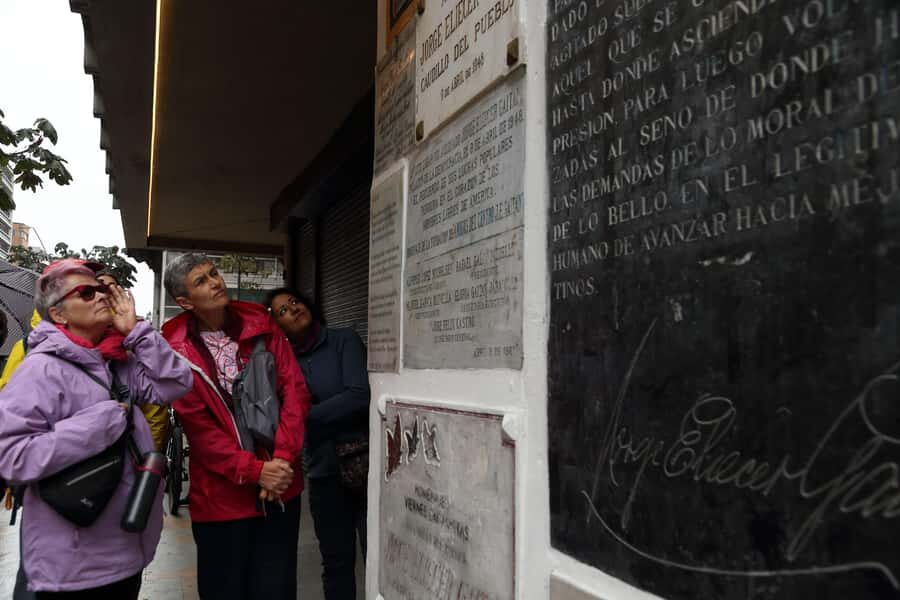
You meet in front of the Museo del Oro, standing right by the red umbrellas used by Beyond Colombia. This is the kind of meeting point that helps you settle quickly: no confusing pin drops, no wandering around guessing which language the guide will speak.
The tour starts with orientation and framing—basically telling you what storyline you’re going to follow. That matters for a topic this heavy. If you show up with no mental structure, you can still enjoy it, but you may miss connections the guide keeps calling out along the way.
You’ll also get a wristband at the end of the tour with benefits and discounts through Beyond Colombia’s recommended partners. It’s not essential to the tour experience, but it’s a nice extra if you plan to eat or book something later while you’re in Bogotá.
The 150-minute flow: independence to today
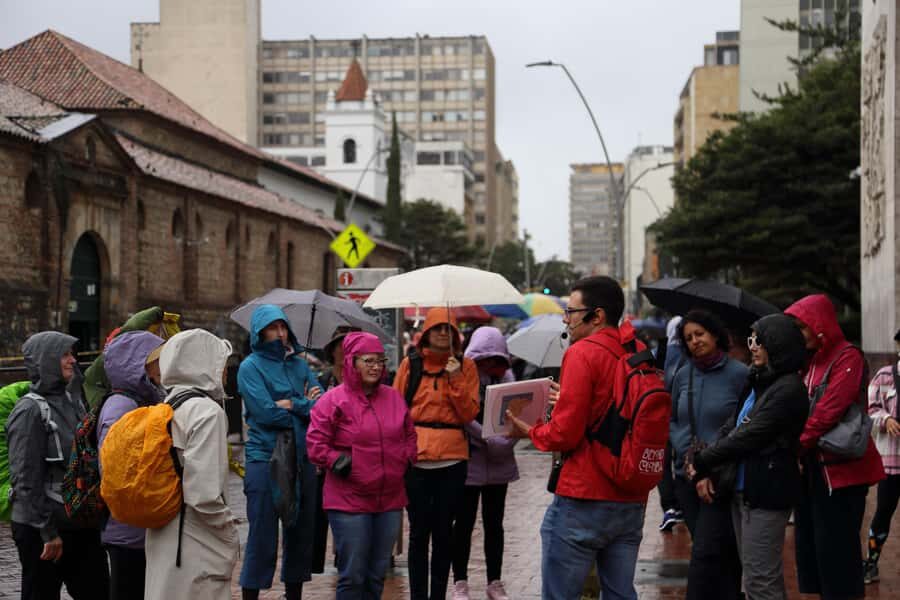
The tour is built like a chronological story. You move through key phases and then connect them to how later armed actors gained influence, especially when it came to the fight against drug trafficking.
Here’s the arc the tour covers, in plain language:
- The independence process
- The Bogotazo and the time of violence
- The military dictatorship
- The creation of guerrillas: FARC, ELN, M – 19
- The peace process (including a peace agreement signed with FARC)
- The current political situation
In between those topics, the guide ties things together through places in Bogotá’s historic center. Instead of learning this only from a textbook, you see how political change played out in the spaces where people gathered, argued, and built power.
This format is especially useful if you’re the type of traveler who likes to connect dots. You don’t just hear names. You get the “why this led to that” logic, plus a sense of how power struggles evolved.
Bogotazo 1948: why one riot can shift a country
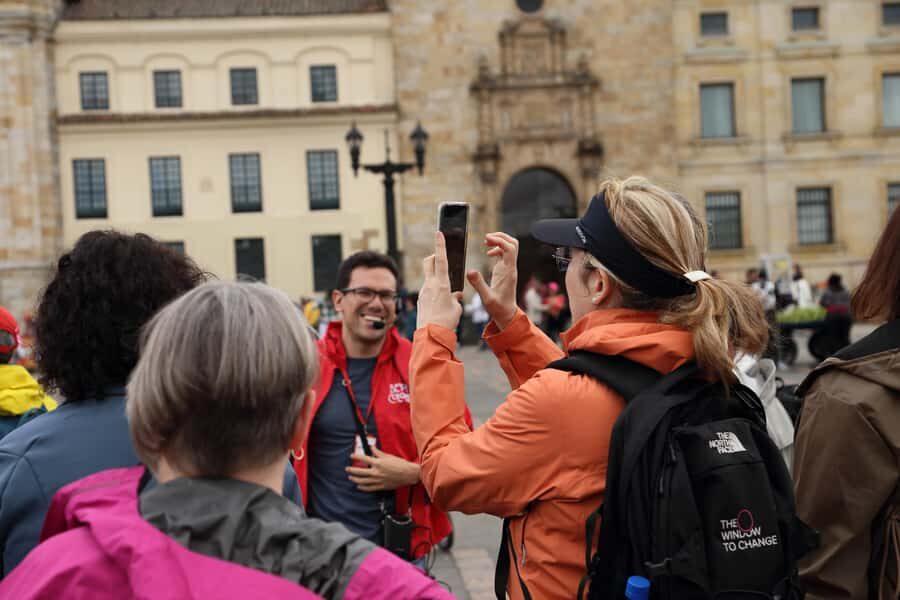
One of the tour’s headline moments is Bogotazo, the controversial riot of 1948. Even if you’ve read about it before, hearing it placed inside a broader storyline helps. The tour treats Bogotazo less like a standalone event and more like a pivot point that feeds into the wider time of violence.
What I like about this approach is that it trains your attention. You start looking for causes and consequences instead of only memorizing dates. And because this is a walking tour through the city’s historic center, it feels less abstract.
Practical tip: this is a topic where people have opinions. The tour’s stated promise is accurate and objective knowledge without taking sides. Still, go in expecting emotional weight. If you’re prone to shutting down when politics turns complicated, you’ll want to pace yourself and ask questions when you feel lost instead of waiting until the end.

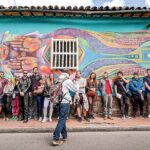
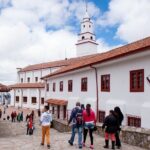
Violence Era origins and the power struggle theme
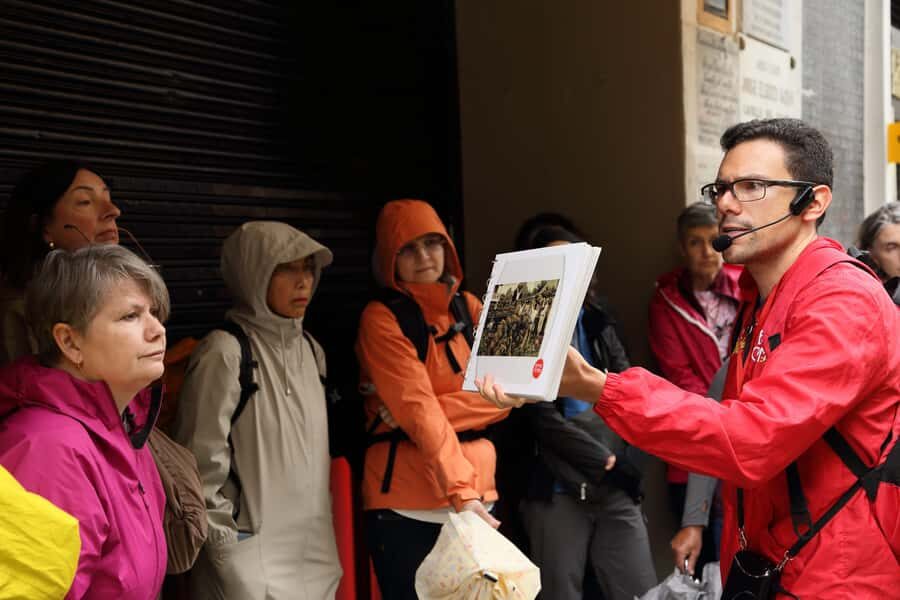
Another core theme is the origins of the so-called Colombian Violence Era. The tour frames this as something that didn’t appear out of nowhere. You learn how earlier supremacy struggles between Liberals and Conservatives set the stage for a deeper conflict cycle.
That “power struggle” lens is important because it changes how you interpret everything that comes afterward. Guerrillas, paramilitary groups, peace negotiations, and the fight against drug trafficking all become easier to understand when you can recognize the political engine behind the violence.
And yes, this is also where the guide’s no-sides promise matters most. When you’re dealing with the Liberals vs Conservatives story and the later armed players, it’s easy for tours to turn into propaganda. This one is explicitly designed to avoid that.
If you want a clear, structured explanation that keeps you from spiraling into misinformation, the way they organize the story helps.
Guerrillas and paramilitaries: fighting reasons explained
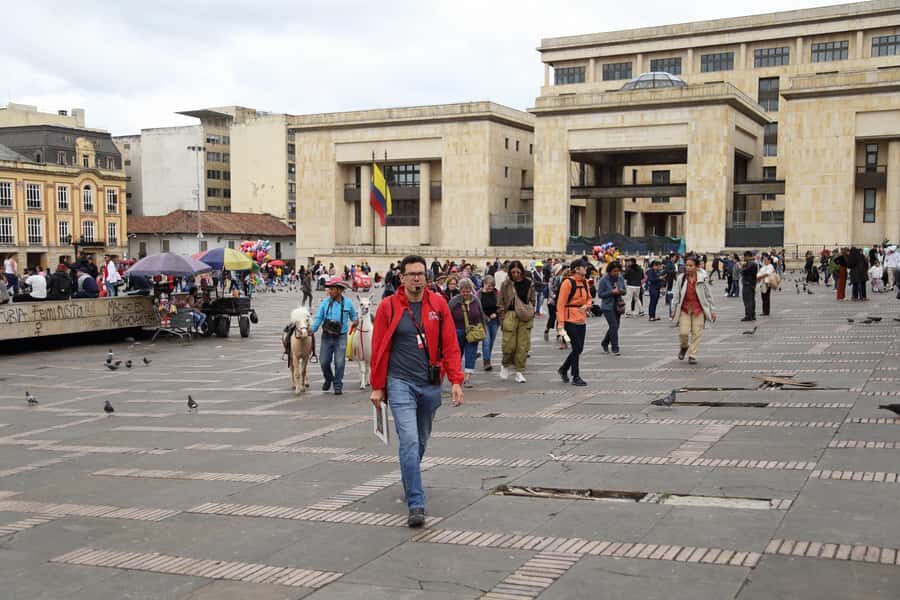
The tour doesn’t just list armed groups. It discusses the ongoing fighting reasons of current guerrillas and paramilitary groups. That’s one of the most useful parts for you as a visitor, because the modern conflict can feel like a wall of confusing labels.
Here’s how this benefits you: you walk away with a better ability to follow news and conversations without getting stuck at the “who are they” stage. Instead, you understand why different armed actors keep fighting and how that connects back to earlier political conflicts.
The tour also ties in Colombia’s drug trafficking reality. It covers Bogotá’s conflict history and the ties to drug cartels, then connects that to the fight against national and international drug trafficking. For many first-time visitors, that connection is exactly what fills the biggest knowledge gap.
One note: this is still a walking tour with a tight time window. So if you’re hoping to leave with a full written dossier on every group, you may want to treat it as an overview plus a starting point.
Peace agreement with FARC: what changed and what didn’t
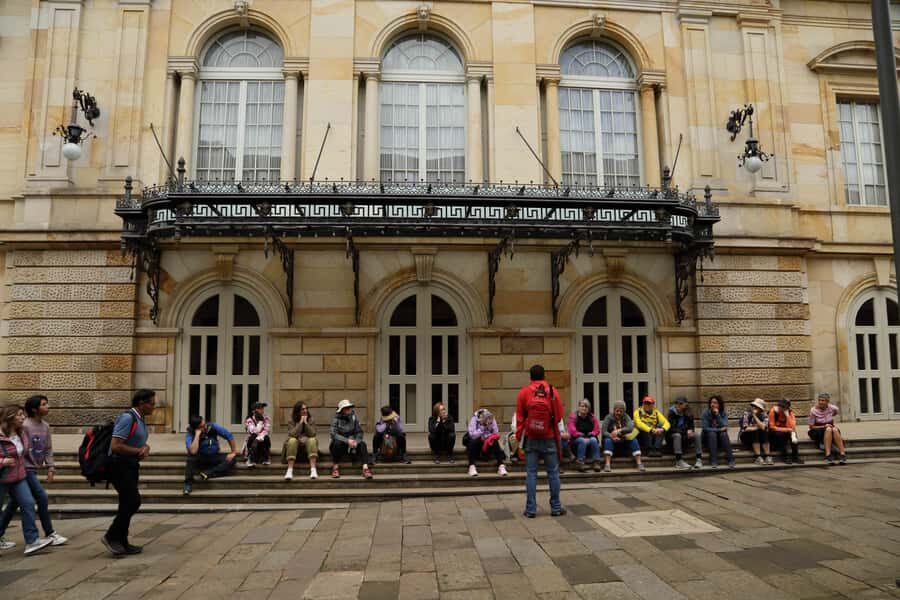
Peace with FARC is a featured topic, including the peace agreement signed with FARC. On this tour, the peace process isn’t treated as fairy dust that instantly ended everything. It’s treated as part of the longer arc of conflict and politics.
That framing is practical. You learn where the peace process fits inside the story rather than treating it as a separate “modern chapter.” It also helps you understand why people discuss peace so intensely in Colombia: because you’re not only talking about diplomacy, you’re talking about a country reshaping power after years of violence.
If you’re curious about the present-day political situation, this tour points you in that direction too. Just remember the earlier drawback: the amount of clarity and detail on the current context can vary by guide and by what questions you ask.
Where the guide makes or breaks it (and how to judge yours)
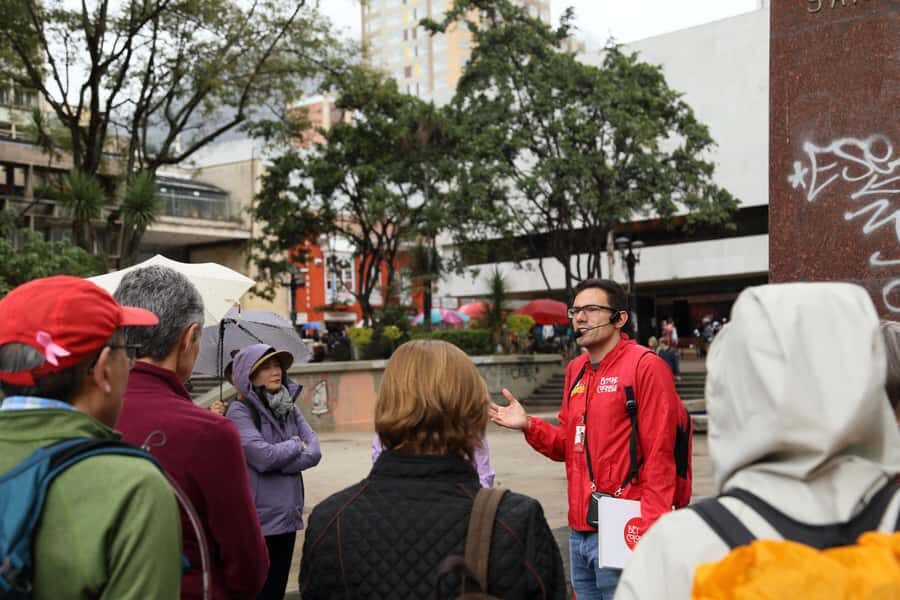
The guides matter a lot on a topic like this. From the experience feedback you can expect guides such as Lorenzo, Hector, Santi, and Daniel to be strong at explaining key connections and responding to questions. Some guides are described as including humor too, which is more than entertainment. It helps keep the group moving and thinking during heavy material.
Here’s how to tell early if your guide is a great fit for you:
- Do they give you a timeline that stays consistent from stop to stop?
- Are they willing to answer your questions directly instead of rushing past?
- Do they keep returning to the central theme—how political conflict connected to armed actors and drug trafficking?
If you want more current political context, don’t be shy. Ask a focused question early, like what specific pieces of today’s situation connect back to the conflict-era timeline they’re explaining. A good guide will adapt.
Walking 9 km without getting worn out
Logistics are the unglamorous part, and they matter here. You’ll walk about 9 km with rest stops built in, and the tour lasts around 3 hours (150 minutes).
What to bring is not optional for comfort:
- Comfortable shoes
- Water or your preferred hydration
- Hat and sunscreen
- Camera for photos
- A rainproof layer (the tour warns that you can’t control weather)
Also note what’s not allowed: smoking, and alcohol or drugs. You’ll be in crowded areas, so keep belongings close.
Weather gear detail: the tour asks you not to bring umbrellas or capes (and instead suggests a rainproof coat or umbrella). Translation: plan to stay dry without turning your outfit into a wind sail. If you have a compact rain jacket, you’ll be happiest.
One more practical note: the tour is described as wheelchair accessible, but it also says it’s not suitable for wheelchair users and people with mobility impairments. Because you’re walking roughly 9 km, you should assume the walking requirement is the main limiter and confirm directly with the provider if that applies to you.
What you’ll see in the historic center (without ticket stops)
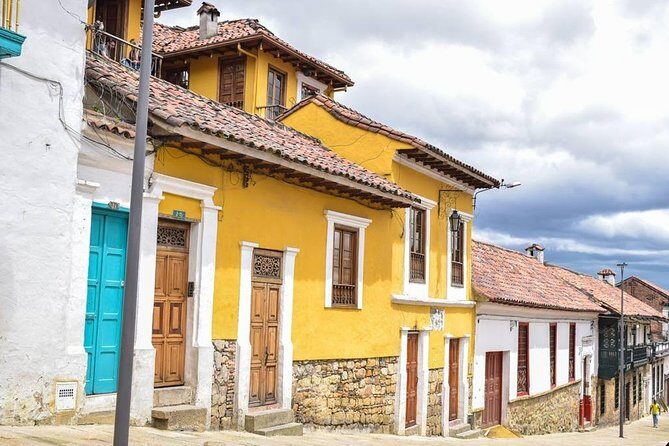
The tour includes sightseeing of essential places in Bogotá’s historic center, framed in the conflict’s history. You’re not just looking at buildings as pretty backdrops. You’re seeing them as context points—places where political events and tensions shaped public life over time.
The good news: there are no tickets or entrances planned where sudden extra charges apply. That keeps the focus on the guide and the story instead of turning it into an expensive add-on scavenger hunt.
The drawback is also part of the deal: because it’s a walking tour through historic-center streets, it can feel crowded in spots. If you’re sensitive to noise or tight spaces, bring some patience and let the guide handle the pace.
Is this tour right for you?
This is best for you if you:
- Want a structured overview of Colombia’s conflict history tied to Bogotá
- Learn best with a timeline and street-level storytelling
- Plan to spend time in the country long enough that news and headlines will matter to you
- Prefer an objective, no-sides approach on political topics
It’s less ideal if you:
- Need a very detailed, modern-politics briefing in every stop
- Can’t comfortably handle about 9 km of walking
- Are traveling with kids under 5 (the tour notes it’s not suitable for children under 5)
If you’re a solo traveler, it can be great. You’ll meet other people while the guide keeps the discussion moving and interactive.
Should you book this conflict-history walk?
I’d book it if you’re the type of traveler who wants to understand the real Colombia behind the headlines. At $13 for an English-language guide covering independence, Bogotazo (1948), military dictatorship, guerrillas like FARC/ELN/M – 19, a peace agreement with FARC, and today’s political situation, the value is strong—especially because there aren’t ticket stops or surprise fees.
Book it with two expectations: first, you’ll walk a lot. Second, the depth on current political context may vary. If you show up ready with one or two clear questions, you’ll get more out of your time.
FAQ
How long is the tour?
It lasts about 150 minutes, roughly 3 hours.
How much does it cost?
The price listed is $13 per person.
Where do I meet the guide?
Meet right in front of the Museo del Oro with Beyond Colombia’s red umbrellas.
Is the tour in English?
Yes, it’s an English-speaking tour guide.
What’s included in the price?
You get an English-speaking guide, accurate and objective Colombian history, and sightseeing of essential places in Bogotá’s historic center framed in conflict history. You also receive a wristband at the end for benefits and discounts with recommended partners, plus recommendations of materials to stay informed.
What is not included?
Drinks, food, souvenirs, transportation to and from your hotel, and tickets or entrances.
Do I need to buy tickets for any stops?
No tickets or entrances are included, and the tour says it won’t take you to places where sudden extra charges apply.
What should I bring?
Bring comfortable shoes, a hat, a camera, sunscreen, and water or your preferred form of hydration.
What isn’t allowed during the tour?
Smoking, and alcohol or drugs.
Can I cancel for a refund?
Yes. Free cancellation is available up to 24 hours in advance for a full refund.