REVIEW · BOGOTA
Bogotá: True Colombian Walking Tour + Local Snacks
Book on Viator →Operated by Walking tour bogota by (The True Colombian Experience) · Bookable on Viator
That first turn into La Candelaria is a quick culture hit. This walking tour strings together Bogotá’s big historic landmarks with real snack stops, and you’ll also learn how to play tejo at the end. I love the small-group feel (often up to 30) and the way guides explain what you’re seeing, not just where it is. One thing to consider: the pace can be brisk, and with English and Spanish running at the same time, it may feel like less time to linger.
My favorite part is the food and drink sampling. You’ll try local fruits at a market square, plus chocolate and coffee-style treats, and the tour often includes a traditional-style chicha drink and other local goodies. I also really like the smart route: it covers key squares, major churches, and the long pedestrian drag of Carrera 7, so you learn the city in a way that a map can’t do. The main drawback is timing: some people finish in closer to 2 and some in closer to 4, so plan your day with a buffer.
In This Review
- Key highlights you should know
- Start at The Cranky Croc Hostel and get oriented fast
- La Candelaria squares: Chorro de Quevedo to Plaza de Bolívar
- La Concordia market square: snack tasting that feels local
- Santuario Nuestra Señora del Carmen: the candy-cane church moment
- Catedral Primada de Bogotá: a first-class landmark, without the maze
- Carrera 7 and the coin trick: learning Bogotá by walking its longest street
- Eje Ambiental: the channeled river that splits old and new
- Casa Magola and tejo: the traditional game, explained and played
- Snacks and drinks: what you’re likely to sample
- Price and time: does $35.22 feel fair?
- Language setup: English and Spanish at the same time
- Pace and comfort: what to expect walking-wise
- Who should book this Bogotá walking tour?
- Should you book it?
- FAQ
- How long is the Bogotá walking tour?
- What does it cost?
- What snacks are included?
- Is lunch included?
- Where do I meet the group?
- Is the tour in English, Spanish, or both?
- Can I get a refund if my plans change?
Key highlights you should know
- La Candelaria on foot: you’ll connect old Bogotá neighborhoods to today’s city lines
- Bilingual guide format: English and Spanish can be handled in parallel on the same walk
- Local market snacks: fruits and other bites that taste like you’re actually there
- Iconic squares and churches: from Chorro de Quevedo to the Catedral Primada
- Tejo at Casa Magola: learn the traditional gunpowder game in a coffee stop setting
Start at The Cranky Croc Hostel and get oriented fast
The tour meets at The Cranky Croc Hostel in La Candelaria (Cl. 12d #3-56). This is a practical starting point because La Candelaria is the part of Bogotá where you can walk to a lot of sights, but it can still feel like a maze when you’re new. The guide helps you make sense of the route right away, with quick context so you’re not just collecting photos.
Another reason this first stop works well: it sets expectations. You’ll know what kind of stories you’re getting (culture, politics at key moments, and the city’s changing layers), and you’ll also hear how snack sampling will roll through the walk. If you’re the type who likes to ask questions as you go, this format tends to reward you.
Other Bogota food and gastronomy tours we've reviewed


La Candelaria squares: Chorro de Quevedo to Plaza de Bolívar
From there, you’ll head to Plazoleta Chorro de Quevedo, one of Bogotá’s oldest areas. This is a good early stop because it anchors the rest of the route. The guide can point out why this spot matters historically, and you get a feel for the old-town atmosphere before you move into the more official, government-centered squares.
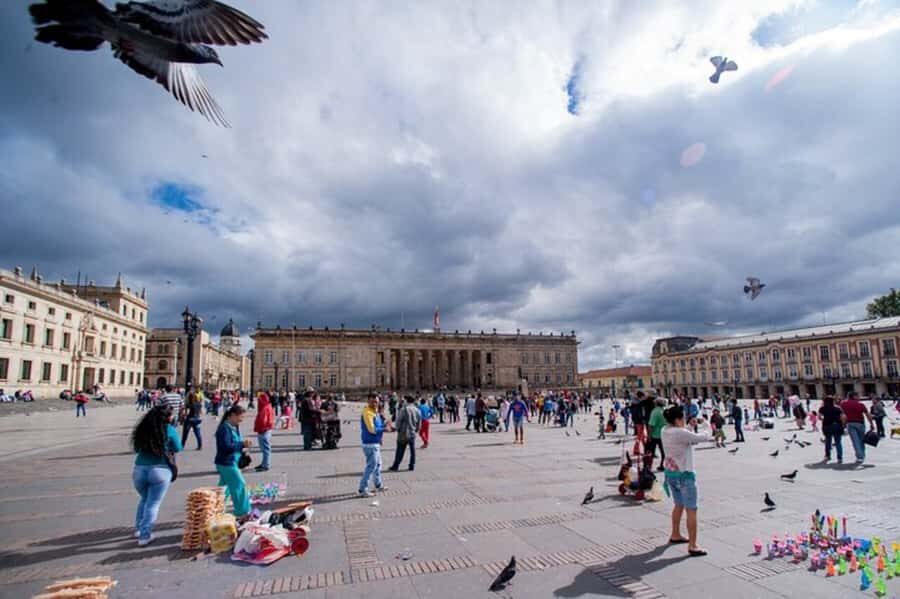
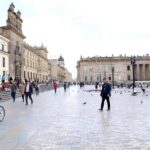
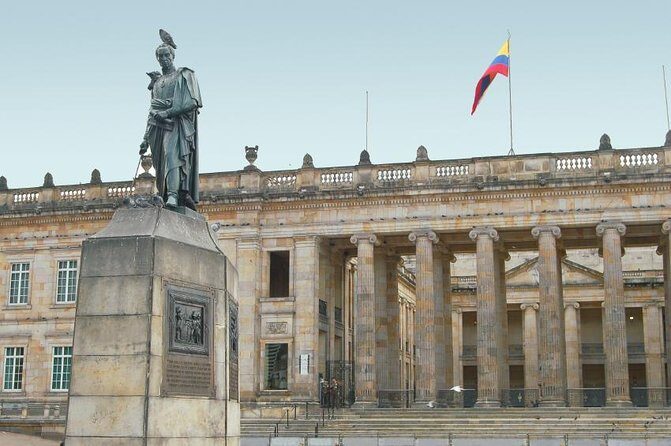
Next comes Plaza de Bolívar de Bogotá. This is the big central stage of Colombia’s political life, and the tour uses it for more than postcard scenery. You’ll learn the cultural and political context tied to the square and how Bogotá’s architecture changes around it. Practically, this is also where you learn how to read the city from a distance: what’s ceremonial, what’s civic, and what’s just everyday street life.
One small caution: because this is a walking tour with multiple stops and included tastings, the time at each square can be short. If you love street performers or want to linger for a perfect angle, you may have to do it quickly, or ask the guide if there’s time before moving on.
La Concordia market square: snack tasting that feels local
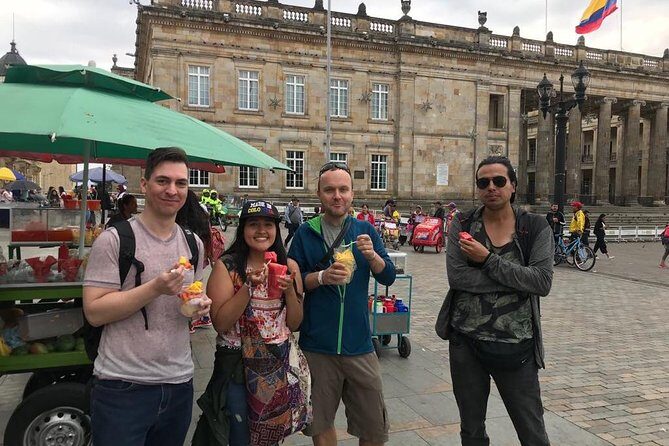
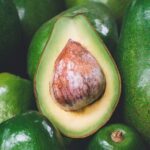
At District Market Square La Concordia, you’ll shift from monuments to regular food culture. You’ll taste local fruits here, and this is one of the most satisfying parts of the day because it’s the kind of stop you might not choose on your own. Even if you’re not a “food tour” person, you’ll probably enjoy this section because it’s simple: you’re walking through an actual market-style setting and trying what the locals snack on.
The best way to get value here is to go with curiosity, not expectations. Fruits and snacks can be familiar in name but different in taste and texture depending on what’s in season. If you’re adventurous, this is where you’ll get the biggest payoff.
Santuario Nuestra Señora del Carmen: the candy-cane church moment
Then you’ll pass by Santuario Nuestra Senora del Carmen, a newer Gothic-style church known for its look that some people describe as candy-cane-like. Even if you’re not religious, churches in Bogotá tell you something about style, ambition, and community identity. The guide’s job here is to point out what makes the building stand out and how the details connect to Colombian tastes and design.
What I like about this stop as a walking-tour segment is that it gives you a visual reset. After squares and market vibes, the church becomes a clear “look up and notice” moment. You’ll also get those quick architectural takeaways that help you spot patterns later in the city.
Catedral Primada de Bogotá: a first-class landmark, without the maze
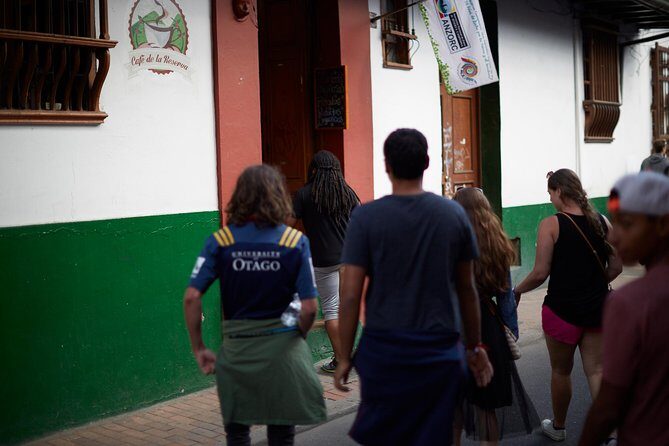
After that, you pass Catedral Primada de Bogotá, the country’s primary cathedral. This stop is useful for first-timers because it’s one of the most important religious landmarks in Colombia, and you’ll understand why it sits at the center of the story the moment you see it.
The practical value: you won’t have to guess what to pay attention to. Guides usually point out key features and explain how major Colombian religious sites fit into the broader narrative of Bogotá. Even if you only get a short look, it helps you avoid the common problem of sightseeing “blind,” where you recognize the building but don’t know what it represents.
Other walking tours we've reviewed in Bogota

Carrera 7 and the coin trick: learning Bogotá by walking its longest street
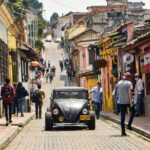
Next you’ll walk by Carrera 7, described as the longest pedestrian street in Latin America. This is where Bogotá starts to feel more like a lived-in city than a collection of historic points. The guide helps you notice the street’s role as a connector, not just an attraction.
You’ll also hear about a fun, specific city detail: in this city, there’s something tied to dropping in a coin that makes a mechanism move. That kind of story is exactly why I like guided walks. It’s playful, it’s memorable, and it turns a stretch of sidewalk into a small local legend you’ll remember later.
Eje Ambiental: the channeled river that splits old and new
Then comes Eje Ambiental, built around a channeled river that divides the city into older and newer parts. This stop helps you understand Bogotá as two things at once. You see the urban planning logic, and you start to grasp how the city grew and where different lifestyles took root.
If you like “why does the city look like this” questions, this is the section that answers them. Even with limited time, a guide can point you toward the big idea: Bogotá didn’t just expand randomly. It grew in ways that create visible boundaries.
Casa Magola and tejo: the traditional game, explained and played
To end, you head into the coffee spot Casa Magola Buen Día for the tejo game. This is the part many people remember because it’s interactive, not just observational.
Tejo is a traditional gunpowder-style game, and the best part of this stop is that the guide doesn’t just hand you rules. You learn how to play it, and you get your turn. Some people also mention that the tejo portion can feel short (it may be around 10 minutes), which is normal for a tour that still needs to cover a lot of ground. If you want extra practice time, treat this as the introduction, then look for more tejo opportunities later in your trip.
Why this ending works: tejo lands emotionally. You leave with a story you didn’t just read about. You felt the game and the local vibe.
Snacks and drinks: what you’re likely to sample
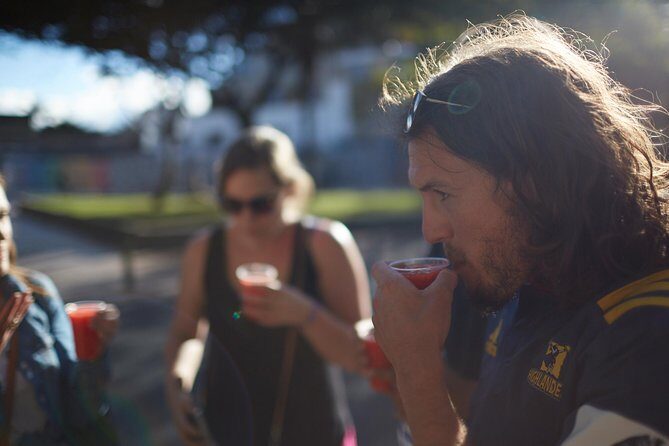
The tour includes snacks, and the route is built around sampling them in a way that matches the neighborhood. At the market stop, you get local fruits. Over the rest of the day, you’ll typically also try a mix that can include chocolate and coffee-style tastings.
Some guides also add traditional-style drinks. One example from past experiences is a chicha tasting, described as tasting like applesauce plus a kombucha-like tang. There can also be a hot chocolate stop with a surprise element, depending on what’s available that day.
A practical tip: even though snacks are included, don’t assume you’ll be stuffed for a full day. Your safest bet is to bring water and be ready for a snack-and-walk rhythm rather than a full meal rhythm. If you’re the type who gets hungry fast, you’ll be happier planning lunch later.
Price and time: does $35.22 feel fair?
At $35.22 per person for roughly 2 to 4 hours, this tour is strong value if you want three things at once: a guided introduction to La Candelaria, multiple snack tastings, and a hands-on tejo experience at the end. You’re not paying extra for paid admissions at stops (the day is structured as free-access sightseeing), and you’re getting the snack component bundled in.
The time range matters for decision-making. Some days run closer to 2–3 hours if the pace is quick and the group moves promptly. Other days stretch toward 4 hours, especially if there are closures to work around, heavier bilingual explanation, or slower group movement. If you’re scheduling dinner right after, leave time to reset.
Group size is another value factor. The tour can run with up to 30 people, and while that’s still manageable, your experience can change based on how many people are in the group that day. If you love a lot of personal attention, you might prefer a private option later in your trip. But if your priority is seeing the main sights and tasting local food, the group format can work great.
Language setup: English and Spanish at the same time
One unusual and important detail: this tour can run in English and Spanish at the same time. That can be great for mixed groups because nobody gets left out. It also means the guide may repeat key points more than once, or split explanations.
If you’re a strong Spanish speaker, you might enjoy hearing both versions of the stories. If you’re not, you might still be fine, but expect that the tour can feel slower or more structured than a single-language walk. Either way, it helps to arrive ready to pay attention and take notes quickly.
As for guides, you could be led by someone like Nat, Yaquelina, Yuly, Jina, Gina, Marianna, Nick, Yvonne, Julie, Lorenzo, Milena, or Natalia. Different personalities can change the tone. But the consistent theme is that guides tend to be friendly, answer questions, and make the walk feel connected to real Bogotá life.
Pace and comfort: what to expect walking-wise
This is a walking tour, so you’ll want walking shoes and a steady attitude about moving. The tour is listed as requiring moderate physical fitness, which usually means you should be comfortable on city sidewalks and staying on your feet for the duration.
The best way to enjoy it is to think of it like a guided stroll with frequent “stop and snack” interruptions, not a slow museum line. If you like long pauses at each viewpoint, you might find the day goes by fast. If you like structure and want to cover a lot of key areas efficiently, you’ll likely feel perfectly satisfied.
Who should book this Bogotá walking tour?
This tour is best for you if:
- You want a first-time friendly route through La Candelaria’s must-see places
- You like learning city context, not just reading plaque text
- You enjoy tasting local fruits, chocolate, and coffee-style treats
- You want an activity at the end, and tejo sounds like your kind of fun
It may not be ideal if:
- You’re very sensitive to brisk pacing and short stop times
- You need a strictly single-language tour without repetition
- You’re hoping for a long, sit-down meal day (lunch is not included)
Should you book it?
Yes, I think you should book it if you’re in Bogotá for a short window and want an efficient, local-feeling introduction. For the money, you get a lot of value: major central sights, market-style snacking, and a true hands-on cultural game at the end.
My only caution is simple: go into it with the right expectations. This isn’t a slow “linger and stare” walk. It’s a structured morning/afternoon flow built for movement, tastings, and key landmarks. If you want that style, you’ll come away with the kind of Bogotá memories that don’t fade as fast as photos.
FAQ
How long is the Bogotá walking tour?
It runs for about 2 to 4 hours.
What does it cost?
The price is $35.22 per person.
What snacks are included?
The tour includes snacks, including items like local fruits and other tastings you’ll stop for along the route.
Is lunch included?
No. Lunch is not included.
Where do I meet the group?
You start at The Cranky Croc Hostel, Cl. 12d #3-56, La Candelaria, Bogotá, Colombia.
Is the tour in English, Spanish, or both?
The tour can be in English and Spanish at the same time.
Can I get a refund if my plans change?
Yes, you can get a full refund with free cancellation up to 24 hours in advance of the experience start time.
If you’d like, tell me your travel dates and whether you prefer a faster or slower pace, and I’ll suggest the best time of day to slot this into your Bogotá plan.