REVIEW · BOGOTA
Zipaquirá Salt Cathedral Private Tour + Walking Tour
Book on Viator →Operated by GoBogotá · Bookable on Viator
A cathedral under a salt mine changes everything. This private Zipaquirá trip from Bogotá pairs the Catedral de Sal with city-center history stops, so you leave with more than photos. You’ll start underground in the mine, then shift to colonial plazas and landmarks above ground.
I love two things most: first, the way the visit inside the salt mine is structured around the Viacrucis stations and the giant salt cross in the Dome. Second, I like the mix of short, meaningful breaks—Plaza de la Independencia, Plaza de los Comuneros, and extra stops—plus a snack and free time for lunch in town.
One possible drawback: the day can feel more like careful transport plus audio (rather than constant live narration) if your guide leans heavily on the script. Also, if you’re not comfortable with Spanish, you’ll want to rely on the multilingual audioguides, since the live guide may be more expressive in Spanish.
In This Review
- Key things to know before you go
- Salt Cathedral Inside a Mine: What the experience is really like
- The Viacrucis route and the salt cross: how the guided flow works
- Zipaquirá walking tour: Plaza de la Independencia and Plaza de los Comuneros
- García Márquez in Zipaquirá: Casa del Nobel Cultural Center
- Tres Esquinas station: railway heritage with French neoclassical style
- Price and value: is $185 per person a good deal?
- Logistics that matter: time, transport, and how long the day feels
- Language, pace, and the one friction point I’d watch
- Who this day trip fits best
- Should you book this Zipaquirá Salt Cathedral Private Tour?
- FAQ
- How long is the Zipaquirá Salt Cathedral private tour?
- What’s included in the $185 per person price?
- Is lunch included?
- Do we visit the Salt Cathedral, and is admission included?
- Are there audioguides during the Salt Cathedral visit?
- Is this a private tour?
- How far in advance should I book?
- Does the tour require good weather?
- Are service animals allowed?
Key things to know before you go
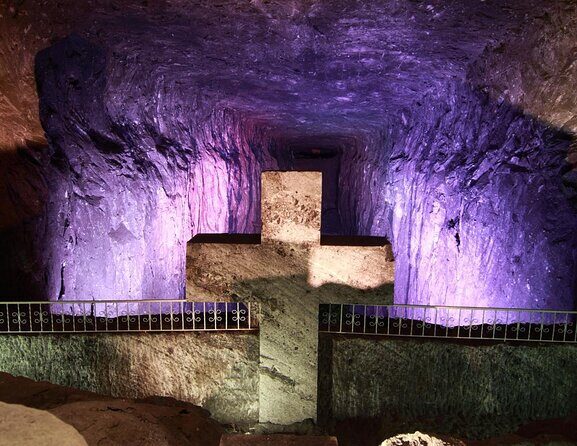
- Two layers of storytelling underground and above ground: Via Crucis scenes in salt, then plazas tied to independence-era figures.
- Audioguides are included in different languages inside the Salt Cathedral.
- García Márquez’s Zipaquirá connection: a school he attended, now the Casa del Nobel Cultural Center.
- Tres Esquinas station has real railway history: built in 1926 for the Savannah Railway and preserved as national heritage.
- Private group experience: only your group goes, with water, a typical Colombian snack stop, and medical insurance included.
Salt Cathedral Inside a Mine: What the experience is really like
The Salt Cathedral of Zipaquirá isn’t just a pretty underground attraction. It’s a working example of how artists, miners, and faith can share the same space without feeling forced. You enter a network of underground corridors and chambers created within an old salt mine exploited since pre-Columbian times. That sets the tone: this isn’t a modern theme park built on top of history. It’s history with a purpose.
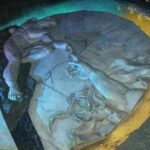
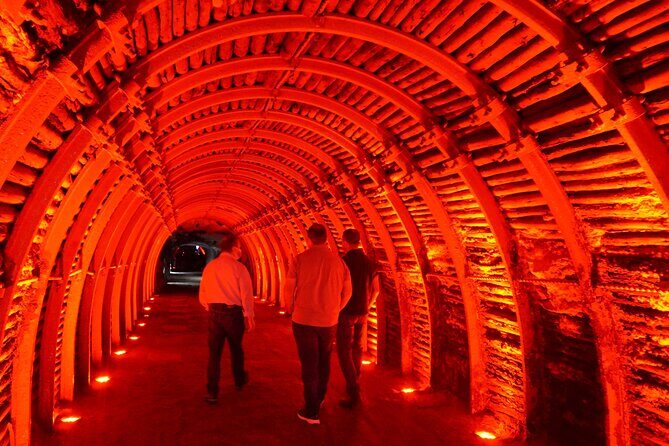
The tour typically begins at Viacrucis, an underground corridor with 14 stations sculpted from salt rock by miners. Each station is designed to reflect Jesus’ path to crucifixion. Even if you’re not deeply religious, the visual language is powerful because it’s made from the material around you. The salt itself becomes the medium.
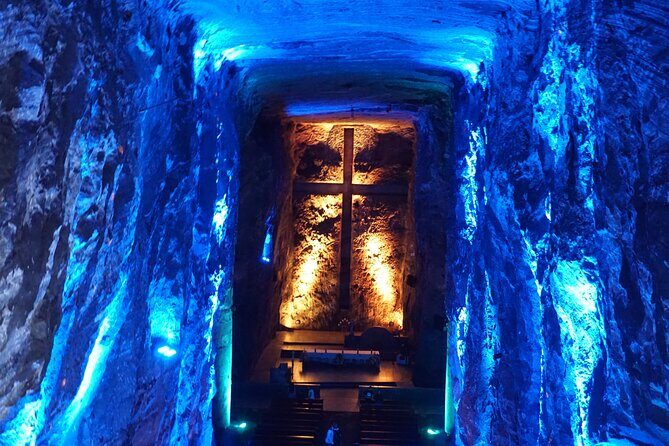
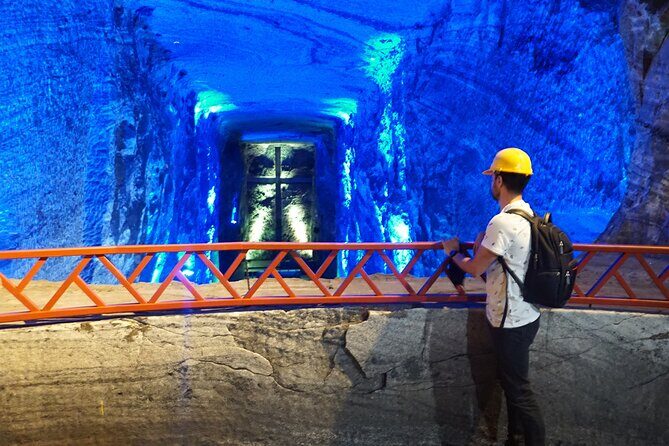
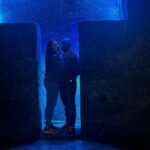
From there, you move toward the Dome, where you can admire the largest salt-cut cross in the world. The cathedral is recognized as the First Wonder of Colombia, and after seeing the scale in person, it’s easy to understand why. The cathedral’s size and the clarity of the symbolism are what make this stop feel like the centerpiece of the day.
Practical note: you’re underground for a major portion, so expect a different atmosphere than outside. It may feel cooler and quieter underground, which is part of the point.
Other Salt Cathedral of Zipaquira tours from Bogota

The Viacrucis route and the salt cross: how the guided flow works
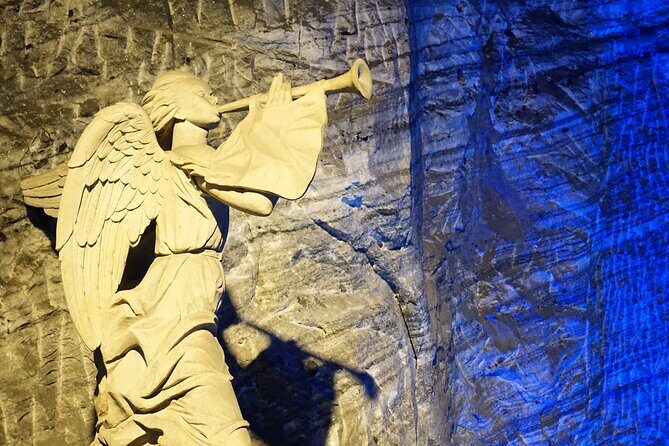
What I like about the Salt Cathedral portion is the “route logic.” You’re not wandering randomly and hoping you catch the story. The tour starts with a sequence—those 14 salt-station scenes—then builds to the Dome and the massive salt cross.
You’ll also have audioguides available in different languages during the cathedral visit. That matters because your experience changes a lot depending on whether your guide’s live narration matches your preferred language. In past trips with this type of format, I’ve seen people really value the audio devices when the guide is moving fast or speaking mostly Spanish.
Your guide option can also be a big difference maker. In the field, names like Ludwyn, Katy, Jose, Pierre, and Leonardo have been highlighted for providing thoughtful narration, story context, and a steady pace. If you opt into a local bilingual guide, you’re more likely to get the “why it matters” part, not just the “what you’re looking at.”
If your group wants flexibility, some tours have worked in a way that lets you explore portions on your own time after the main orientation. That can be a plus if you like to pause, look closer, and take in the details without feeling rushed.
Zipaquirá walking tour: Plaza de la Independencia and Plaza de los Comuneros
After the underground portion, the tour shifts gears in a good way. You trade enclosed corridors for open plazas, and you start seeing how Zipaquirá’s identity connects to Colombia’s independence story.
First stop is Plaza de la Independencia. This area used to be the old market square, and it was inaugurated in 2010 as a tribute to independence and the legacy of Antonio Nariño. Nariño’s statue is placed in the center holding a book representing the Human Rights of the people. That’s a specific detail you can’t really get from a quick photo stop, and it helps you understand why this square exists beyond decoration.
Then you’ll notice the flags around the plaza. They symbolize the countries that achieved their freedom under the leadership of Simon Bolívar. It’s a clever way to make the independence era feel broader than one leader or one year.
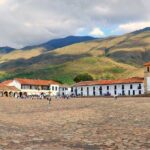
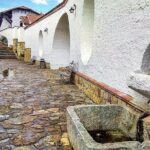
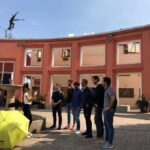
Next comes Plaza de los Comuneros, the heart of Zipaquirá and a key colonial square. The area is linked to the first revolution in America, which is also the reason for the name. Around the square you’ll see imposing colonial buildings such as the Diocesan Cathedral, Government House, and Municipal Palace. The streets are cobblestone, and the architecture is well-preserved enough that you can actually get a sense of what daily life looked like in older eras.
This is where the walking tour is at its best: short stops, but with enough context that you’re not just moving from one landmark to the next.
García Márquez in Zipaquirá: Casa del Nobel Cultural Center
One of the more memorable add-ons on this itinerary is the stop tied to Gabriel García Márquez. You’ll pass by the school where he studied as a boarder until his graduation in 1946. Today, the location is the Casa del Nobel Cultural Center, a space dedicated to art and the memory of the writer.
This is not a random celebrity stop. It gives the day trip a different angle—literature and memory instead of only mine-and-independence history. If you love books, you’ll likely enjoy how the itinerary turns the tour into a story you can carry in your head, not only a list of sights.
Even if you’re not a García Már Márquez fan, this stop helps break up the day so the cathedral isn’t all you remember. It also makes the walking tour feel purposeful, not just ornamental.
Tres Esquinas station: railway heritage with French neoclassical style
The tour also includes a stop at Tres Esquinas, a station built in 1926 during the presidency of General Pedro Nel Ospina. This station was fundamental for the Savannah Railway, which boosted commerce and industry in the region.
What you’ll likely appreciate is the architectural contrast. Tres Esquinas has an elegant neoclassical French design. It’s been declared national architectural heritage, and it still retains its historical essence as a witness to how Zipaquirá developed between the 1920s and 1970s.
This is a great stop for anyone who likes infrastructure stories. You get a sense of how transportation shaped the region’s economy, not just how political events shaped its identity. If the cathedral is about faith and art, Tres Esquinas adds another ingredient: industry and movement.
Other Bogota private city tours we've reviewed



Price and value: is $185 per person a good deal?

At $185 per person, this isn’t the cheapest option from Bogotá. It’s also not trying to be. It’s a private day trip that handles transport, timing, and key admissions in one package.
Here’s what helps justify the cost based on what’s included:
- Salt mine admission is covered by the tour (so you’re not piecing it together yourself).
- Audioguides in different languages are included inside the Salt Cathedral.
- A local, professional, bilingual guide is available if you choose that option.
- Water is provided, plus there’s a typical Colombian snack stop.
- Medical insurance is included for peace of mind.
- There’s free time for lunch at a recommended restaurant, even though lunch itself is not included.
From a value standpoint, the real question is whether you want a private guide plus a structured itinerary. If you’re the type who likes your day organized and your transportation handled, $185 starts to make sense. If you’d rather DIY Zipaquirá and pay only for the cathedral, your budget could go further that way.
Also consider timing. This experience is booked about 10 days in advance on average, which suggests strong demand. Getting the slot you want without scrambling is part of the value.
Logistics that matter: time, transport, and how long the day feels
The tour runs about 6 to 7 hours. That’s a half-day format that still gives you enough time for the mine visit and the walking portion in town.
One practical benefit: you don’t have to worry about how to get between Bogotá and Zipaquirá. Reviews highlight pickup from accommodations and flexible drop-offs, with examples like driver Luisa dropping guests in Candelaria afterward, depending on what the group wanted. A comfortable private car also helps you manage the longish drive without feeling like the transport is eating the day.
The cathedral part is the heavy lift, and the rest of the day works best if you’re comfortable with walking in town. The plaza stops are short (around 10 minutes each for Plaza de la Independencia and Plaza de los Comuneros), but the day still adds up.
One more logistics detail: the tour includes WiFi, though the “best connection” line is more playful than technical. Still, it’s a plus when you need a message, a map check, or a quick update before heading underground.
Language, pace, and the one friction point I’d watch
Language is the main variable. The cathedral provides audioguides in different languages, which is your safety net. In some experiences with guides who speak animated Spanish, English speakers have said they felt like the live guide was more enjoyable in Spanish than in their own language. The audio devices help close that gap, but you’ll still want to be ready to switch modes: listen live when you can, then rely on the devices when you need accuracy.
Pace is usually smooth in a private setting, but you should know what can shift. One review noted that the day felt more like transportation with audio and less like an active tour. That seems unusual, but it’s a reminder: if you want deeper commentary, you can ask for it early. Say what you want to learn—independence details, mine symbolism, or railway history—and adjust expectations.
A smaller friction point that came up: some people ran into reluctance from staff around restroom use after the walk. That’s not universal in the information you have, but it’s smart to plan ahead. If you’re sensitive about timing, use restrooms before starting the longer segments.
Who this day trip fits best
This is a strong match if you want:
- One anchor attraction (the Salt Cathedral) plus real walking stops in Zipaquirá.
- A structured day without the stress of coordinating transport and tickets.
- Context around independence history and culture, not only surface-level sightseeing.
If you’re traveling with kids or multiple generations, the private format helps. The cathedral is a major visual wow, while the plaza stops keep you from being stuck in one long environment.
If you care about literature, the Casa del Nobel Cultural Center stop adds a thoughtful layer beyond mine-and-museum basics. And if you like architecture and infrastructure history, Tres Esquinas brings that in.
Should you book this Zipaquirá Salt Cathedral Private Tour?
Yes, you should book if you want a guided, private half-day that combines the Salt Cathedral with a guided walking circuit of Zipaquirá’s key civic and cultural spots. The included cathedral ticket, multilingual audioguides, water/snack, WiFi, and medical insurance make the package feel more “handled” than a DIY day.
I’d think twice only if your main goal is to spend lots of time in the city center beyond brief plaza stops. This itinerary is built around the cathedral first, then quick context stops. Also, if language is a deal-breaker and you don’t want to use audioguides, choose the bilingual guide option carefully so you get the level of narration you want.
FAQ
How long is the Zipaquirá Salt Cathedral private tour?
The experience runs about 6 to 7 hours.
What’s included in the $185 per person price?
You get the Salt Cathedral ticket (paid by the tour), audioguides in different languages inside the cathedral, water, a typical Colombian snack stop, medical insurance, WiFi, and a souvenir. You also get free time for lunch at a recommended restaurant, though lunch itself is not included.
Is lunch included?
Lunch is not included. The tour includes free time to eat at a recommended restaurant.
Do we visit the Salt Cathedral, and is admission included?
Yes. You’ll visit the Catedral de Sal, and the admission ticket to the salt mine is included (paid by the tour).
Are there audioguides during the Salt Cathedral visit?
Yes. Audioguides in different languages are included.
Is this a private tour?
Yes. It’s private, so only your group participates.
How far in advance should I book?
On average, it’s booked about 10 days in advance.
Does the tour require good weather?
Yes. The experience requires good weather. If it’s canceled due to poor weather, you’ll be offered a different date or a full refund.
Are service animals allowed?
Yes, service animals are allowed.