REVIEW · BOGOTA
Graffiti Tour: a fascinating walk through a street art City
Book on Viator →Operated by Capital Graffiti Tours · Bookable on Viator
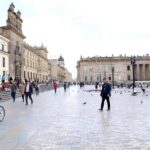
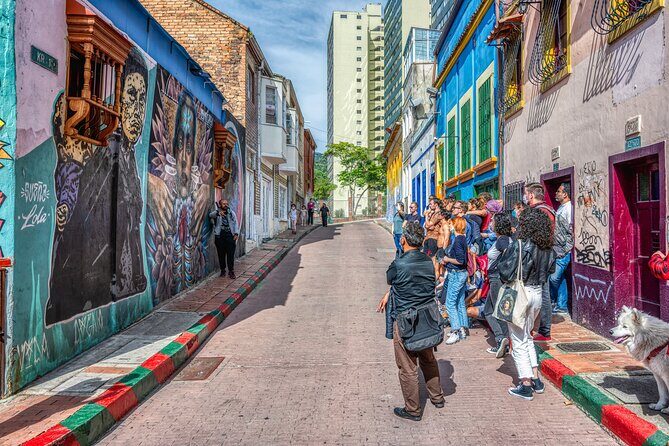
Bogotá street art tells stories you can read at street level. This is a 2.5-hour walk where murals, stencils, and tags connect to human rights, migration, music, and local politics. You’ll start in front of the Gold Museum and end at Ocio Gallery, where the art scene keeps going.
What I like most is the way the tour links the wall art to real social issues, not just style. I also like the hands-on feel at stops like the letter reading game at COOTRADIAN, where graffiti culture turns into an activity instead of just viewing. One thing to consider: there are lots of short stops and some walking, so it’s not recommended for travelers with mobility restrictions.
In This Review
- Key highlights worth your time
- Why Bogotá’s walls feel like real news
- Route and pacing: from Gold Museum to Ocio Gallery in 2 hours 30 minutes
- Stops 1–4: Gold Museum kickoff, human rights at the Procuraduría, migration, and salsa
- Stops 5–9: Torre Bakatá, a tattoo-gallery wall, and graffiti’s origins
- Stops 10–14: Political stencils, Amazon science, indigenous cosmovision, and Comuna 13
- Stops 15–17: Aerosol learning game, political murals on Cl 20, and the tallest wall at The Spot
- How to get more out of the tour (and not miss the point)
- Price and value: why $15 can feel like a deal in Bogotá
- Who should book this Bogotá graffiti walk?
- FAQ
- Is the graffiti tour in English?
- How long is the tour and what does the pace feel like?
- How much does it cost?
- Are any museum or site admissions included?
- What’s included and what’s not included?
- Where does the tour start and where does it end?
- Is this tour suitable if I have mobility restrictions?
- Should you book this Bogotá graffiti tour?
Key highlights worth your time
- 17 curated mural and stencil stops that cover human rights, migration, salsa culture, and political posters
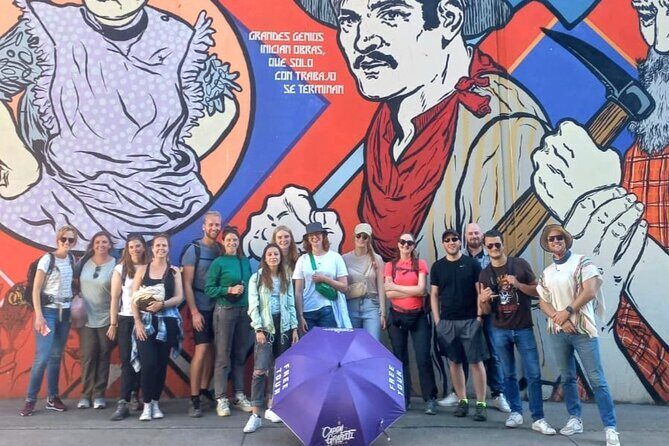
- English-speaking guides, with guides like Cami, Jay, and Marco known for connecting art to Colombian social issues
- Free entry tickets listed for stops, so your money stays focused on the tour itself
- A mix of techniques and themes, from aerosol vs vinyl ideas to stencil work about Venezuelan migrants
- Interactive moment at COOTRADIAN with an abstract letter reading game
- You finish inside a working gallery scene at Ocio Gallery with 100+ artists’ work
Why Bogotá’s walls feel like real news
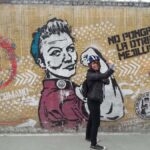
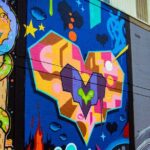
If you’ve ever wondered why street art can look like decoration and still hit hard, Bogotá answers that question fast. The walls here act like public bulletin boards—only the message arrives through paint, stencils, and symbolism instead of press releases.
On this tour, you’re not just looking at color. You’re watching how artists communicate fear, resilience, identity, and community pressure. That’s why the route keeps returning to the same theme: public art is how people talk when mainstream channels are too loud, too slow, or too controlled.
Other graffiti and street art tours in Bogota
Route and pacing: from Gold Museum to Ocio Gallery in 2 hours 30 minutes
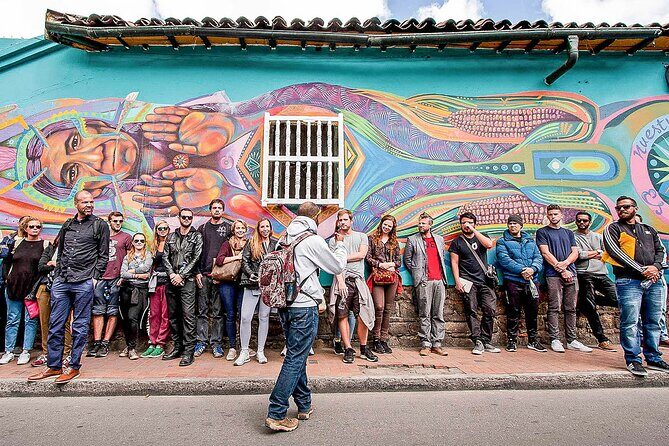
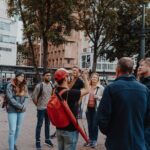
This is a focused, city-center walk. Plan for about 2 hours 30 minutes total, with a series of short viewing stops—many around 5 to 10 minutes each—so you get momentum without feeling rushed.
The tour starts at Capital Graffiti Tours, Cra. 6 #15-88, Santa Fé, Bogotá, in front of the Gold Museum area. It ends at Ocio Gallery, Cra. 5 #26b-26, Bogotá, where there are 100+ artists showing work. The group size max is 15 travelers, which helps the guide keep context clear and answer questions without losing the pace.
Price-wise, it’s $15 per person, and the big value is what’s included: experienced English-speaking guides plus multiple street art locations across the city. You also get admission tickets marked as free for the stops listed, so you’re not stacking extra costs as you go. Food isn’t included, so you’ll want to plan a snack or dinner around the tour time.
Stops 1–4: Gold Museum kickoff, human rights at the Procuraduría, migration, and salsa
The tour begins with a warm welcome right in the Gold Museum starting zone. Stop 1 is short and practical—around 10 minutes—but it sets the tone. You’ll get the objectives of the walk, which matters because the art later is political and symbolic. If you show up with no framing, the city can feel like a wall of noise.
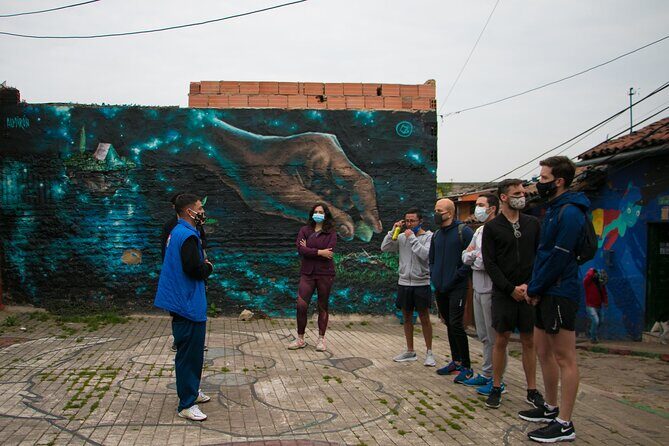
Stop 2 takes you to the Procuraduría General de la Nación, where an enormous mural focuses on collaboration with social leaders and human rights defenders. The theme is violence threatening their work tied to food sovereignty. The guide’s job here is key: this mural doesn’t just show faces, it uses metaphor and social communication-style symbolism to connect values and danger in one image. You’ll leave with a better sense of why street art in Bogotá can feel like a warning label.
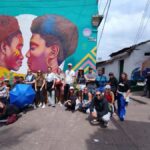
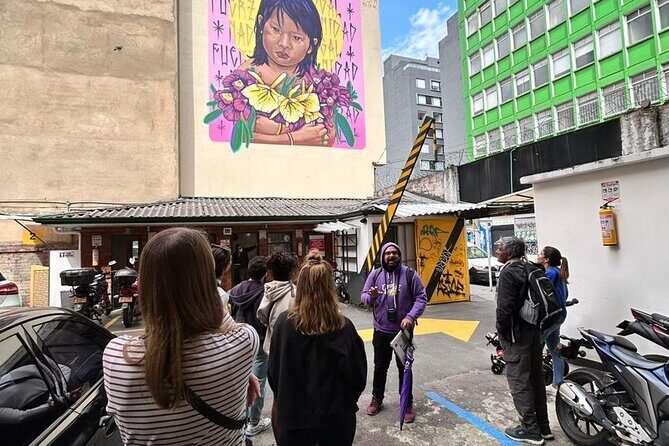
Stop 3 is a public-parking-area mural that tackles migration. You’ll see a portrait of an indigenous girl connected to a nomadic tribe, commissioned by the Peruvian embassy and created by two women painters from Bogotá and Lima. The timing of this stop is smart. After the human-rights mural, the migration artwork makes the city feel like one connected story rather than isolated murals.
Stop 4 slows the mood with music. At Casa Quiebra Canto (Quiebracanto), you’ll encounter two salsa culture murals. One references the song Lágrimas Negras, and the other shows a dance scene in a famous salsa nightclub. Even if salsa isn’t your thing, this section helps you understand that street art isn’t only protest. It also celebrates culture people use to survive.
Stops 5–9: Torre Bakatá, a tattoo-gallery wall, and graffiti’s origins
Stop 5 is your “how did they even pull that off?” moment: Torre Bakatá, described as the tallest illegal graffiti in Colombia. It’s on a semi-abandoned skyscraper, so the stop is quick—about 5 minutes—and what you’re really doing is looking from the street while the guide explains why this kind of wall is both art and disruption. Illegal doesn’t mean random. Here it’s tied to visibility and risk.
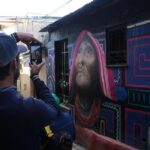
Stop 6 shifts to Viuda Negra Tattoo Gallery, where a mural places an indigenous person beneath the watchful gaze of a hooded woman. The stop explores technique contrast—aerosol vs vinyl—which gives you a real “how it’s made” angle instead of only “what it means.” If you’ve ever wondered why some murals look soft and misty while others have harder edges, this is the kind of clue that makes you see more on your next walk.
Stop 7 is a triple-mural stop at a public moto parking area. You’ll see:
- A work by a renowned artist from Spain who became prominent in the 1990s
- A prominent photographer who turns travel portraits into stencils
- A mural dealing with parenting and freedom, which lands more psychologically and introspectively than the earlier topics
That mix is one reason I’d recommend doing this tour early in your Bogotá stay. It teaches you how to read a wall across different moods, not just search for the loud political message.
Stop 8 is focused and direct: a stencil at LITOGRAFIA CH about Venezuelan migrants and their experiences. Stencils are perfect for this kind of communication because they’re repeatable, legible, and quick to reproduce. You’ll likely feel how the technique supports the subject.
Stop 9 at a motos smokes shop CENTRAL wall gets philosophical in a street-art way. The graffiti letters and characters push you to think about where graffiti comes from and how muralism differs from graffiti. The guide frames it as a historical chain that moves from cave art to public space art. It’s a short stop—about 5 minutes—but it changes how you interpret the next images. Suddenly the walls feel like part of a long visual conversation.
Stops 10–14: Political stencils, Amazon science, indigenous cosmovision, and Comuna 13
Stop 10 at Torre Ventto turns your attention to current social issues through political posters and stencils. Stencils here function like messaging: you can often spot them fast, and the guide helps you catch the point behind the urgency. This stop is also a nice reset if you’ve been processing heavy themes at earlier locations.
Stop 11 is at Alianza Francesa Bogotá and connects art with science and environment. The mural raises awareness about threats to the Amazon rainforest. This is one of those stops where the meaning isn’t only Colombia-specific—it’s global pressure delivered through local public art. It also helps you see that Bogotá street art isn’t trapped in one category like protest only.
Stop 12 at Superdorado de Aves pays tribute to indigenous cosmovision and cultural heritage. The purpose here isn’t to treat indigenous culture as background decoration. It’s a reminder that worldview can be the subject of public art, not just a theme.
Stop 13 is where the tour becomes emotionally heavy again, but in an informed way. At Parqueadero Público la 3, you’ll see a mural about Comuna 13 and Operation Orion. It’s based on powerful photographs by journalists and depicts community resilience in the face of false positives. This stop shows you why public art can become a living archive—especially when people want the truth to stay visible.
Stop 14 finishes the mid-to-late stretch at Cafetería La Ventantia with a stencil about the last indigenous leader of the Hitnu culture. It highlights tension between development and cultural preservation. This is a fitting closer for the “identity and survival” cluster of the walk, because it brings the spotlight to what’s at risk when infrastructure grows faster than respect.
Other walking tours we've reviewed in Bogota
Stops 15–17: Aerosol learning game, political murals on Cl 20, and the tallest wall at The Spot
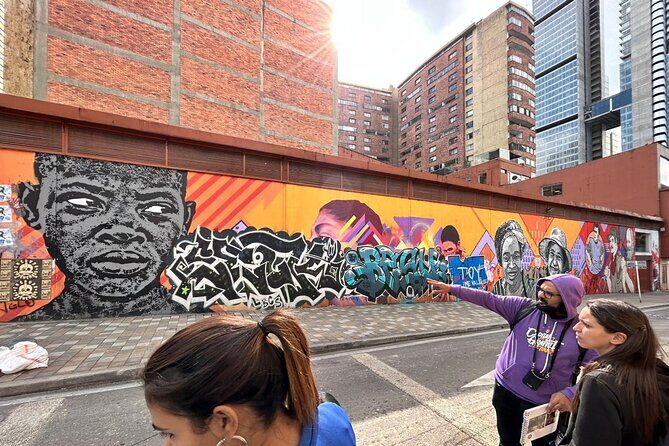
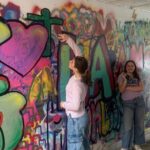
Stop 15 at COOTRADIAN breaks the usual rhythm. Instead of only looking, you play an abstract-letter reading game made from letters created by famous graffiti writers. The idea is to make aerosol art workshops feel accessible—something for real people, not just street legends. If you like learning through doing, this is the moment that turns the tour into a memory instead of a slideshow.
Stop 16 at Cl 20 #430 brings you four renowned political artists from Bogotá, each contributing murals focused on the foundations of society and social struggles. The value here is perspective: the guide’s framing helps you see how different artists approach the same idea of social pressure—some use symbolism, some use direct imagery, and some use structure.
Stop 17 at The Spot Bogotá Centro is described as the tallest wall in the country. The mural covers diversity and asks you to reflect on a better future tied to sustainable social development and the role of sustainable tourism. It’s a strong landing point because it gives your earlier observations somewhere to go: from pain and conflict toward choices about how societies should move.
Then you end at Ocio Gallery, with more than 100 artists’ work to continue the story. Even if you don’t buy anything, you get a sense of how this scene fits together beyond murals on the street.
How to get more out of the tour (and not miss the point)
This tour works best when you treat it like a guided reading of a city. Keep your eyes open for repeated symbols and for technique cues. For example, when you hit the aerosol vs vinyl discussion at the tattoo-gallery mural, you’ll likely start noticing texture differences across other walls later in the walk.
A few practical tips:
- Wear comfortable shoes. Stops are short, but the route still adds up in walking.
- Bring water. Food isn’t included, and Bogotá afternoons can be draining.
- Take photos, but also listen. The meaning is often in the context the guide gives between stops.
- Ask about the social angle. Guides like Jay, Cami/Camilo, and Marco are praised for tying murals to Colombian politics and social conditions, not just art style. If your guide offers that link, grab it.
Also, note the tour is designed for most travelers and is not recommended for mobility restrictions. If you have limited walking ability, this route may feel long even though the stops are brief.
Price and value: why $15 can feel like a deal in Bogotá
At $15 per person for roughly 2.5 hours with an English-speaking guide, the value is mainly in what you avoid: confusion. Bogotá has a lot of street art. Without someone to point out technique and social meaning, you can end up taking photos of pretty walls and missing the message.
This tour includes guided interpretation across a wide set of themes—human rights threats, migration stories, salsa culture, indigenous heritage, and political operations connected to Comuna 13. That range matters. You’re not paying for one mural. You’re paying for a guided system for understanding many.
The other value boost is that the route includes stops with admission tickets marked as free, which reduces surprise costs. Food isn’t included, but that’s common on walking tours. Bring your own snack plan and you’re set.
Who should book this Bogotá graffiti walk?
Book this if you:
- Want your first Bogotá street art experience to feel structured and meaningful
- Like politics, social issues, and the way art shows lived reality
- Enjoy learning how techniques like stencils and aerosol effects change the message
- Want an English-speaking guide with real context, including guides such as Cami/Camilo, Jay, and Marco (Marco has a sociology background noted in one guide story)
Consider skipping if you:
- Need a low-walking, low-stairs plan due to mobility limits
- Prefer only art-for-art’s-sake pieces with no political framing
FAQ
Is the graffiti tour in English?
Yes. The experience includes English-speaking guides.
How long is the tour and what does the pace feel like?
It runs about 2 hours 30 minutes. The itinerary uses many short stops, often around 5 to 10 minutes, so you keep moving while still getting time to look.
How much does it cost?
The price is $15.00 per person.
Are any museum or site admissions included?
The tour lists admission ticket free for the stops where admission applies, so you shouldn’t need to pay extra entry fees at those specific points.
What’s included and what’s not included?
Included: experienced English-speaking guides and exploration of multiple street art and graffiti locations. Not included: food and tips.
Where does the tour start and where does it end?
Start: Capital Graffiti Tours, Cra. 6 #15-88, Santa Fé, Bogotá.
End: Ocio Gallery, Cra. 5 #26b-26, Bogotá.
Is this tour suitable if I have mobility restrictions?
It’s not recommended for travelers with mobility restrictions.
Should you book this Bogotá graffiti tour?
If you’re in Bogotá and you want street art that means something, I’d book this. The route is packed with murals and stencils tied to migration, human rights, indigenous culture, salsa, and major political events like Operation Orion. The price is low for a 2.5-hour guided walk, and the ending at Ocio Gallery helps you keep the momentum into the city’s active art scene.
Just go in expecting a city walk with some distance and short stops—not a slow museum-style stroll. If that fits your style, you’ll leave with a sharper way to read Bogotá’s walls the rest of your trip.