REVIEW · BOGOTA
Bogota + Monserrate Private City Tour, Museums, Candelaria.
Book on Viator →Operated by Nómadas Colombia Travel · Bookable on Viator
Bogotá from above, then straight into its heart. This private tour strings together Monserrate views with museums and the classic colonial streets of La Candelaria.
I love the private door-to-door comfort and pacing, especially with an expert guide in your language. I also love how the day uses Monserrate as your “orientation moment,” then follows with the sights that explain the city below.
One possible drawback: it’s a lot of moving. Monserrate is over 3000 m, and the historic center walks and plazas mean you’ll want comfy shoes and a steady rhythm.
In This Review
- The Highlights You’ll Really Feel in This Bogotá Day
- Entering Monserrate: Your Quick Orientation to Bogotá
- La Candelaria: Walking the Old Bogotá Without Getting Lost
- Emerald Museum: A Short Stop That Changes How You See Colombia
- The Botero Museum and the Banco de la República Stops
- Plaza de Bolívar: Where Bogotá Shows Its Power (and Its Beauty)
- Nariño’s House and the Gabriel García Márquez Literary Stop
- How the “Gastronomic Experience” Fits In (and What to Watch)
- Private Guides Like Camilo, Daniel, Beatriz, and Sergio Make It Click
- Price and Value: Is $59.13 a Good Deal?
- Who This Tour Suits Best
- Should You Book This Bogotá + Monserrate Private Tour?
- FAQ
- How long is the Bogota + Monserrate private city tour?
- What’s included in the tour price?
- Are the museums always open?
- Does the tour include Monserrate?
- Is this tour private?
- Is breakfast or lunch included?
The Highlights You’ll Really Feel in This Bogotá Day
- Monserrate at 3000+ meters: cable car or funicular up for the clearest city view, plus the Monserrate Basilica area.
- La Candelaria on foot: a compact, historic neighborhood walk that makes the center feel human-sized.
- Two museums with different purposes: the Emerald museum for Colombia’s stones and the Banco de la República/Botero museum for art context.
- Plazas that connect eras: Chorro del Quevedo’s tradition-meets-modern vibe and Plaza de Bolívar’s official architecture.
- Historic stops beyond the postcard: including a literary homage tied to Gabriel García Márquez and the house of Nariño near the presidential zone.
Entering Monserrate: Your Quick Orientation to Bogotá
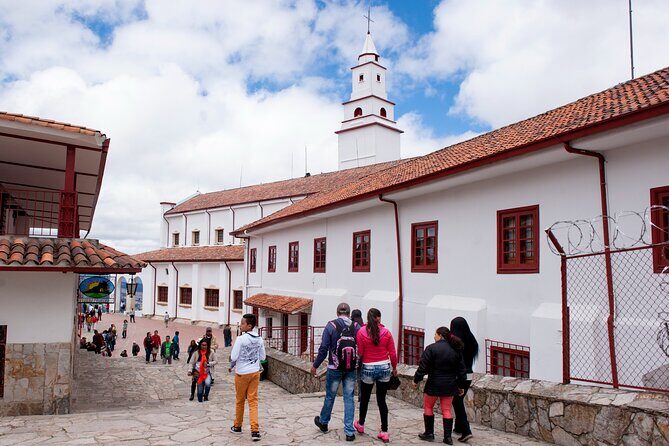
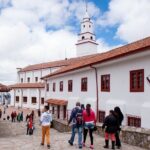
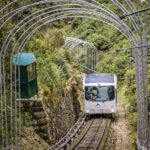
If you only have one day, Monserrate is the smart start. You ride up by cable car or funicular, then you get a wide look over Bogotá—simple, dramatic, and instantly useful for the rest of the afternoon.
The altitude matters. At more than 3000 m, even a short walk can feel like it’s asking for an extra page of effort. I’d plan for slower steps, light layers, and hydration, because Bogotá’s weather can swing from bright sun at street level to cooler air higher up.
Here’s the practical payoff: Monserrate doesn’t just give you a view. It helps you later understand where neighborhoods sit, how the city spreads, and why certain streets and buildings feel so central when you finally walk them.
Timing tip: Monserrate is popular, especially around mass and weekends. If you’re traveling on a day with heavy crowds, it’s worth asking your guide how they’re planning the best route and timing so you’re not trapped in a long wait.
Other La Candelaria walking tours we've reviewed in Bogota

La Candelaria: Walking the Old Bogotá Without Getting Lost
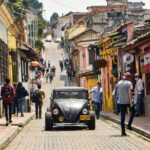
From Monserrate, the tour shifts to Barrio La Candelaria, one of Bogotá’s most historic neighborhoods. This part works because it’s guided on foot. You’re not just seeing buildings; you’re getting the thread that connects street corners, architecture, and the city’s story.
La Candelaria is also where Bogotá starts to feel more like a living place than a checklist. The pace is usually relaxed, and the guide helps you notice the small stuff: street scale, how people move through the neighborhood, and how older structures shaped today’s streets.
You’ll also hit Plaza del Chorro del Quevedo, a meeting point where tradition and innovation share the same space. That’s a useful stop if you want to understand Bogotá today, not just “then.” The square is famous for keeping traditional constructions while still hosting younger, creative energy.
Another meaningful change of scenery comes near the center of power. The tour runs through the heart of the old city: the area around where official life and historic neighborhoods overlap. This is where you’ll start feeling the contrast between Colombia’s public institutions and the personal stories you picked up in La Candelaria.
Emerald Museum: A Short Stop That Changes How You See Colombia
Next comes the Museo Internacional de la Esmeralda. This is not a generic museum stop. The focus is on stones and nature—especially the “green world” side of emeralds—and it gives you a different angle on regional beauty.
A key detail for planning: this museum is closed Sundays and holidays. If your tour date falls on one of those days, you’ll want your guide to confirm what replaces it or how your schedule adjusts.
Why this stop is valuable: it breaks the pattern of only seeing colonial streets and classic art. You get something tactile and visual—material culture and nature tied together. Even if you’re not shopping for gems, the museum helps you understand why this region’s stones have made such a lasting impression.
Also, the time slot is compact (about 45 minutes), which makes it easier to fit into a busy day without burning out. You’ll appreciate that on a tour that already includes altitude and multiple outdoor blocks.
The Botero Museum and the Banco de la República Stops
The tour also includes the Museos del Banco de la República, named in honor of Fernando Botero. In practice, this is the kind of museum stop that works well for first-timers, because it gives cultural context in a short window.
This is where the city’s taste and storytelling show up beyond street-level architecture. The Banco collection areas help connect Colombia’s artistic life with what you’re walking through outside.
Again, planning matters: this museum is closed Tuesdays. If you’re visiting on a Tuesday, you’ll want to confirm that your day still includes a museum stop that matches the timing.
From the way guides describe the visit on tours like this, the goal is not to make you a museum expert. It’s to give you enough context to look at Bogotá with better eyes afterward—so Plaza de Bolívar doesn’t just look impressive, it also feels meaningful.
Plaza de Bolívar: Where Bogotá Shows Its Power (and Its Beauty)
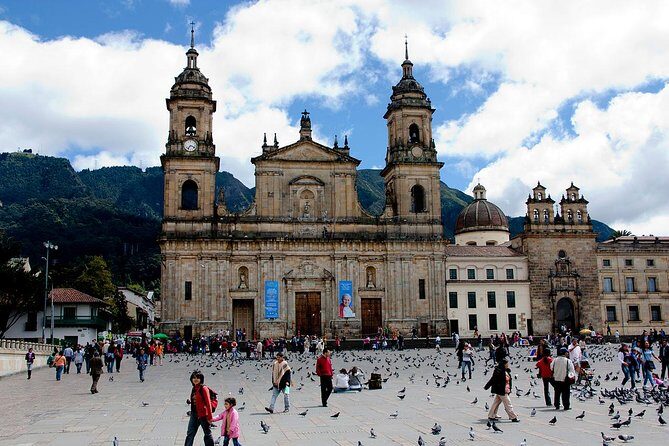
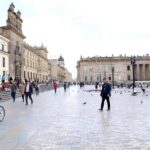
Then you arrive at Plaza de Bolívar, one of the most important squares in the city and country. The surrounding buildings do most of the talking, and the guide helps you see the design logic: official architecture, long lines of history, and a feel for how public life formed here.
This stop is surrounded by major landmarks, including the Presidential Palace, the Mayor’s House, the Palace of Justice, and the Primate Cathedral. It’s one of those places where photos look good, but a guide makes the difference because you start understanding why the layout matters.
If you’re the type who likes structure—streets making sense, buildings having a reason—this is your payoff. You get a clear mental model of the city’s core, and you can connect it back to what you saw earlier in La Candelaria.
Also, since this is about 45 minutes, it’s enough time to walk the perimeter without turning the square into a long slog. That’s important on a day tour where you’ll have already spent time at altitude.
Other Monserrate tours and tickets we've reviewed in Bogota


Nariño’s House and the Gabriel García Márquez Literary Stop
The tour doesn’t only hit government buildings and traditional squares. It also includes smaller historic moments that add texture.
You’ll learn about the house of Nariño, a historic place close to the presidential house. That proximity is useful. It shows how power and politics weren’t distant concepts in Bogotá’s past—they were tied directly to the same central zone you’re standing in.
There’s also a literary stop honoring Gabriel García Márquez. The exact point is presented as a well-known place linked to Colombian literature. Even without a long museum detour, it adds a layer most city tours skip: the cultural side of Bogotá, where ideas and writing sit alongside architecture and politics.
How the “Gastronomic Experience” Fits In (and What to Watch)
This tour includes a gastronomic experience, but the exact form can vary depending on the day and what’s open. That’s normal in real life, because Bogotá is a working city with changing schedules.
The best approach for you: treat food as part of the itinerary flow, not a guarantee that one specific place will be perfect no matter what. Some guides build in a meal or tasting that fits the neighborhood theme, and you can end up with standout local flavors in the mix.
Still, here’s the consideration: if a planned snack option is closed, you may need to speak up for a reasonable alternative, like switching the place or adjusting the timing. You’ll usually be fine with a flexible guide, but it’s smart to have that expectation.
My practical advice: bring a little patience for the “human logistics” of a busy center. If it’s hot, ask early for a water break. If you’re sensitive to walking time, ask whether food can be timed between stops instead of after.
Private Guides Like Camilo, Daniel, Beatriz, and Sergio Make It Click
What makes this tour feel worth it is the way the guide connects dots. On these private tours, guides such as Camilo, Daniel, Beatriz, and Sergio have a consistent pattern: they give you the story behind the streets and buildings, then they adjust to your group.
You’ll notice it most with crowd management. At Monserrate, a good guide helps you handle the climb and descent calmly, and they keep the day moving without turning it into a sprint.
Another plus: private tours mean you’re not stuck with the slowest or fastest person. That matters on a day with museums, plazas, and altitude. You can ask for an extra photo moment, or you can skip a side view if you’ve already got what you came for.
If you care about photography, you’ll probably also appreciate the way the guide times viewpoints and angles. Several guides on tours like this are known for helping people get good shots without spending forever in one spot.
Price and Value: Is $59.13 a Good Deal?
At about $59.13 per person for roughly 6 hours 15 minutes, the value depends on what you want from the day.
Here’s the best argument for the price: you’re getting private transportation round trip to your hotel, an expert guide in your language, plus museum entries. That’s not just “someone talks to you.” It’s time saved in a city where traffic and routing can eat your day.
Admissions included (as listed) are:
- Museo Internacional de la Esmeralda (with closure on Sundays and holidays)
- Museos del Banco de la República / Botero museum (closed Tuesdays)
- Monserrate general entrance if you choose the option with Monserrate
So you’re not paying extra for every single stop. You’re paying for structure, guidance, and logistics, which is exactly what a first-day itinerary needs.
Where value can fall apart is when you’re expecting long food breaks or extra add-ons that aren’t part of the listed inclusions. Lunch isn’t listed as included, and additional purchases are on you. If you treat this as a highlights tour with a built-in food experience rather than a full restaurant day, it tends to match expectations.
Who This Tour Suits Best
This is a strong fit if:
- You’re seeing Bogotá for the first time and want the core landmarks plus context.
- You’re short on time and want a guided route that avoids guesswork.
- You prefer private pacing over group rushing.
It may be less ideal if:
- You dislike altitude and prefer long museum time over hilltop viewpoints.
- You hate walking on cobblestones and through plazas.
The good news: because it’s private, you can ask for small adjustments. Many guides on this route are used to balancing sightseeing with comfort, especially for families and solo travelers who want to keep it manageable.
Should You Book This Bogotá + Monserrate Private Tour?
If you want a one-day way to understand Bogotá, I’d say yes—especially because it pairs Monserrate with La Candelaria and then locks in the big center stops at Plaza de Bolívar. The museum choices also help you see the city through more than just architecture.
Book it if you can align your date with museum hours. Remember: the Emerald museum is closed Sundays and holidays, and the Botero/Banco museum is closed Tuesdays.
I’d also book it if you’ll appreciate a guide who handles the flow—altitude morning energy, then walking through neighborhoods and squares without turning it into chaos.
If you’re traveling on one of those museum-closure days or you’re very sensitive to walking, ask questions before you pay so you know exactly how your day will adjust.
If you want one planned day that’s built for first-timers, this one is a solid bet.
FAQ
How long is the Bogota + Monserrate private city tour?
It runs about 6 hours 15 minutes.
What’s included in the tour price?
Included are private round-trip transportation to your hotel, an expert guide in your chosen language, a gastronomic experience, entrance to the International Emerald Museum, the Candelaria tour, the historic center, Bolivar Square, and Botero Museum (as listed). Monserrate general entrance is included if you choose the option with Monserrate.
Are the museums always open?
No. The International Emerald Museum is closed Sundays and holidays. The Botero Museum (Museos del Banco de la República) is closed Tuesdays.
Does the tour include Monserrate?
It includes Monserrate entrance if you select the option with Monserrate. Getting up and down is done by cable car or funicular.
Is this tour private?
Yes. It’s a private tour/activity, and only your group participates.
Is breakfast or lunch included?
Breakfast is not included. Lunch is also not listed as included, though there is a gastronomic experience included during the tour.