REVIEW · BOGOTA
Graffiti Tour in La Candelaria Bogotá
Book on Viator →Operated by Gran Colombia Tours · Bookable on Viator
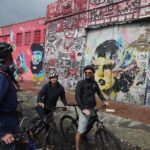
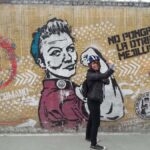
If you like street art with a brain, go. This La Candelaria graffiti tour turns Bogotá’s walls into a way to understand the city’s history and politics, not just pretty images. I especially loved the context—guides connect what you’re seeing to social and legal realities—and I also liked the easy pace of a small-group walking tour that fits tight schedules. One watch-out: the tour takes on socio-political themes, so if you want murals to stay purely aesthetic, this may feel more opinionated than you’d expect.
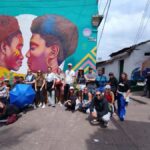
For value, it’s hard to beat: $16 gets you a local guide, multiple downtown mural stops, Colombian Andean tea, and all-risk insurance. The walk runs in all weather (you get an umbrella), and it’s capped at 20 people, so you’re not lost in a crowd. Expect the route to be guided in English and Spanish depending on the group, sometimes at the same time, so plan on a mix of languages in the explanation.
Meet at Plaza Del Chorro de Quevedo and you’ll circle through La Candelaria, then end right back where you started. Based on the tour timing descriptions you’ll see online, I’d plan for about 2 to 2.5 hours of walking, not a full half-day city tour.
In This Review
- Quick hits before you go
- Why La Candelaria graffiti tells a different Bogotá story
- Meeting at Plaza del Chorro de Quevedo: a start that feels local
- Stop 1: Barrio La Candelaria and the mural legacy you might miss
- Stop 2: Plaza del Chorro del Quevedo—art, people, and what’s hidden nearby
- Stop 3: Avenida Jiménez for 10 minutes of street-art style and perspective
- The socio-political context is the real value (and the only potential friction)
- What the guides add: names you might meet and why they matter
- Tea, rain gear, and the small logistics that save your trip
- How long it takes and how to schedule it in Bogotá
- Who this graffiti walk is best for
- Money math: is $16 good value in Bogotá?
- Practical tips so you get more out of the murals
- Should you book the Bogotá La Candelaria graffiti tour?
- FAQ
- Where is the meeting point for the graffiti tour?
- Where does the tour end?
- How long should I set aside for the tour?
- What languages will the guide speak?
- What’s included in the ticket price?
- Are the places you visit ticket-free?
- Does the tour run in the rain?
- What are my cancellation options?
Quick hits before you go
- Small group walk (max 20): easier questions, better photo stops, and less waiting around.
- Real context for murals: socio-political and even legal background shows up in the storytelling.
- Tea is included: Colombian Andean tea is part of the experience, not an add-on.
- Downtown La Candelaria route: start at Chorro de Quevedo and move through streets where the art is most active.
- Weather-proof format: umbrella provided and it runs in rain.
- English/Spanish mix possible: guides may explain in both languages depending on the group.
Why La Candelaria graffiti tells a different Bogotá story
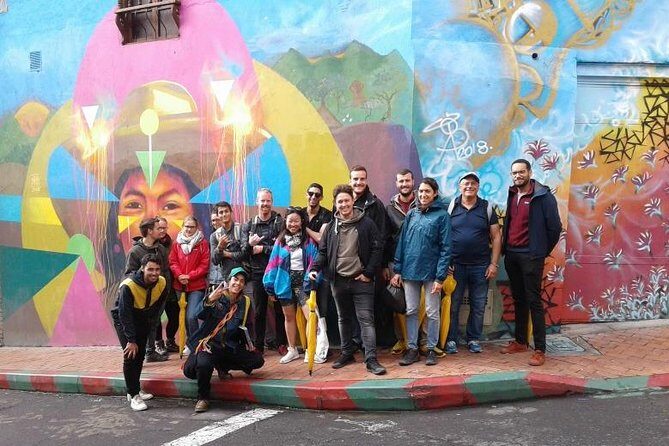
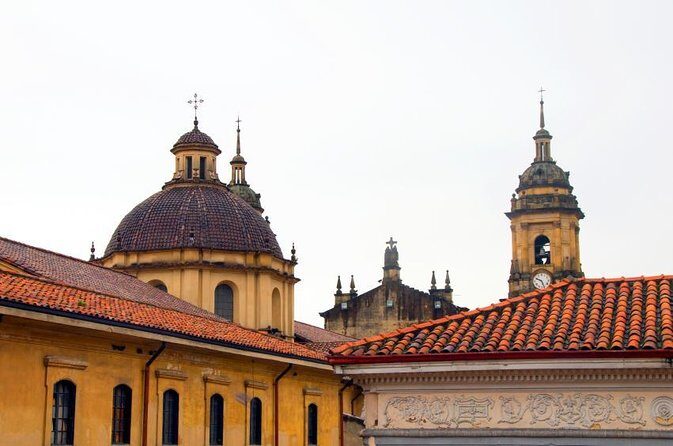
La Candelaria is where Bogotá’s layers show up fast. You see old stone streets, local life, and then—right on the walls—street art that grew out of the city’s debates, tensions, and creativity.
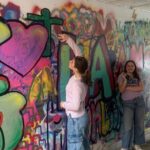
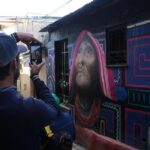
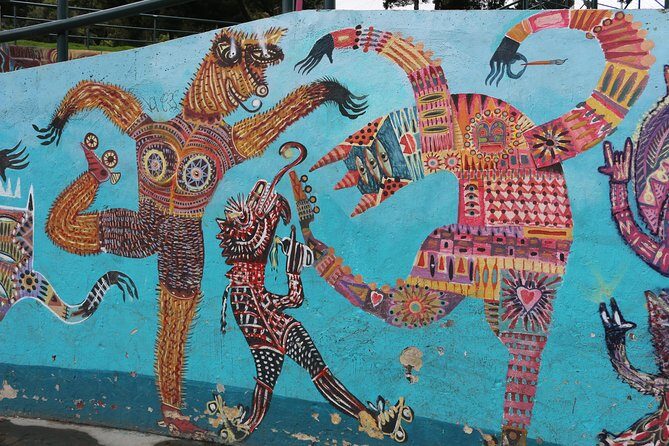
What makes this tour work is how the guide reads the murals with you. You don’t just point and shoot. You learn how artists use style, symbols, and placement to talk to the neighborhood (and sometimes to the authorities). That’s the difference between seeing graffiti as decoration and seeing it as communication.
Other La Candelaria walking tours we've reviewed in Bogota
Meeting at Plaza del Chorro de Quevedo: a start that feels local
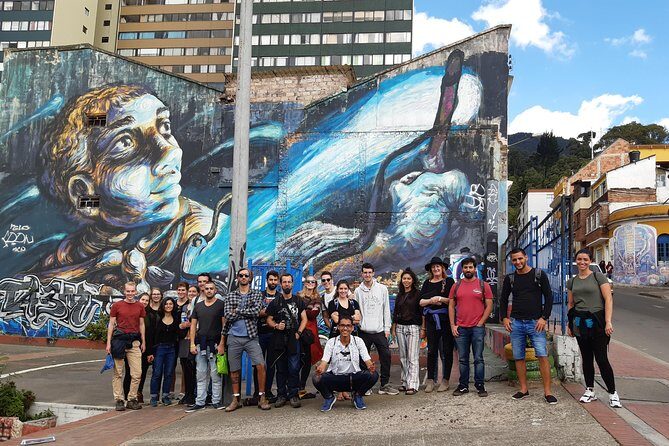
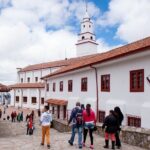
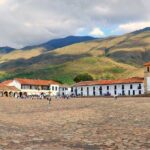
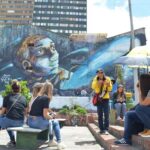
You begin at Plaza Del Chorro de Quevedo in La Candelaria. This is an easy anchor point for a walking tour: you’re in a public square where the neighborhood’s energy is obvious before you even start.
The start-to-finish setup is also practical. The tour ends back at the meeting spot, so you’re not stuck figuring out how to get home from another part of downtown. And since there’s no hotel pickup or drop-off, you’ll want to arrive a few minutes early so you can find the group calmly.
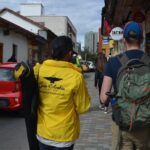
One detail worth knowing: some runnings mention a guide using cues like a yellow umbrella to help you locate the tour. If you’re coming from a busy street, give yourself extra time to find the right person.
Stop 1: Barrio La Candelaria and the mural legacy you might miss
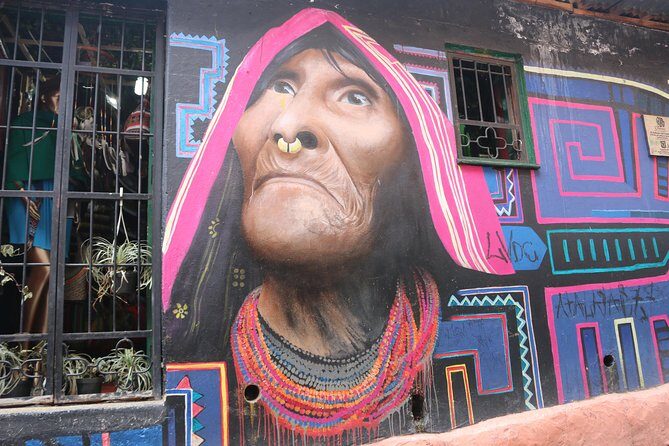
The first stop is Barrio La Candelaria for about 15 minutes. This is where you get grounded in the area and learn how graffiti fits into a longer mural tradition in Bogotá.
Even if you’re street-art savvy, this is the part where a good guide saves you time. You’ll hear what to look for—recurring themes, different approaches to lettering and imagery, and why certain walls became storytelling surfaces. The guide also frames how this art relates to public space and community identity.
A nice bonus here is the admission note: the stops you visit are listed as free. That means you’re not juggling tickets mid-walk—just walking, listening, and scanning the walls for details you’d normally walk past.
Stop 2: Plaza del Chorro del Quevedo—art, people, and what’s hidden nearby
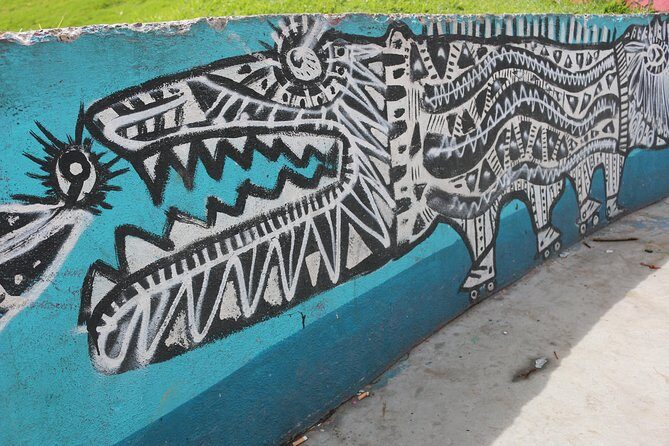
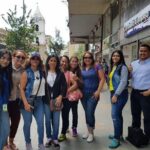
Next you move to Plaza Del Chorro del Quevedo for another 15 minutes. This stop is more than a photo pause. It’s a chance to meet other people on the tour, compare what you’re noticing, and let the guide point out murals you’d likely miss without local eyes.
This square is a useful reset point. Downtown Bogotá can feel dense, and having a moment where the guide slows down helps you start seeing patterns: themes that repeat across streets, and how different artists respond to the same city pressures in different ways.
If you’re hoping for a tour that also feels social—not just a lecture—this is where it tends to work best. The format keeps you moving, but it’s not a “never stop walking” route.
Stop 3: Avenida Jiménez for 10 minutes of street-art style and perspective
The final listed stop is Avenida Jimenez for about 10 minutes. It’s short by design, which can be good: you get one last concentrated look before the tour wraps up.
In that short time, you’ll want to slow your brain down. Look at how artists handle scale, contrast, and message density on busy streets. Guides often talk through the main artists’ perspectives here, which helps you understand why one mural feels more personal while another feels more like an argument with the public.
Even though this stop is brief, it matters because it gives you a “closing lens.” By the time you reach it, you’ve already learned the neighborhood context, so the art reads clearer.
Other graffiti and street art tours in Bogota
The socio-political context is the real value (and the only potential friction)
This tour includes the socio-political context of graffiti production, and you’ll feel that in the conversation. Multiple guides are described as explaining historical, social, political, and even legal background tied to the murals.
That can be a highlight. Street art often grows from pressure points: inequality, protest, identity, and power. When a guide helps you understand those pressures, the murals stop being random and start making sense.
At the same time, it’s the part that could rub you the wrong way. One note in the feedback points to discomfort when discussion touched current political messages. The operator’s response emphasizes that the guide’s job is to explain context rather than promote a stance.
My practical takeaway: if you want art-history storytelling that sticks mostly to craft and local neighborhood life, this still may work—but expect the discussion to cross into politics because the art often does.
What the guides add: names you might meet and why they matter
The experience hinges on the guide, and the feedback is heavy on that. Several names come up again and again, including Jose, Juana, Luis, Nati, Diego, Gabriel, Christian, Bernardo, Gerald, Natalie, and Gabriele.
What you’ll consistently hear from these guides is a mix of three things:
- How the art is made and how it’s read (styles, symbols, techniques)
- Why the art shows up where it does (public space, audience, neighborhood)
- What the art is responding to (social and political pressures, sometimes legal)
If you’re someone who likes asking questions, this is the type of tour where your questions won’t feel like interruptions. The good ones are ready for the “why” behind what you’re seeing.
Tea, rain gear, and the small logistics that save your trip
This is not just walking with a random soundtrack. It includes Colombian Andean tea, and that’s a real cultural touchpoint. One review specifically calls out the tea’s history and significance, which makes the stop feel tied to the place rather than tacked on.
Weather-wise, you’re covered. The tour operates in all weather conditions, and the operator says they provide an umbrella if it rains. That means you’re less likely to lose the day to a forecast.
Also, it includes all-risk insurance. That’s not exciting, but it’s a comfort when you’re doing an outdoor walking activity.
How long it takes and how to schedule it in Bogotá
The tour is listed as about 2 hours 30 minutes. In feedback, some people note it can run closer to 2 hours. Either way, this fits well as a morning or early afternoon plan: you’ll get a strong orientation to the district without burning your whole day.
Because the tour starts and ends at the same point in La Candelaria, it’s easier to connect it with other nearby plans. Just keep in mind downtown can be slow moving. If you’re timing a museum entry or a later reservation, add buffer time.
One more practical note: the experience is booked in advance often enough that it’s worth reserving ahead. The listing says it’s commonly booked about 7 days in advance, so don’t count on last-minute availability.
Who this graffiti walk is best for
This is a good fit if you:
- Like street art but also want the story behind it
- Want a guided walk through La Candelaria without spending hours researching murals on your own
- Enjoy photo stops paired with explanation (several guide styles were praised for making murals easy to understand and capture)
It may be less ideal if:
- You want a purely neutral “look but don’t talk” art experience
- You strongly dislike political discussion in any form
- You’re expecting a long day tour with lots of stops and transportation involved (this one is a focused downtown walk)
Language-wise, it can be in English and Spanish at the same time depending on the group. That usually works fine, but if you prefer one language only, it helps to confirm what you should expect when you book.
Money math: is $16 good value in Bogotá?
At $16 per person, you’re paying for a specific package: a local guide, multiple downtown mural stops, explanation of socio-political context, Andean tea, and all-risk insurance. For a walking tour in a central district like La Candelaria, that’s a lot included.
One key detail: you’re advised to remember that you’re paying the tip in advance. So don’t assume you’ll need to add a separate gratuity on top. Still, if you’re the type who likes to reward excellent guiding, it’s worth understanding exactly how the payment is handled for your booking so you don’t overpay.
Practical tips so you get more out of the murals
Because this is a walking tour with multiple street-art stops, bring the basics that keep you comfortable:
- Wear shoes that handle uneven sidewalks and short uphill moments downtown.
- Bring your phone or camera charger if you like taking lots of photos.
- Expect rain at any time in Bogotá season-to-season, and plan around the umbrella provided.
Also, arrive ready to look slowly. Graffiti rewards attention: a symbol here, a phrase there, a style choice that changes the message. If you rush, you’ll miss the part that makes a guided reading worth it.
Finally, treat the experience like a conversation with the neighborhood. Even when topics turn political, the goal is understanding why the art exists—not scoring debating points.
Should you book the Bogotá La Candelaria graffiti tour?
I’d book this tour if you want your first real understanding of Bogotá’s street-art language, and you like history that shows up on the walls. The best versions of this walk are guide-driven: you leave with clearer themes, styles, and reasons behind what you saw.
Skip it only if you’re determined to avoid any political or socio-legal discussion. Since the tour explicitly covers socio-political context, that topic is part of the product.
If you can handle a few tough themes and you enjoy walking while learning, this is one of the easiest ways to get oriented fast in La Candelaria—and it won’t take over your entire day.
FAQ
Where is the meeting point for the graffiti tour?
The tour meets at Plaza Del Chorro de Quevedo (Pl. Del Chorro de Quevedo, La Candelaria, Bogotá, Colombia).
Where does the tour end?
It ends back at the same meeting point (Plaza Del Chorro de Quevedo).
How long should I set aside for the tour?
The tour runs for about 2 hours 30 minutes (approx.). Some feedback notes it may be closer to 2 hours depending on the run.
What languages will the guide speak?
The tour can be in English and Spanish at the same time, depending on the group.
What’s included in the ticket price?
Included are the tour guide, visits to several graffiti in downtown Bogotá, socio-political context of graffiti production, Colombian Andean tea, and all-risk insurance.
Are the places you visit ticket-free?
The listed stops note admission ticket free.
Does the tour run in the rain?
Yes. It operates in all weather conditions, and the operator says they provide an umbrella in case it rains.
What are my cancellation options?
You can cancel for free up to 24 hours in advance for a full refund. Changes within 24 hours aren’t accepted, and cancellations less than 24 hours before start aren’t refunded.