REVIEW · BOGOTA
Pedaling in Full Color: Urban Art, and Cultural Diversity
Book on Viator →Operated by Capital Graffiti Tours · Bookable on Viator
Street art in Bogotá becomes readable at bike speed. You’ll ride a mural map that links art, identity, and political memory across multiple neighborhoods, with free stops and short explanations at each wall. The two big wins for me are the artist-led storytelling (with names like Diego, Natalia, and Anna showing up in guides) and the feeling of moving safely and comfortably through the city. One thing to consider: it’s a full route with lots of sights, so if you prefer long museum-style pauses, this format may feel a bit brisk.
I also like that the tour doesn’t treat graffiti as just decoration. It treats it like communication—sometimes about daily life, sometimes about inequality, sometimes about peace—and you get context as you pedal from one message to the next. With a small group cap of 15 people, you’re not stuck behind a crowd every time a mural gets worth a closer look.
In This Review
- Key Highlights You’ll Notice Fast
- Why Bogotá Murals Make Sense on Two Wheels
- Meeting at Cl 26b: The Start, Safety Tips, and the Core Story
- What that framing does for you
- The Full Stop-by-Stop Murals You’ll Ride Past
- Stop 1: The opening wall at Cl 26b #4-13
- Stop 2: Casa Genoveva (Instituto Distrital de Patrimonio Cultural)
- Stop 3: Chorro de Quevedo Plaza
- Stop 4: Plaza de Mercado La Concordia
- Stop 5: Skal Bogotá and the giant broom/mop technique
- Stop 6: Edificio Venado de Oro and the paramo ecosystem
- Stop 7: Parqueadero and La Música es Vida
- Stop 8: Plazoleta del Rosario, the removed statue, and protest graffiti
- Stop 9: LAGA and political paste-ups on Seventh Pedestrian Avenue
- Stop 10: Panamericana Centro (Carrera 7 con 12) and Wayuu weaving
- Stop 11: Plaza de las Nieves and birds in flight
- Stop 12: Bancolombia Mercantil and protest against banking influence
- Stop 13: Plaza de Toros Santamaría and 20 murals near the bullring
- Stop 14: Barrio Armenia, female artists, and garden-driven community work
- Stop 15: Casa Kilele and tribute to social leaders
- Stop 16: Centro de Memoria y Reconciliación and mosaic corn seeds
- Stop 17: Café de la fonda break and decriminalization decree context
- Stop 18: Santa Fe neighborhood peace mural
- Stop 19: The iconic compassion mural at Cl 26 #13-69
- Stop 20: Spotty Bogotá and Colombia’s diversity portrait mural
- What Makes This Tour Worth $56.18 (and When It Might Not)
- How to Plan Your Ride: Day-of-Week, Comfort, and Safety
- Who Should Book This Bogotá Mural Bike Tour
- Should You Book Pedaling in Full Color?
- FAQ
- How much does the tour cost?
- How long is the experience?
- What’s included in the price?
- Is coffee included?
- Where does the tour start and end?
- Are tickets or admissions required for the stops?
- How big is the group?
- Is it okay if I am traveling with limited Spanish?
- What is the cancellation window for a full refund?
Key Highlights You’ll Notice Fast
- Local artist guidance that explains what you’re seeing and why it matters
- A tight 3-hour route with frequent stops and quick, clear takeaways
- Indigenous and Afro-Colombian murals shown as part of Colombia’s living culture
- Political street art and social messages worked into the walk-and-ride rhythm
- Bike + helmet + rain poncho included, plus a security briefing before you start
Why Bogotá Murals Make Sense on Two Wheels
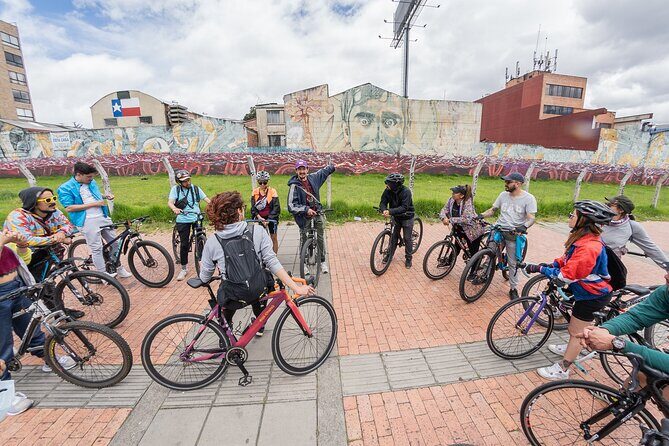
Bogotá street art works best when you can actually move through it. Walls and alleys aren’t isolated gallery pieces; they’re responding to the neighborhood around them—what people worry about, what they remember, and what they want to change.
This tour is built around that idea. In about three hours, you stitch together a “city argument” that runs from resilience and identity to conflict and reconciliation. You don’t just stare at paint—you connect it to place.
And bike time matters. With short stop windows, you get momentum and variety. It’s a practical way to see lots of districts without turning your whole day into a logistics puzzle.
Other graffiti and street art tours in Bogota
Meeting at Cl 26b: The Start, Safety Tips, and the Core Story
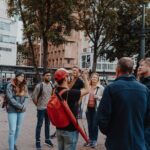
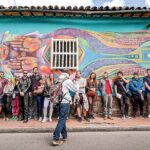
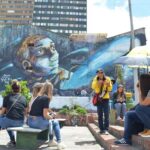
The tour begins at Cl 26b #4-13, where you meet your guide and get a friendly welcome. The guide is a local street artist or promoter, and the opening is designed to frame what comes next: street art as a channel for the city’s resilient spirit and Colombia’s memory, aiming at a better future.
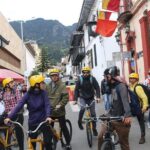
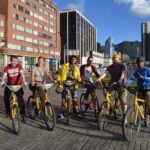
Before you pedal, you’ll get bike security tips, and you’ll be outfitted with a helmet plus a rain poncho in case weather changes your plans. Bikes are included, so you’re not wasting time with rentals or wrong-size gear.
The group is capped at 15, which keeps the tour from turning into a shuffle. You can actually hear the guide at each stop and still move on without constant bottlenecks.
What that framing does for you
That story setup pays off later. When you hit murals tied to indigenous identity, political protest, or peace after conflict, you’re not guessing. You’re already tuned to the theme the guide is building.
The Full Stop-by-Stop Murals You’ll Ride Past
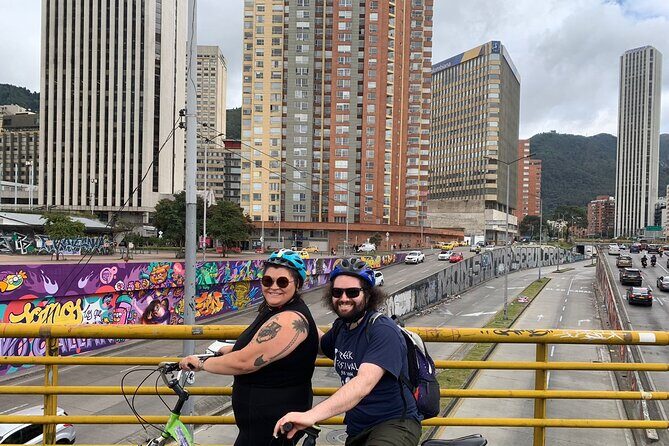
Think of this as a mural circuit. Some stops are quick visual hits; others bring a little more meaning—especially when the art is clearly answering questions about culture, power, or who gets represented.
Stop 1: The opening wall at Cl 26b #4-13
You start at the first address with a warm intro and the tour’s main argument. This is more than small talk. It’s a guide-to-the-city setup that tells you what lens to use while you’re looking at later murals—so the route doesn’t feel like a random highlight reel.
Even though the first wall visit is brief, it sets the expectation that the art will be readable, not just colorful.
Other Bogota bike tours we've reviewed

Stop 2: Casa Genoveva (Instituto Distrital de Patrimonio Cultural)
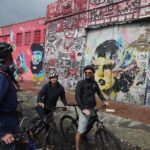
Here you see a hyper-realistic spray piece featuring a child with a duplicated face, creating a double-vision effect. The message is about duality—innocence versus the harsher urban reality—and how easily people misjudge what they see.
This stop is useful because it names a real social tension. Graffiti can get lumped into one category by outsiders, but the art here pushes you toward thinking about perception, prejudice, and how identity gets treated in public space.
Stop 3: Chorro de Quevedo Plaza
At Plazoleta Chorro de Quevedo, you’ll focus on murals celebrating indigenous and Afro-Colombian cultures. You also learn that the walls were commissioned by the company as part of a mission to support local artists.
This is where the tour starts to feel like more than street-art sightseeing. You can see how murals can function as community presence—public representation, not private decoration.
Stop 4: Plaza de Mercado La Concordia
At Plaza De Mercado La Concordia, a farmers market facade gets transformed with murals showing Colombian farmers’ culture. It’s a quick stop, but the theme matters: art isn’t only about big politics. It’s also about labor, food culture, and who feeds a city.
If you like murals that connect to everyday life, this one gives you that anchor.
Stop 5: Skal Bogotá and the giant broom/mop technique
At Skal Bogotá, you’ll see a giant mural made with brooms and mops by Bastardilla. The image: a child launching a shooting star with a slingshot. It’s the kind of mural that forces a simple question—what wish is the kid sending?
The technique is the story here. Knowing it’s done with tools you’d expect for cleaning makes the mural feel handmade, physical, and surprisingly intimate for something huge.
Stop 6: Edificio Venado de Oro and the paramo ecosystem
At Edificio Venado de Oro, a mural highlights a highland ecosystem through a frailejon and páramos theme. You’re not just learning the visual style; you’re learning why water and biodiversity matter to Colombia.
This stop is one of the quieter ones, but it adds texture to the tour. You’ll leave with the sense that street art covers nature, not just people.
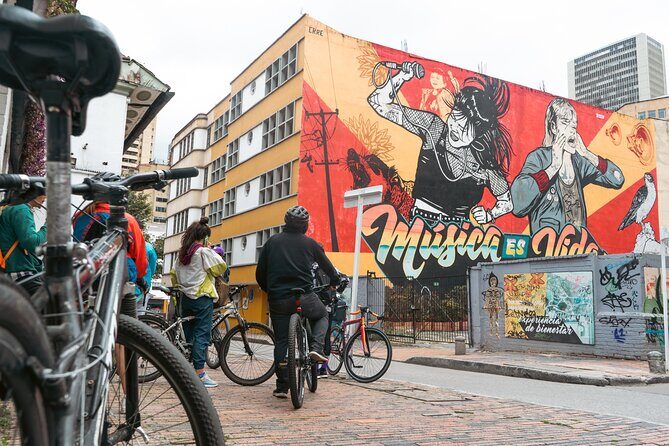
Stop 7: Parqueadero and La Música es Vida
At Parqueadero, you’ll see a giant stencil mural honoring female singers in Colombia. It was commissioned by a major music festival, which gives you a neat example of how art can connect with mainstream cultural events without becoming watered down.
It’s also a reminder that murals can be about recognition: who gets credited, who gets heard, and who becomes part of the public memory.
Stop 8: Plazoleta del Rosario, the removed statue, and protest graffiti
At Plazoleta del Rosario, there’s an empty pedestal where the Misak indigenous nation removed a conquistador statue. From there, the guide talks about political tensions and colonialism—topics that often sit underneath street art whether you notice them or not.
You’ll also see the highest vandal graffiti on a nearby skyscraper. That mix—measured historical change at one spot, raw provocation at another—shows why street art can’t be reduced to aesthetics.
Stop 9: LAGA and political paste-ups on Seventh Pedestrian Avenue
At LAGA, you’ll find political paste-ups on Seventh Pedestrian Avenue. The fun here is looking for hidden images and subtle meanings, like a visual scavenger hunt.
This is one of the stops where your attention skills matter. Take a slow moment. The message can hide in plain sight.
Stop 10: Panamericana Centro (Carrera 7 con 12) and Wayuu weaving
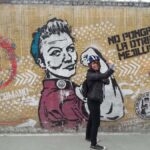
At Panamericana Centro Carrera 7 con 12, you’ll see a stencil mural of a Wayuu indigenous woman against a background inspired by her intricate weavings.
It’s a strong identity-focused image, and it works as a counterpoint to the colonialism themes you saw earlier. Here, the art points to cultural craft and continuity.
Stop 11: Plaza de las Nieves and birds in flight
At Plaza De Las Nieves, you’ll appreciate a large mural of colorful birds representing Colombia and Bogotá’s biodiversity.
This is another “breathing space” stop. It shifts the mood from heavy politics to living systems—then sets you up to return to more human stories.
Stop 12: Bancolombia Mercantil and protest against banking influence
At BANCOLOMBIA MERCANTIL, there’s a powerful political mural opposing the influence of the banking industry.
This is a reminder that street art often targets systems, not only individuals. If you like murals with a clear cause-and-effect vibe, you’ll find this one direct.
Stop 13: Plaza de Toros Santamaría and 20 murals near the bullring
Near Plaza de Toros Santamaria, you ride along a street close to the bulls ring arena decorated with 20 murals by national and international artists. Some include messages against bullfighting.
This stop is practical because it shows how you can cover more ground in less time while still getting meaning. You’re also in an area where the debate around tradition vs. ethics shows up on the walls.
Stop 14: Barrio Armenia, female artists, and garden-driven community work
In Barrio Armenia, you’ll see walls with illustrations by female artists, paired with community-driven work in gardens.
The value here is scale of participation. The murals aren’t only installed. They’re linked to ongoing, local use of shared space.
Stop 15: Casa Kilele and tribute to social leaders
At Casa Kilele, you’ll encounter a mural paying tribute to social leaders who have lost their lives in Colombia. You’ll also get storytelling and insight about the conflict in Colombia.
This stop is emotionally heavier than many of the others. The guide’s role is crucial because the mural needs context to land with the right weight—not as a photo op, but as memory.
Stop 16: Centro de Memoria y Reconciliación and mosaic corn seeds
At the Centro de Memoria y Reconciliación, you’ll visit the Mosaic of Memory for Peace. It’s adorned with corn seeds, funded by the Center of Memory, Peace, and Reconciliation, representing Colombia’s journey toward peace.
The corn detail matters because it signals the everyday foundation of recovery. Peace isn’t only courts and speeches; it’s also agriculture, food, and life continuing after violence.
Stop 17: Café de la fonda break and decriminalization decree context
At Cafe de la fonda, you take about a 15-minute break. Here, you’ll learn about the decriminalization of street art and a decree that supports it, while visiting and tasting coffee & beer from a local factory.
Coffee and tastings are not included. Still, this stop is valuable because it connects street art to law and public policy, not only street-level attitudes.
Stop 18: Santa Fe neighborhood peace mural
At Santa Fe, you’ll find a mural symbolizing peace and post-conflict in Colombia. The image includes a monkey transforming blackbirds using a cumbia instrument.
That combination sounds playful, and it is. But it’s also a symbol of transformation—an idea street artists return to when they talk about change after crisis.
Stop 19: The iconic compassion mural at Cl 26 #13-69
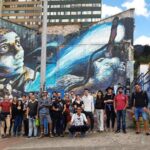
You end with one of the city’s most iconic walls: at Cl. 26 #13-69, a 10-floor mural based on a photograph showing tenderness between two homeless individuals in tough circumstances.
This is the moment where the tour’s “better future” theme becomes personal. It’s not abstract, and it doesn’t pretend suffering is simple.
Stop 20: Spotty Bogotá and Colombia’s diversity portrait mural
The final stop is at Spotty Bogotá, the tallest mural in Colombia. It represents cultural and natural diversity through portraits of children from different areas and cultures in Colombia in the downtown area.
This last wall acts like a summary without being too neat. Instead of wrapping up with slogans, it sends you forward with faces—youth, variety, and the idea of continuity.
What Makes This Tour Worth $56.18 (and When It Might Not)
At $56.18 per person for about 3 hours, you’re paying for three things that matter: a bike and gear, a small-group route, and an artist-led explanation that connects murals to meaning.
The included items aren’t just extras. Helmet + rain poncho matter in Bogotá’s weather, and a bike means you see more without expensive private transport. Also, all listed stop admissions are free, so you’re not paying ticket-by-ticket.
Where the value can wobble is pacing. With many short mural stops (some only 5 minutes), this is not a “sit and study” tour. If you want slow art contemplation and long Q&A at fewer places, you might prefer a different format.
How to Plan Your Ride: Day-of-Week, Comfort, and Safety
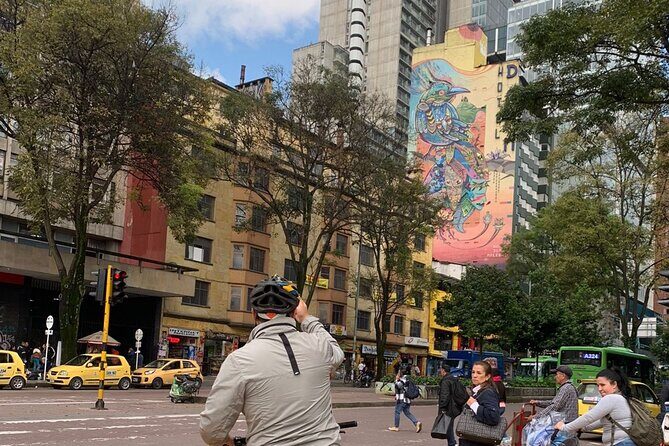
One detail that keeps showing up in people’s experiences is the quality of the streets on a Sunday, especially when the city opens for biking through cyclovia. Even without planning every minute around it, choosing a day when roads feel bike-friendly can make the whole route smoother.
You’ll want to show up ready for movement. Expect frequent stops, then short rides between them, and some sections close enough to notice the wall details without needing to wade through crowds.
For comfort:
- Use the helmet the way it’s meant to be used.
- Wear layers. The poncho is there, but you still want something breathable under it.
- Bring the mindset that you’re doing a route, not a museum visit. Short pauses, then back on the bike.
On safety, one review point that stands out is that people felt safe throughout, even on a first visit to Bogotá. That comes partly from the bike format and partly from having an experienced local guide.
Who Should Book This Bogotá Mural Bike Tour
This tour fits best if you:
- Want a first solid overview of Bogotá’s street art across multiple neighborhoods in a few hours
- Like art with clear social meaning, not just style
- Enjoy learning from a working local artist who explains murals stop-by-stop
- Prefer bike travel over long walks in a big city
It may be less ideal if you:
- Get restless with short stops and constant movement
- Want only nature-themed or only political-themed murals (this route mixes both)
- Plan to buy lots of snacks, since the coffee/tastings stop costs extra
Should You Book Pedaling in Full Color?
If you’re in Bogotá for a short stay, or if you want one activity that teaches you how to read the city, I think this is a smart bet. You get 20 mural stops, a bike with safety gear included, and explanations tied to identity, conflict, reconciliation, and everyday life.
Book it especially if you like street art that doesn’t shy away from tough topics. The tour’s best moments are the ones where compassion, colonial memory, cultural pride, and protest all sit on the same wall network you’re pedaling through.
If you hate being rushed, then consider whether you want more time per mural. But if you’re flexible and curious, this is one of the easiest ways to get beyond surface-level sightseeing in Bogotá.
FAQ
How much does the tour cost?
The tour costs $56.18 per person.
How long is the experience?
It lasts about 3 hours.
What’s included in the price?
You get a bicycle, plus a helmet and rain poncho.
Is coffee included?
No. Coffee and other tastings are not included, though there is a café stop.
Where does the tour start and end?
It starts at Cl 26b #4-13 in Bogotá and ends back at the same meeting point.
Are tickets or admissions required for the stops?
Admission tickets are listed as free for the stops included on the route.
How big is the group?
The tour has a maximum of 15 travelers.
Is it okay if I am traveling with limited Spanish?
The tour information doesn’t guarantee language level, but one review specifically mentions doing the tour without knowing Spanish well and still having a good experience.
What is the cancellation window for a full refund?
You can cancel up to 24 hours in advance for a full refund. Less than 24 hours before start time is not refunded.