REVIEW · BOGOTA
Walls of Wonder: Immersive Journey through Distrito Graffiti
Book on Viator →Operated by Capital Graffiti Tours · Bookable on Viator
Big walls, sharp ideas, and street-level stories. This 90-minute guided walk through Bogotá’s Distrito Graffiti project pairs huge wall art with clear local context about culture and politics. I especially loved how each stop shifts from paint technique to meaning, and how street art becomes a quick lesson in what Bogotá is thinking right now.
One catch: it’s mostly a walking route, so it’s not recommended for travelers with limited mobility.
In This Review
- Key things I’d plan around
- What this Bogotá graffiti walk is really about
- Price and value: why $25 makes sense here
- Getting there: Puente Aranda start point and smart arrival timing
- The walk itself: 14 murals, each with a different idea
- Stop 1: Distrito Grafiti (project kickoff)
- Stop 2: Soplascol sas (the graffiti artist figure)
- Stop 3: Eds Terpel San Andres (death, skulls, and coca vs cocaine)
- Stop 4: TEXTILES FACTORY TEXTRAMA (wild style and the origins of graffiti)
- Stop 5: Kr 54 – Cl 5C (Jaune’s realistic workers)
- Stop 6: Metalfischer (a uterus made of water and the frailejon plant)
- Stop 7: Centro Creativo Textura (tucans, indigenous communities, and a jaguar on an arm)
- Stop 8: LA AREPERIA DC (the burning mental house)
- Stop 9: Industrias Proton Ltda. (trombone, rosary, and salsa)
- Stop 10: TelefonoPostobón Planta San Rafael Industrial (Guache portrait, plastic pollution, and old phones)
- Stop 11: COMTUCAR S.A.S (Sabotaje al Montaje’s giant old man)
- Stop 12: FIORENZI CEDI (trains, mural styles, and an indigenous symbol totem)
- Stop 13: Todo Cajas Jemd S.a.s (alien planets and a school-bag-book)
- Stop 14: Inversiones Merlup Sas (group photo and wrap-up)
- How the guide changes what you see
- Photo and timing tips so you don’t feel rushed
- Who should book this Bogotá street art tour
- Should you book Walls of Wonder?
- FAQ
- How long is the Walls of Wonder tour?
- How much does it cost?
- Where does the tour start and end?
- Is food included?
- Are tickets or admissions included for the mural stops?
- How many people are in the group?
- Is the tour in English?
- Is the tour suitable for people with limited mobility?
- Can service animals join?
- What if I need to cancel?
Key things I’d plan around
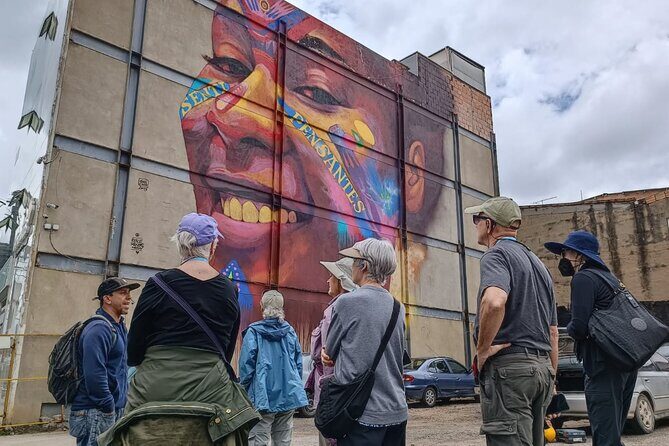
- 14 mural stops in about 1.5 hours, so the pacing is quick and you’ll be moving a lot
- Theme-led walls: death and coca vs cocaine, workers, spirituality and salsa, environment, and identity
- Guides with strong city context (I’ve heard names like Jay, Jahir, Camilo, Jeff, and Tet.artist)
- Admission at the murals is free, so the price mainly covers the guide and route
- Small group size (maximum 15), which keeps the Q&A realistic
- Street-art photo chances at both wide walls and up-close stencils
What this Bogotá graffiti walk is really about
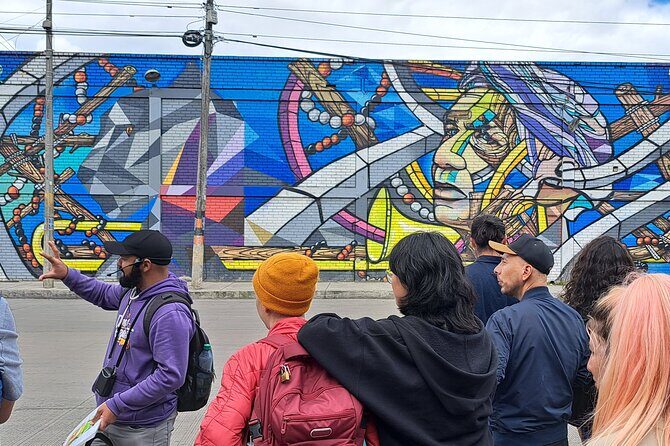
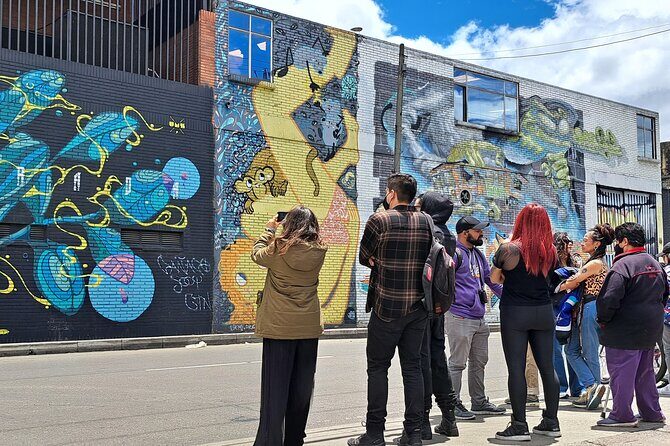
This isn’t a graffiti tour that just says, Wow, look at the colors. The Distrito Graffiti idea is to show different voices and techniques on giant surfaces, and then explain what you’re actually looking at. In practice, that means you’re seeing everything from big realistic portraits to wild-style lettering to stencils of everyday workers.
What makes it compelling is the way the art stays connected to Bogotá life. You’ll notice repeated themes: identity, belief, labor, the environment, and the way public space becomes a debate stage.
Other graffiti and street art tours in Bogota
Price and value: why $25 makes sense here
At $25 per person for about 1.5 hours, you’re paying for guided storytelling, not entrance fees. Each stop is listed as free admission, so the cost mainly covers the guide’s time and the walk that strings these walls into one legible route.
This is also a good price point compared with many “highlight” tours that only slow down at a couple murals. Here, you’re getting a lot of visual variety per minute—realistic stencils, huge portraits, and symbolic murals that need interpretation.
One practical note: food and tips aren’t included. Plan to bring a water bottle and a small snack if you tend to run on low fuel during walking tours.
Getting there: Puente Aranda start point and smart arrival timing
The tour starts at Av. de las Américas #50-85, Puente Aranda, Bogotá, and it ends back at the meeting point. It’s also close to public transportation, which matters because you’ll want to get there without burning time.
Because each mural stop is short (most are around 3–10 minutes, with a couple longer ones), arrive on time and stay ready to walk. If you show up late, you’ll miss the best context—then the murals turn back into just walls.
If you’re coming with a service animal, that’s allowed. And if you’re choosing this tour with kids, it can work well since the stops are visual and the guide can explain meanings in plain language.
The walk itself: 14 murals, each with a different idea
Think of this route like a guided magazine you read with your feet. You won’t linger for an hour at one wall. Instead, you’ll get quick orientation, meaning, and a few details you’ll probably remember later when you’re back on the street.
Stop 1: Distrito Grafiti (project kickoff)
You start by getting introduced to the Distrito Grafiti project and its goal: showcasing diverse international voices using incredible techniques on giant walls. This first stop is useful because it tells you how to “read” what you’ll see next—style isn’t random here.
Stop 2: Soplascol sas (the graffiti artist figure)
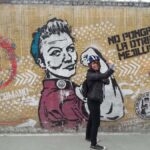
A mural shows a graffiti artist wearing a hoodie and cap, carrying spray cans and rollers. It’s a simple image, but it helps ground the tour: graffiti isn’t just a tag; it’s a practice with tools, habits, and identity.
Stop 3: Eds Terpel San Andres (death, skulls, and coca vs cocaine)
One of the most discussion-worthy stops shows a skull with a coca plant emerging from it. The point isn’t sensational shock—it’s the distinction between coca and cocaine, and how people can misunderstand plants when politics takes over the story.
Stop 4: TEXTILES FACTORY TEXTRAMA (wild style and the origins of graffiti)
Here you look at wild-style graffiti writing as a form of abstract art. You also get the origin story: graffiti was treated as vandal art, and the district’s work is about putting it into a different frame.
This stop is where the walk can shift your mindset fast. If you’ve ever thought graffiti is only damage, the guide’s explanation can help you see how the same technique changes meaning when the community supports it.
Stop 5: Kr 54 – Cl 5C (Jaune’s realistic workers)
You’ll see realistic-style mini stencils of workers—builders, cleaners, and others often overlooked in daily life. These mini figures were created by Belgian artist Jaune, and they give the tour a human scale.
This is a great stop for photos because the style feels detailed and controlled, even though it’s street art. It’s also a reminder that public art can be about dignity, not just decoration.
Stop 6: Metalfischer (a uterus made of water and the frailejon plant)
A mural shows a uterus made of water, connected to the frailejon plant that grows in Colombia’s highland wet ecosystems. It was created by a local female artist, and the symbolism ties nature, bodies, and equity together.
If you like when art makes you think about ecology through metaphor, this is one to linger for—even with the short time limit.
Stop 7: Centro Creativo Textura (tucans, indigenous communities, and a jaguar on an arm)
You’ll find cartoon tucans and indigenous communities celebrating Colombia’s cultural heritage. There’s also a realistic portrait of a woman with a small jaguar walking on her arm, which reads as harmony between humans and nature.
This stop is fun visually, but it’s also cultural. The best part is that it doesn’t feel stuck in one style: you get cartoon energy plus realism, side by side.
Stop 8: LA AREPERIA DC (the burning mental house)
This is a giant black-and-white acrylic illustration showing a character witnessing their mental house burn. It’s a metaphor for beliefs being transformed and for resilience.
If you prefer symbolic art over literal scenes, you’ll probably appreciate how this one communicates without needing a caption you can memorize.
Stop 9: Industrias Proton Ltda. (trombone, rosary, and salsa)
A man plays the trombone with a rosary coiled around the instrument, connecting spirituality and music—especially salsa. It’s a perfect example of how street art can map religion onto everyday culture.
This mural also helps you understand the neighborhood as something living and musical, not just a gallery of images.
Stop 10: TelefonoPostobón Planta San Rafael Industrial (Guache portrait, plastic pollution, and old phones)
This is a longer, multi-message stop.
- You’ll see a giant portrait by renowned Colombian artist Guache, featuring an Afro-Colombian woman in his style. The artwork represents sentipensar, blending contemporary and ancestral indigenous philosophy.
- Nearby is an environmental mural showing a plastic bag floating in the ocean, raising awareness about pollution and waste.
- The stop ends with an artwork featuring an old telephone, bringing nostalgia and reflection on how quickly communication has changed.
It’s three themes packed into one area: identity, the planet, and technology. If you’re the type who loves one big “conversation” spot, this is it.
Stop 11: COMTUCAR S.A.S (Sabotaje al Montaje’s giant old man)
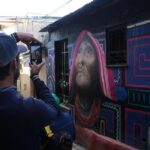
A four-story-tall hyper-realist portrait shows an old man, created by Spanish artist Sabotaje al Montaje. The scale does half the work for you—your body feels small compared to the wall.
This is one of the best stops for awe, but also one where you’ll want to slow your eyes down. Hyper-realism rewards careful looking.
Stop 12: FIORENZI CEDI (trains, mural styles, and an indigenous symbol totem)
You’ll explore the idea of graffiti on trains and the coexistence of muralism styles in buildings. It’s about how different public-art scenes overlap instead of living in separate worlds.
You’ll also see a giant totem adorned with a Colombian indigenous symbol created by a Brazilian crew. The piece is psychedelic in color and clearly celebrates indigenous cultures.
Stop 13: Todo Cajas Jemd S.a.s (alien planets and a school-bag-book)
This stop mixes sci-fi and poetry. One mural shows an alien creature grasping planets—an invitation to think about the mysteries of the universe.
Then you’ll also see a poetic scene: a child with a school bag shaped like a book, a clock marking the start of class, and the child gazing at a magnificent bird. It’s a gentle reminder that curiosity is its own kind of adventure.
Stop 14: Inversiones Merlup Sas (group photo and wrap-up)
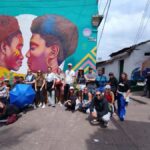
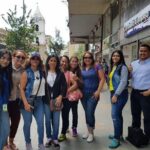
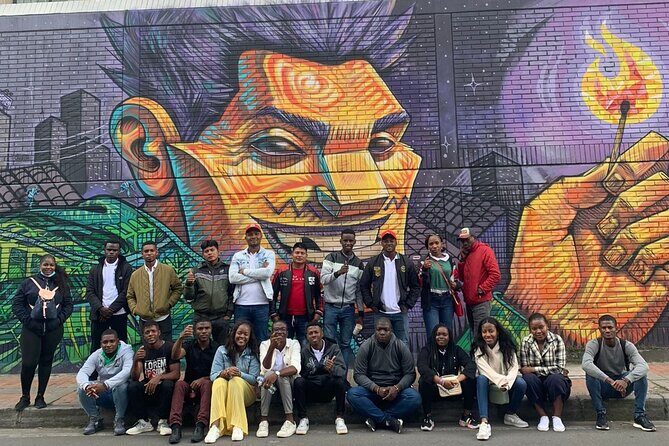
You finish with a group picture and inspiring insights about the transformative power of art in Bogotá. This last stop matters because it ties the symbolism together, so the route doesn’t end like a random series of walls.
How the guide changes what you see
The biggest value here is that the walk turns visuals into meaning. You’ll hear explanations that connect style choices to social themes—why someone might use skull imagery, why workers get framed as heroes, how faith and music share space, and how environmental messages land in public art.
It helps that the guides I’ve heard named—Jay, Jahir, Camilo, Jeff, and Tet.artist—tend to make room for questions. One of the best travel moments is when you ask something you’re genuinely curious about and get a straight answer, not a scripted one.
Even when you don’t agree with a message, you come away with new language for the city. That’s the real “transportation” this tour provides: it carries your understanding faster than any museum map.
Photo and timing tips so you don’t feel rushed
With short stops, your best strategy is to plan your photo habits.
- Quick wide shots first, then go back for close-ups if time allows. Mini stencils and realistic portraits are worth a second look.
- Turn your phone toward people, not just the art. Many murals include specific figures—workers, musicians, mothers, indigenous communities—and the human focus is part of the story.
- Don’t try to read every letter of wild style in one minute. The point is to understand the concept, then remember what the guide said.
Also, because this is mostly walking, wear comfortable shoes. You’re covering enough ground in 1.5 hours that blisters can steal the fun fast.
Who should book this Bogotá street art tour
I’d book this if you want more than a photo stop. It’s a great match for first-time visitors to Bogotá who want to understand how public art works as culture, politics, and community conversation.
It also suits people who like variety: giant realistic portraits, abstract spray lettering, stencils of workers, and symbolic murals with environmental and spiritual themes. And with small group size up to 15, you’re not lost in a herd.
Skip it (or consider a different option) if you have limited mobility, since the route is not recommended for that. And if you expect a leisurely pace where you stand and stare for a long time, this isn’t built for that style of visiting.
Should you book Walls of Wonder?
Yes, if you’re curious about how Bogotá uses street art to talk about identity, belief, labor, and the environment. For $25, you get a dense route with free admissions at each wall, guided explanations, and a mix of styles you can’t replicate by browsing images online.
I’d book with confidence if you like tours that help you look better, not just visit famous spots. Bring comfortable shoes, arrive ready to walk, and treat each stop like a short chapter. You’ll leave with more than pictures—you’ll have a clearer sense of what these murals are trying to say.
FAQ
How long is the Walls of Wonder tour?
The tour runs about 1 hour 30 minutes.
How much does it cost?
It costs $25.00 per person.
Where does the tour start and end?
It starts at Av. de las Américas #50-85, Puente Aranda, Bogotá, Colombia, and it ends back at the same meeting point.
Is food included?
No, food and tips are not included.
Are tickets or admissions included for the mural stops?
Admission tickets are listed as free at the mural stops on the route.
How many people are in the group?
The tour has a maximum of 15 travelers.
Is the tour in English?
The tour is described as being done in English.
Is the tour suitable for people with limited mobility?
It’s not recommended for travelers with limited mobility.
Can service animals join?
Yes, service animals are allowed.
What if I need to cancel?
Free cancellation is offered. You can cancel up to 24 hours in advance for a full refund, and cancellations made less than 24 hours before the start time are not refunded.