REVIEW · BOGOTA
Biking in Full Color: Urban Art Bike Tour
Book on GetYourGuide →Operated by Capital Graffiti Tours · Bookable on GetYourGuide
Bike lanes meet mural walls in Bogotá. This Urban Art Bike Tour turns a simple Sunday ride (or a regular one using protected lanes) into a guided walk-through of street art, politics, and post-conflict messages across four neighborhoods. I love the way the route connects different parts of the city without slowing down, and I especially like the focus on female artists and large-scale murals you can actually see up close from the saddle. The only real drawback is that it moves at a bike pace, so if you want lots of long stops or a slower sightseeing rhythm, this may feel a bit brisk.
What helps is that the guide is not just pointing at paintings. On a tour led by Diego, the storytelling was tied to the walls themselves—who made them, what they mean, and how Bogotá became a capital for graffiti and cycling culture. You also get a practical format: 3 hours, about 13 km of trail, and clear neighborhoods—Centro, Teusaquillo, Santa Fe, and La Macarena—so you don’t waste time wondering what’s next. One consideration: no backpacks and no valuables, so plan to travel light and keep your phone and wallet secure.
In This Review
- Key highlights worth your attention
- Bogotá’s street art is better from two wheels
- Starting in La Candelaria: the big red wall and the purple-hoodie guide
- 13 km, 3 hours: how the pace and distance really affect the experience
- Using bike lanes and Ciclovía Sundays for maximum mural time
- Neighborhood 1: Centro—spotting street art as an urban language
- Neighborhood 2: Teusaquillo—women artists and the power of illustrations
- Neighborhood 3: Santa Fe—coffee factory stop and the mural-to-life connection
- Neighborhood 4: La Macarena—giant murals and a peace message
- The guide factor: why Diego’s style is repeatedly praised
- What to bring (and what to leave behind) so the ride stays easy
- Price and value: $62 for murals, context, and 13 km on a bike
- Who should book this Bogotá bike-and-mural tour
- Should you book it? My take
- FAQ
- How long is the Bogotá Urban Art Bike Tour?
- How much distance does the tour cover?
- Where is the meeting point in La Candelaria?
- What should I wear or bring?
- Is it allowed to bring a backpack or valuables?
- What languages is the guide available in?
Key highlights worth your attention
- 13 km of bike trails on city routes, designed to link murals across four neighborhoods in about 3 hours
- Street art by women—you’ll learn how the visual language and themes show up on the walls
- A stop focused on a mural symbolizing peace and post-conflict and what that message carries locally
- The option to ride during Ciclovía Sundays, when Bogotá opens up more bike space and community activity
- A pause at a coffee factory, mixing everyday culture with mural spotting
- A guide who connects artwork to meaning, technique, and context (Diego is specifically praised in past tours)
Bogotá’s street art is better from two wheels
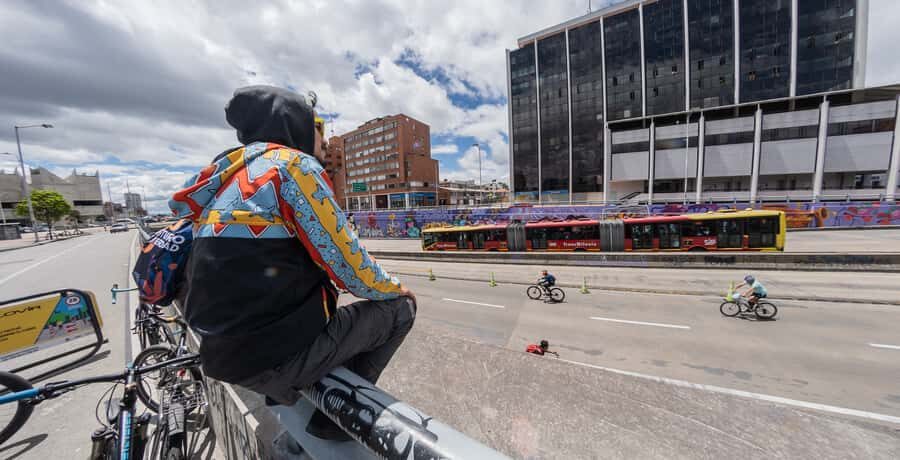
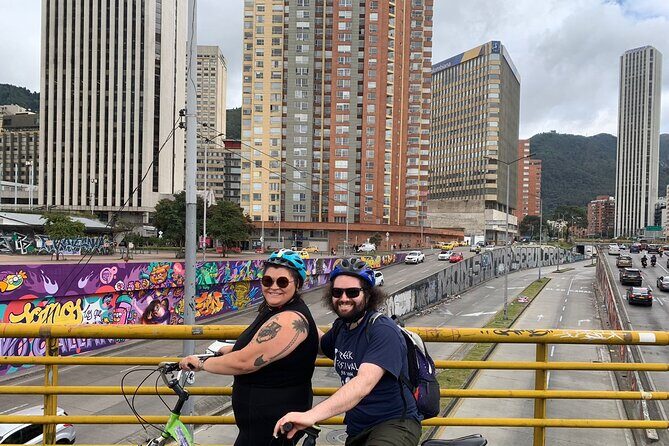
If you’re picturing graffiti tours as you trudging around a few blocks, this one’s different. The bike format changes how you read a wall. From a bike, you see scale faster, understand how a neighborhood “breathes” around the art, and you get a real sense of how political messages sit in daily life.
This tour leans into that idea hard. You’re riding through Bogotá’s street art movement while also moving between four neighborhoods that feel distinct in texture, architecture, and street activity. You’re not just collecting photos—you’re learning how the city’s visual culture works, and why messages show up where they do.
Other graffiti and street art tours in Bogota
Starting in La Candelaria: the big red wall and the purple-hoodie guide
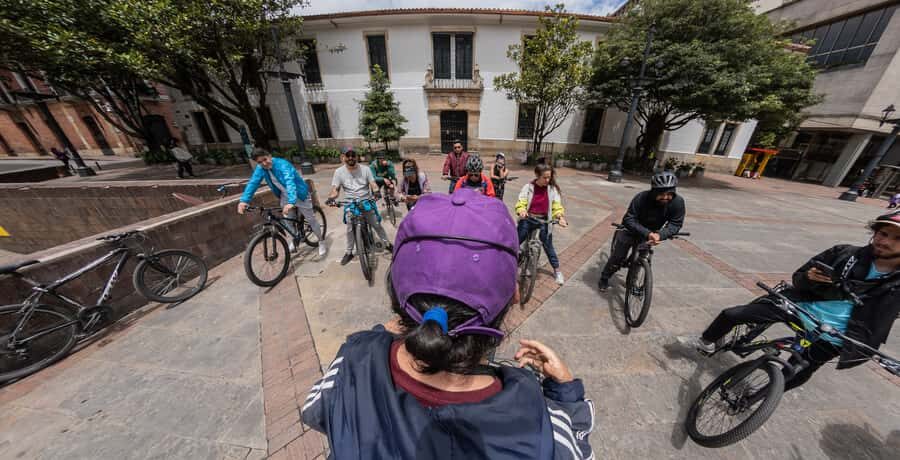
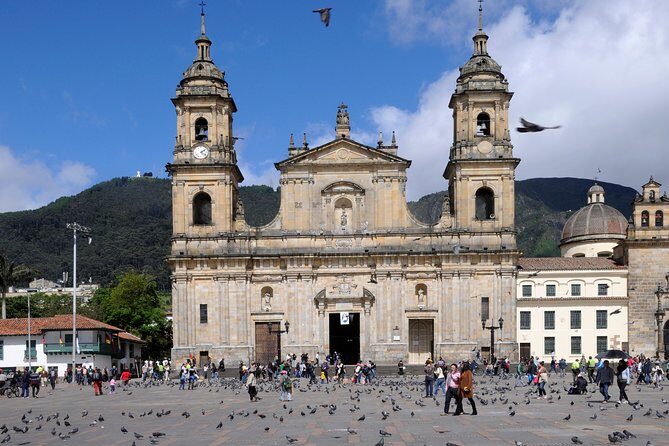
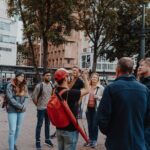
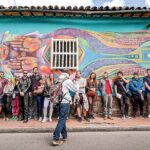
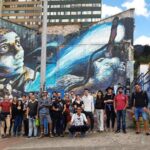
The tour kicks off in La Candelaria, one of the most recognizable parts of Bogotá’s historic center. The meeting point is in front of a big red wall at Carrera 3 #12-52. Look for your guide wearing a purple hoodie (or a matching cap or umbrella).
This first beat matters more than you’d think. If you show up ready to ride, you settle in quickly and start noticing what the guide will teach you next: how artists use public space, how murals interact with nearby buildings and streets, and why the neighborhood setting changes what a piece communicates.
Practical tip: wear sports shoes. You’ll be on and off the bike at stops, and you’ll want grip and comfort, not flimsy soles.
13 km, 3 hours: how the pace and distance really affect the experience
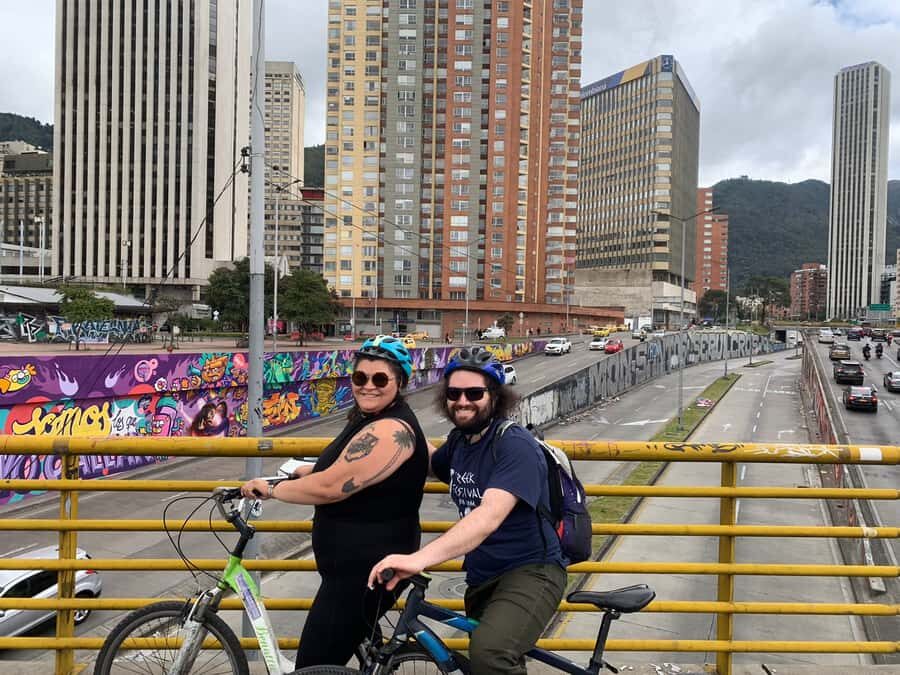
The tour is designed to cover about 13 km in roughly 3 hours across four neighborhoods. That combination is what makes the tour feel efficient and complete without turning into a marathon.
Here’s the real value: cycling lets you spend more time looking closely at murals and less time stuck in transit. You also get a guided sequence—each neighborhood adds a layer, rather than repeating the same “big mural, big photo, next street” pattern.
The tradeoff is obvious: this is not a slow art museum tour. Expect movement and short stops. If you prefer long wandering time or you plan to sketch for hours, you may feel rushed. But if you want a strong overview and a high mural-to-time ratio, the format works.
Using bike lanes and Ciclovía Sundays for maximum mural time
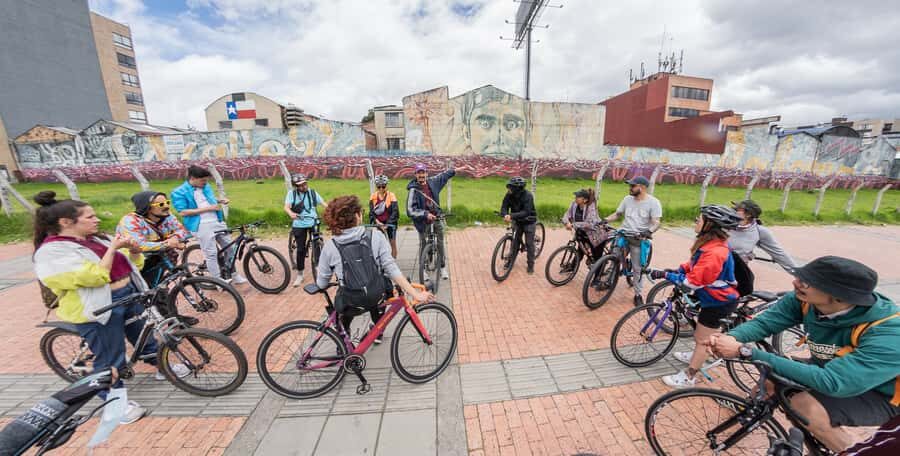
Bogotá is a different city depending on the day and the street access. This tour runs using the city bike lanes, and on Ciclovía Sundays it’s designed around a special Sunday setup that gives cyclists more route options and access to added morning cultural activity.
Why you should care: when bike access is broader, it’s easier for a guide to stitch together street art stops without losing time to detours. You also tend to get a livelier street scene, which helps you understand how public art functions as part of everyday city life.
If you can choose dates, Sundays during Ciclovía can be the most energetic version of this tour. It’s not guaranteed to change the art itself, but it can change how the streets feel while you ride through it.
Neighborhood 1: Centro—spotting street art as an urban language
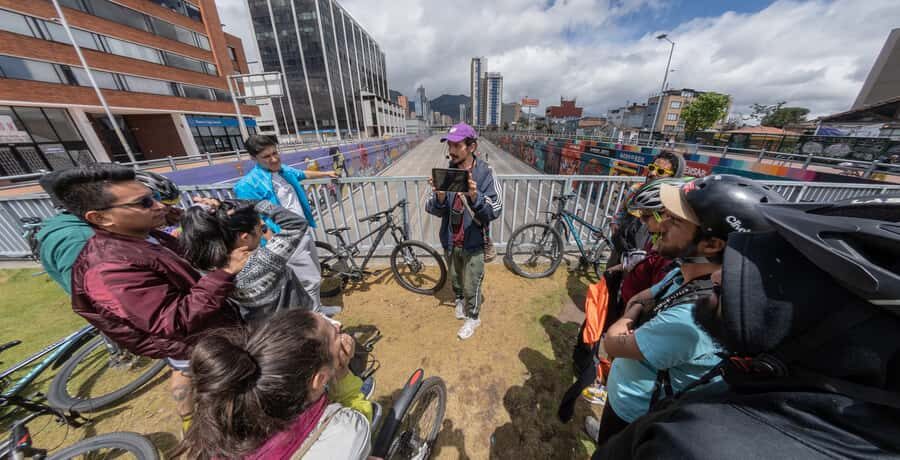
Centro is where you often feel the density of a capital city. It’s also where street art can read like a public billboard—messages you can’t avoid, because they sit right in your commuting paths.
This tour’s Centro segment is about recognition first: learning to recognize the street art movement in Bogotá and seeing how themes and styles repeat across different walls. You’ll start thinking about murals as a kind of communication system—one that includes humor, critique, identity, and commentary.
You’ll likely notice that the art isn’t just decorative. It reacts to where it’s placed. That’s the mental shift the guide helps you make: walls are part of the city’s conversation, not separate from it.
Other Bogota bike tours we've reviewed

Neighborhood 2: Teusaquillo—women artists and the power of illustrations
One of the most praised elements of this tour is the attention to walls adorned with illustrations by female artists. Teusaquillo becomes a strong chapter for that theme, because the neighborhood’s feel supports visual storytelling—cleaner streets, strong facades, and an atmosphere where murals can be read as intentional compositions.
This is where you’ll start connecting technique to meaning. Instead of just naming artists (when that info is shared), the guide typically frames what you’re seeing: choices in color, figures, symbolism, and how female perspectives shape the subject matter.
What you get out of this as a visitor: you stop treating street art like random graffiti and start viewing it as authored work with messages that matter—social, cultural, and political.
Neighborhood 3: Santa Fe—coffee factory stop and the mural-to-life connection
The tour includes a stop at a coffee factory, which breaks the ride and adds context beyond the walls. This matters because street art can feel abstract if you only experience it as visuals. A café or production stop pulls you back into ordinary Bogotá: labor, daily routines, and the kinds of spaces people rely on.
Santa Fe also tends to highlight the political side of street art. If you’ve ever wondered how public messages stay public for years, this is the tour segment that helps. You’ll see how murals respond to social struggles and how the city uses walls to keep conversations visible.
Practical note: keep your phone secure and ready. You’ll want photos, but you also want your hands free when the group gets moving again.
Neighborhood 4: La Macarena—giant murals and a peace message
La Macarena is where the scale can feel bigger. This tour includes stops at some of the city’s giant murals, and that’s where street art starts to read almost like architecture—large enough that it changes how you understand the street corner.
The standout here is a mural symbolizing peace and post-conflict. Even if you don’t know the details already, you’ll get the story behind why that theme shows up and what it’s communicating in the local social landscape.
That’s the deeper payoff: this isn’t only about aesthetics. It’s about why Bogotá’s artists use walls as a public forum, and why peace messaging can function like a reminder—sometimes hopeful, sometimes complex, always connected to real people.
The guide factor: why Diego’s style is repeatedly praised
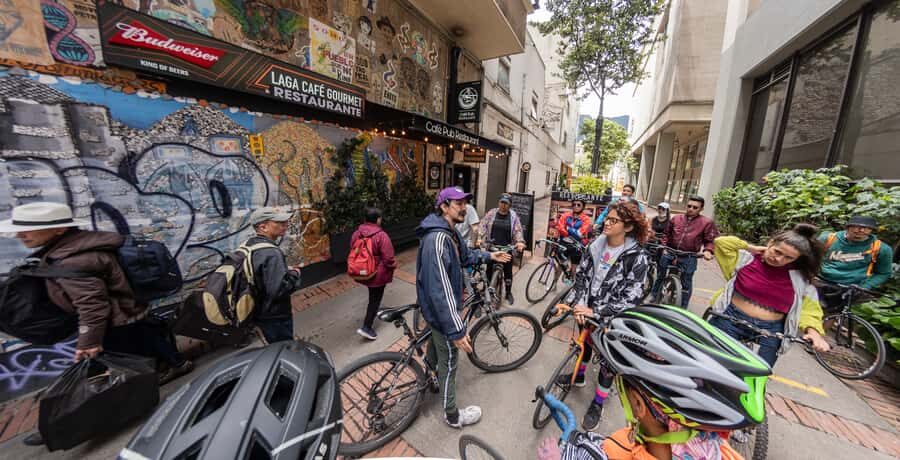
The strongest version of this tour depends on the person steering the story. In the best past tours, the guide isn’t doing a generic script. With Diego, the focus was on explaining art, graffiti, and history in multiple neighborhoods, and tying that explanation to the local community.
That kind of guidance changes what you remember. When the guide links a mural’s meaning to the neighborhood where it lives, you start noticing patterns on your own—symbols repeated, color choices that signal mood, and the way artists use public space for commentary.
If you’re choosing between “see street art” and “understand street art,” this tour clearly aims for the second.
What to bring (and what to leave behind) so the ride stays easy
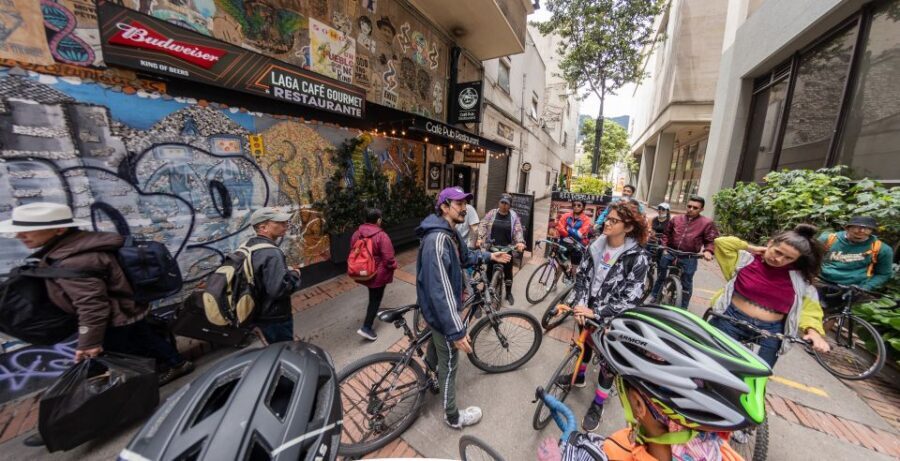
This tour keeps things simple, but you’ll be happier if you prepare:
- Bring: sports shoes
- Avoid: backpacks and valuables
The tour runs rain or shine, and you’ll be offered a rain poncho if weather hits. That’s a big deal in Bogotá, because sudden showers happen. With the poncho, you can keep going without turning the tour into a stop-and-start day.
Also, pack with bike pacing in mind. You don’t want to fuss with bags while the group is rolling between neighborhoods.
Price and value: $62 for murals, context, and 13 km on a bike
At $62 per person for a 3-hour guided ride covering 13 km, the price sits in the “worth it if you’ll actually use it” category.
Here’s what makes it feel like good value:
- You’re paying for guided interpretation, not just transportation.
- The bike route covers multiple neighborhoods in one session, so you don’t pay twice in time and effort.
- You get specific themes (female artists, peace/post-conflict mural) plus big murals and a coffee stop, which makes the experience feel varied, not repetitive.
If you’re the type who can spend hours reading murals and talking with guides, this is a strong match. If you only want quick photo stops and you’re already fluent in street art context, you might feel like you’re paying for narration you could do on your own. But for most first-timers, the guide’s storytelling is the point.
Also, the overall rating is 3.2 from 4 reviews—a small sample size, with multiple standout 5/5 reactions tied to knowledge and engagement. That mix usually means you should expect variability by group and guide energy. Still, the praise is specific and consistent about what matters: art explanation and meaningful context.
Who should book this Bogotá bike-and-mural tour
Book it if you want:
- A guided street art education that goes beyond naming styles
- A way to cover several neighborhoods without exhausting walking
- A tour that includes themes like female artists and a peace/post-conflict mural, not only general graffiti spotting
- A morning-friendly format (especially if you can catch Ciclovía Sundays)
Skip it if:
- You want a slow, museum-style pace with lots of downtime
- You need to carry valuables or a backpack on a guided street activity
- You’re uncomfortable riding city bikes for about 3 hours (even with frequent stops)
Should you book it? My take
If your goal is to understand why Bogotá’s murals matter, this tour is an efficient, thoughtful way to do it. The combination of 13 km, four neighborhoods, giant murals, and a specific peace/post-conflict focus gives you a full arc in one afternoon-or-morning window.
My main caution is pacing: this is a ride, not a linger. If you can handle movement and short stops, you’ll get a lot for the $62 price, and you’ll walk away seeing street art as a form of public storytelling—written on walls, but meant for people.
FAQ
How long is the Bogotá Urban Art Bike Tour?
The tour lasts about 3 hours.
How much distance does the tour cover?
It covers 13 km of bike trails, passing through four neighborhoods.
Where is the meeting point in La Candelaria?
Meet in front of the big red wall at Carrera 3 #12-52 in La Candelaria. Look for the guide with a purple hoodie, cap, or umbrella.
What should I wear or bring?
Wear sports shoes. You’ll also want to be ready for weather since the tour runs rain or shine.
Is it allowed to bring a backpack or valuables?
No. Backpacks and valuables are not allowed.
What languages is the guide available in?
The live tour guide is available in English, Spanish, French, German, and Italian.