REVIEW · BOGOTA
Graffiti Tour: a fascinating walk through a street art City
Book on GetYourGuide →Operated by Capital Graffiti Tours · Bookable on GetYourGuide
Bogotá’s walls tell the truth faster than textbooks. This graffiti walk is a smart, hands-on way to read the city through illegal street art and political posters—and understand why it matters right now.
I love how the tour treats graffiti like a conversation, not just a photo stop. You’ll learn the stories behind the work, plus the political and historical context that helps you see what you’re looking at.
One thing to consider: graffiti is often placed in sensitive spaces, so you’ll want to travel light and skip valuables.
In This Review
- Key Highlights You’ll Notice on the Walk
- Bogotá Street Art That Reads Like Current Events
- Meeting Point at the Gold Museum: Quick Start, Clear Instructions
- The Tallest Illegal Graffiti in Colombia: Scale, Strategy, and Nerve
- Political Posters and Social Issues: Learning to Read the City’s Arguments
- Community Resilience and False Positives: When the Wall Gets Interrupted
- Artists Who Teach: Techniques, Context, and How to Appreciate Without Guessing
- How This Tour Supports New Murals (And Doesn’t Feel Like Just a Cash Grab)
- Timing, Walking Pace, and How to Prepare for 150 Minutes
- Price and Value: Why $15 Can Go Further Here
- Language Options, Small Groups, and Who This Tour Fits Best
- Should You Book Capital Graffiti Tours for the Graffiti Walk?
- FAQ
- How long is the graffiti tour?
- How much does it cost?
- Where do I meet the guide?
- What languages are available for the live guide?
- Is the tour accessible and can I book private or small groups?
- Is it okay to bring valuables?
Key Highlights You’ll Notice on the Walk
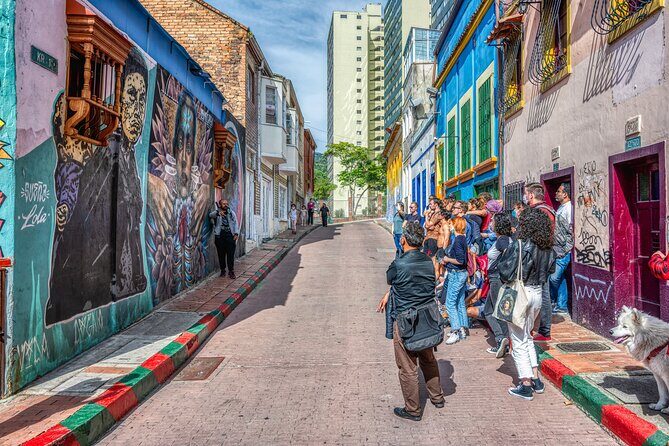
- Tallest illegal graffiti in Colombia: you get a front-row view of scale and risk
- Political posters tied to current social issues: street messages you can actually connect to today
- Community resilience against false positives: the wall shows what happens when removal and misunderstanding collide
- Guides who are artists and promoters: technique plus context, not just opinions
- Your payment supports new murals: cultural expansion through real reinvestment
Bogotá Street Art That Reads Like Current Events
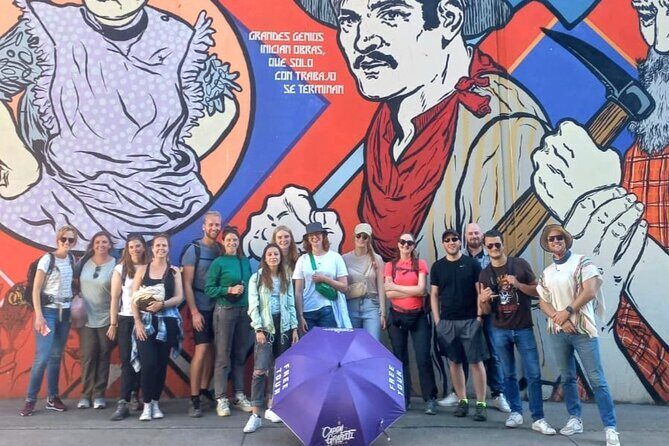
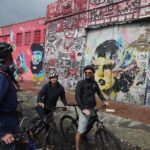
Street art in Bogotá isn’t just decoration. It’s public language—sometimes loud, sometimes careful—and it’s often tied to Colombia’s ongoing conversations about identity, peace, and social change.
What makes this tour worth your time is the way it connects art to people. You’ll hear how murals and posters reflect the city’s complex past, what the present peace process means on the street, and what residents want for the future. Even if you’re not an art expert, you’ll come away with a sharper eye for symbolism and intent.
And yes, you’ll see plenty of art that looks amazing in a photo. But the point isn’t the camera. It’s understanding why certain walls get painted, pasted, protected, or argued over.
Other graffiti and street art tours in Bogota
Meeting Point at the Gold Museum: Quick Start, Clear Instructions
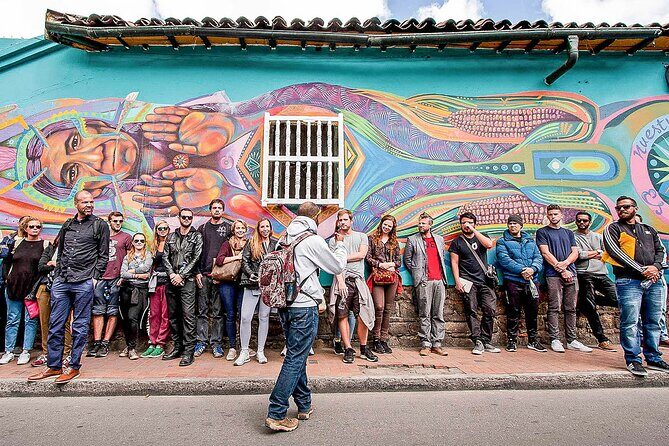
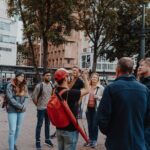
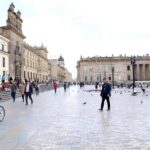
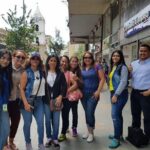
You’ll meet next to the Gold Museum at Carrera 6 # 15-88. When you arrive, look for your guide with a Purple Hoodie, cap, or umbrella—easy to spot, even if the street is busy.
This matters more than you might think. Bogotá is full of “almost right” meeting points, and a clear landmark saves time and stress—especially on a walking tour.
You’ll also want to dress for the sidewalk reality. Bring a comfortable pair of shoes and expect you’ll be walking and stopping often. The tour is 150 minutes long, so plan for a solid block of time on foot rather than a quick stroll.
The Tallest Illegal Graffiti in Colombia: Scale, Strategy, and Nerve
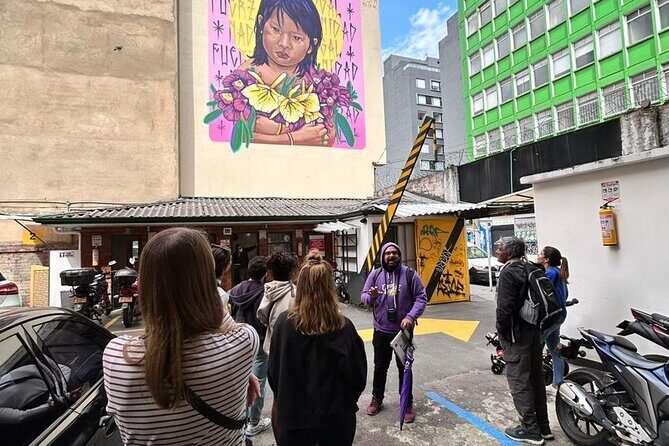
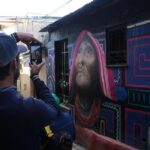
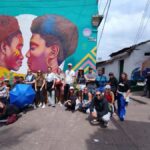
One of the main draws is the chance to witness the tallest illegal graffiti in Colombia. Seeing it in person changes how you feel about it—because scale is a kind of messaging.
When street art is illegal, it usually signals more than style. It can point to urgency, disagreement, or a refusal to wait for official approval. Standing near something that size helps you understand how artists use walls as billboards and how they compete for attention in a real urban environment.
A helpful way to watch on this stop: look past the colors and ask what the artist needed the wall to do. Was it meant to confront? Protest? Memorialize? Spark debate? Your guide will help you read the story behind the artwork so you don’t just see a masterpiece—you understand the why.
Political Posters and Social Issues: Learning to Read the City’s Arguments
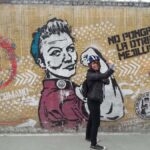
Another major part of the experience is an area with political posters addressing current social issues. This is where the tour shifts from “wow” to “aha.”
Posters tend to be more direct than murals. They can feel like someone wrote a note on the street and dared the city to respond. As you move through this section, you’ll likely notice how messages connect to broader topics—public debate, power, justice, and everyday life.
What I like about this portion is that it trains your eye. You start spotting patterns: repetition of themes, visual cues, and the way text and images work together to persuade. Instead of treating the street like a gallery, you start treating it like a living newspaper.
And because this is tied to social issues, you may find yourself thinking about how art becomes a public tool when formal channels feel slow or incomplete.
Community Resilience and False Positives: When the Wall Gets Interrupted
The tour also highlights community resilience in the face of false positives. That phrase points to a real-world tension: sometimes street art gets removed, targeted, or misunderstood—and communities still keep creating.
This is important context. Graffiti can be labeled as vandalism by people who never ask what it’s saying. Even when a piece is part of community storytelling, it can still be treated as a problem. Your guide frames what that conflict looks like in practice and why residents continue working anyway.
Here’s how to get the most out of this part: try to separate the art from the assumptions around it. Ask yourself what the wall is contributing—comfort, critique, memory, or visibility. Then think about what happens when authorities or viewers judge a piece without understanding its purpose.
That’s the real lesson. You’re not only looking at paint and paper. You’re watching how communities defend their right to speak in public space.
Other walking tours we've reviewed in Bogota
Artists Who Teach: Techniques, Context, and How to Appreciate Without Guessing
This isn’t set up like a history lecture or a casual “look at that” walk. The guides are experienced and also work as artists and promoters, so you get a blend of technique and context.
That matters because street art appreciation is easy to fake and hard to do well. A good guide helps you notice things like style choices, layered references, and the kinds of inspiration artists pull from. You’ll also get political, cultural, historical, and geographical context so the art lands with meaning.
You can use your time actively. When you see a mural or poster, try to identify:
- the main message (even if it’s subtle)
- who it seems aimed at
- what the artist might want you to question
If you do that, the whole tour starts clicking into place. You stop treating the city like background and start treating it like a text.
How This Tour Supports New Murals (And Doesn’t Feel Like Just a Cash Grab)
One standout promise here is social impact and cultural expansion. The tour emphasizes that this isn’t a typical tourism-only setup. It’s tied to artists and community leaders, with reinvestment into the financing and management of new murals that continue to transform the urban landscape.
In plain terms: part of what you pay supports more public art coming into the city, not just a one-time walking experience. That’s one reason the tour feels more purposeful than a standard photo tour.
It also changes the tone. When a tour is connected to the people making the work, the conversation feels grounded. You’re more likely to get honest stories about why certain pieces appear, what risks are involved, and why the community keeps showing up.
If you care about ethical travel—travel that leaves more behind than it takes—this is the kind of detail that makes a difference.
Timing, Walking Pace, and How to Prepare for 150 Minutes
The duration is 150 minutes. That’s long enough to cover multiple street art and graffiti locations, but short enough to stay energetic if you pace yourself.
You’ll be moving between spots, stopping to look closely, and listening as your guide explains what you’re seeing. A walking tour like this rewards attention. If you show up half-ready, you’ll miss the connections that make the art meaningful.
Practical tip: charge your phone before you go, but don’t rely on it as your only memory tool. Take mental notes about what the guide explains—the symbolism, the political angle, and the community context. Photos fade. Understanding sticks.
Also, since valuables aren’t allowed, keep your carry simple. Bring what you need for photos and water, but keep the “just in case” stuff at home.
Price and Value: Why $15 Can Go Further Here
The price is $15 per person, and the value here is tied to more than just guiding time. You’re getting:
- 150 minutes with experienced English-speaking guides (plus more languages)
- multiple graffiti and street art locations
- context that helps you understand what you’re seeing
- a social impact model connected to local mural projects
There’s also an important note about the shared option. If you choose shared, what you pay per person equals the amount suggested to tip the guides and cover their work (minus the commission). And at the end, you don’t have to pay anything extra even if other travelers do.
That transparency is useful. It helps you budget without guessing how much you should add for tips at the last minute. For me, that makes the pricing feel more straightforward and fair.
If you’re choosing between a cheaper walk and one with this kind of community reinvestment, the difference isn’t just price. It’s whether the tour meaningfully supports the people behind the art.
Language Options, Small Groups, and Who This Tour Fits Best
This tour offers guides in English, Spanish, Italian, French, and German. Even if you don’t speak every language, it’s a plus that the tour is built for international visitors—not just locals.
Group type is private or small groups available. Small groups tend to make it easier to ask questions, get closer to wall details, and keep the pace comfortable. If you prefer a more personal experience—rather than being swept along in a big crowd—this format is a good fit.
Who should book? This tour is ideal if you enjoy street art with context. If you like walking, reading visuals, and understanding how art connects to real issues, you’ll get a lot out of it. It also works well if you want a “Bogotá identity” experience beyond typical museum time.
Who might skip? If you’re looking only for quick sightseeing photos with minimal talking, this may feel more discussion-heavy than you expect.
Should You Book Capital Graffiti Tours for the Graffiti Walk?
If you want a street art experience that treats murals and posters like messages—not decorations—this is an easy yes. You get illegal graffiti history at human scale, political content that connects to today, and a guide approach that explains technique and meaning.
The best reasons to book are the combination: the tallest illegal graffiti, the political poster area, and the community resilience angle. Add the social impact model tied to reinvesting in new murals, and you’ve got a tour that’s more than a pretty walk.
Just go in prepared: light on valuables, ready to walk, and willing to listen. If you do that, you’ll leave with more than photos. You’ll leave with a working way to read Bogotá’s walls.
FAQ
How long is the graffiti tour?
The tour lasts 150 minutes.
How much does it cost?
It costs $15 per person.
Where do I meet the guide?
Meet next to the Gold Museum at Carrera 6 # 15-88. Look for the guide wearing a Purple Hoodie, cap, or umbrella.
What languages are available for the live guide?
The live tour guide is available in English, Spanish, Italian, French, and German.
Is the tour accessible and can I book private or small groups?
Yes, the tour is wheelchair accessible. Private or small groups are also available.
Is it okay to bring valuables?
No. Valuables are not allowed on this activity.