REVIEW · BOGOTA
Graffiti Tour in La Candelaria Bogotá with Transportation
Book on GetYourGuide →Operated by Gran Colombia Tours · Bookable on GetYourGuide
Bogotá’s walls talk back. In this 3-hour graffiti tour in La Candelaria, you’ll learn how street art connects to politics, indigenous ancestry, and the city’s modern identity. I like that the route is organized around real neighborhoods and specific artists, so it feels like a guided art story instead of random wall photos.
Two things I especially like are the focus on women artists and the way the guide ties each mural to the meaning behind it. One drawback to consider is that, depending on the day and pacing, the walk time may feel shorter than the posted duration, and you will be doing lots of streets and sidewalks in rain or shine.
In This Review
- Key things to know before you go
- La Candelaria’s graffiti isn’t decoration, it’s a message system
- Starting at Chorro de Quevedo: the tour’s story engine
- The narrow-street stop: indigenous ancestry told in layers
- Murals by Wosnan, Ocio4, and Carlos Trilleras: seeing the same wall twice
- Park of La Concordia and the marketplace: where ideas meet pressure
- Women artists in the spotlight: why the names matter
- Journalists Park promenade: culture in the 60s, still shaping today
- Café Herencia finish: a calm landing with Carlos Trilleras
- Transportation and the private-group setup: worth it in Bogotá
- What the guide actually does for you (and why it matters)
- The rain-or-shine reality: plan your comfort, not your mood
- Value check: is $48 a smart buy?
- Should you book this La Candelaria graffiti tour?
- FAQ
- How long is the graffiti tour in La Candelaria?
- Where does the tour start?
- What languages are available?
- What is included in the price?
- Is lunch included?
- Does the tour run in bad weather?
Key things to know before you go
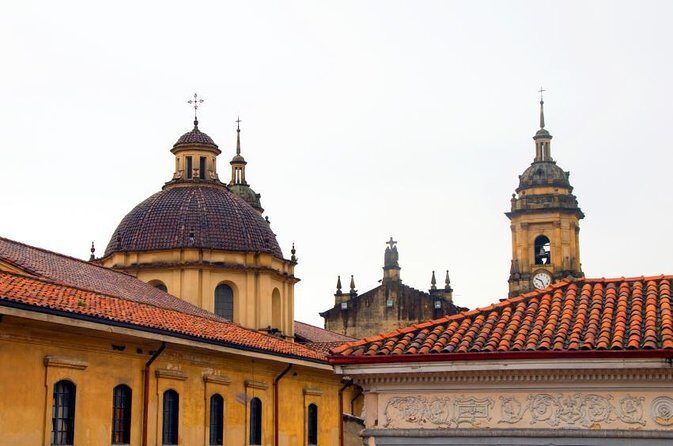
- Art with context: You get the socio-political side of graffiti production, not just the style.
- La Candelaria route: Starts around Chorro de Quevedo Square and moves through downtown’s key gathering areas.
- Specific artists, not vague labels: You’ll hear about names like Ledania, 3 Manos, Wosnan, Ocio4, Carlos Trilleras, Bastardilla, Vera, and Erre.
- Indigenous ancestry theme: There’s a narrow graffiti-packed street that retells indigenous roots of the city.
- Downtown crossroads: Park of La Concordia and the La Concordia marketplace are framed as a tension spot and idea-melting point.
- A sweet finish: The tour ends at Café Herencia, with more artwork from Carlos Trilleras.
La Candelaria’s graffiti isn’t decoration, it’s a message system
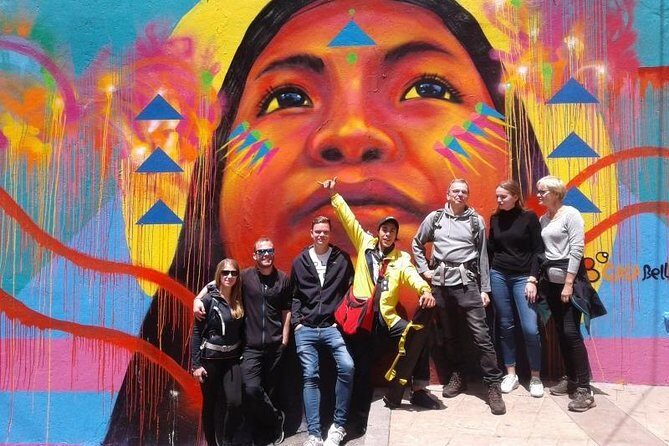
La Candelaria is the kind of place where the city feels layered: old streets, modern voices, and big ideas written across brick. This tour leans into that. You’re not just looking at color. You’re tracing how graffiti becomes a way to argue, remember, and claim space in downtown Bogotá.
I like that the tour treats graffiti as social commentary. You’ll hear about the socio-political context of graffiti production and what artists are trying to communicate. That changes how you see the walls. Suddenly, a tag or symbol isn’t just a signature—it’s part of a bigger conversation.
You’ll also get a guided “how to read it” approach. The guide points out what you might miss on your own: symbolism, themes, and how different artists connect to local history. It turns wandering into learning without turning it into a classroom.
Other La Candelaria walking tours we've reviewed in Bogota
Starting at Chorro de Quevedo: the tour’s story engine
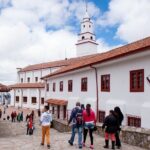
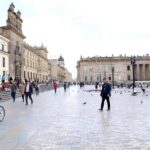
Most graffiti tours jump straight to the murals. This one starts at Chorro de Quevedo Plaza, which matters because it helps you understand why downtown became a stage for artists and thinkers. From there, you’ll move through La Candelaria on foot with a guided route built for sightseeing and street-level viewing.
This is where the pacing feels important. The tour uses the first stretch to set expectations: how Bogotá’s art history links to graffiti, and what to watch for as you walk. It’s also a practical win: you’re out in the neighborhood before you settle into the longer mural stops.
Then you make quick strategic stops like the area around Bolívar Square (brief guided sightseeing time). The tour doesn’t linger there, which is good. It keeps you moving toward the walls that actually hold the details you came for.
The narrow-street stop: indigenous ancestry told in layers
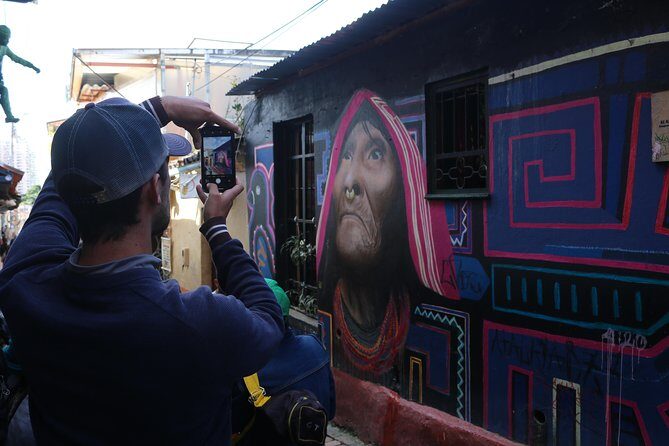
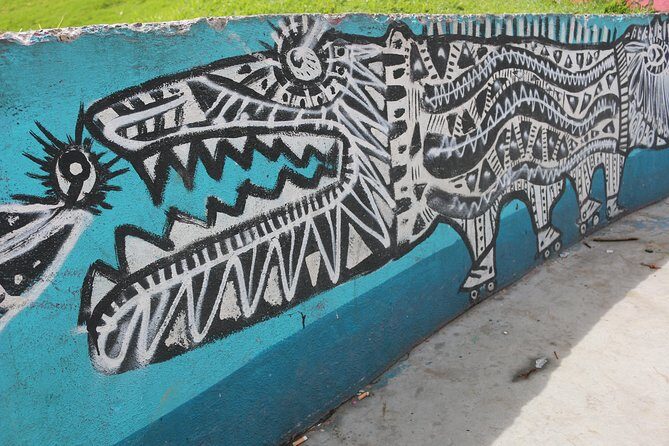
One of the most specific parts of this experience is the visit to a narrow street packed with graffiti that retells the indigenous ancestry of the city. That’s a big deal, because it shifts street art from a “trend” into a record of memory and identity.
On a street like this, you can’t really zoom out and treat it like decoration. The murals are close, dense, and meant to be read by walking past them. The guide’s role becomes crucial here—explaining the imagery and why those messages appear where they do.
If you like art that has a point (not just a vibe), this stop is one you’ll remember. It also gives you a framework for later murals, especially once women artists come into the story and the tour starts connecting art to roles, influence, and voice.
Murals by Wosnan, Ocio4, and Carlos Trilleras: seeing the same wall twice
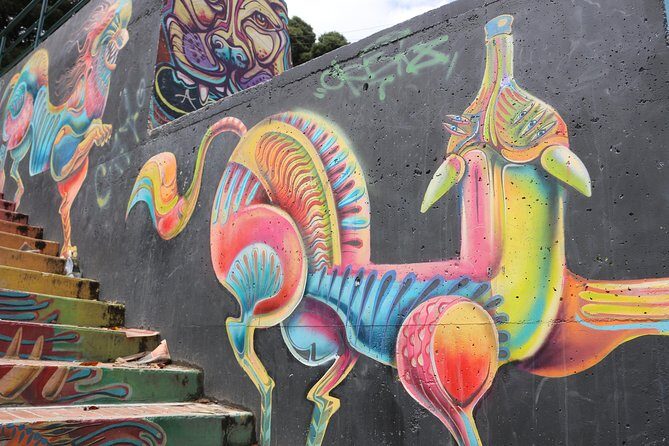
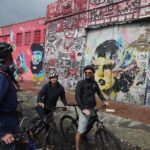
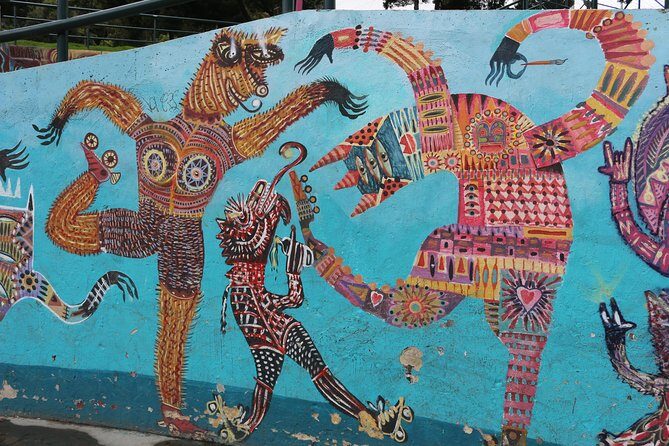
After the indigenous-themed street, the tour continues with stops built around named artists—so you know you’re not just catching random paint. You’ll visit work by Carlos Trilleras and see a couple of murals painted by Wosnan and Ocio 4.
This section matters because it shows how graffiti style can still carry serious meaning. The guide ties together composition and intention, so you learn to spot what artists emphasize—faces, symbols, text, and social themes. It’s the difference between seeing a mural and understanding what it’s doing.
You’ll also get a “through-lines” feeling: themes echo through the neighborhood. Even when the art changes, the tour keeps you oriented in how the city’s artists interpret community life, power, and belonging.
Park of La Concordia and the marketplace: where ideas meet pressure
Next up is the Park of La Concordia and the nearby La Concordia marketplace. The tour frames this area as a tension spot, a meeting point, and a melting pot of influences—basically, the kind of place where art doesn’t stay neutral for long.
This is a good stop for two reasons. First, it gives you a sense of why certain stories show up on walls here. Second, it helps you understand street art as part of daily downtown life, not something that only exists “for tourists.”
Expect picturesque streets along the way, with more graffiti that you’ll catch in-between major anchors. This part is where the tour can feel like real walking in Bogotá: slower, eye-level, and focused on the details.
Other graffiti and street art tours in Bogota
Women artists in the spotlight: why the names matter
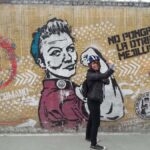
One of the most highly praised aspects of this tour is the focus on graffiti authored by women. You’ll see some of the best street art by women and learn about their role in the propagation of this art.
The guide names artists like Bastardilla, Vera, Ledania, and Erre, and that naming is more than trivia. Knowing the artists helps you see patterns in themes and style. It also pushes back against the idea that graffiti culture is only one kind of voice.
If you care about who gets visibility in art movements, this section is a big reason to book. Even if you’re not a graffiti superfan, it changes your takeaway. You leave paying attention to authorship, not just artwork.
Journalists Park promenade: culture in the 60s, still shaping today
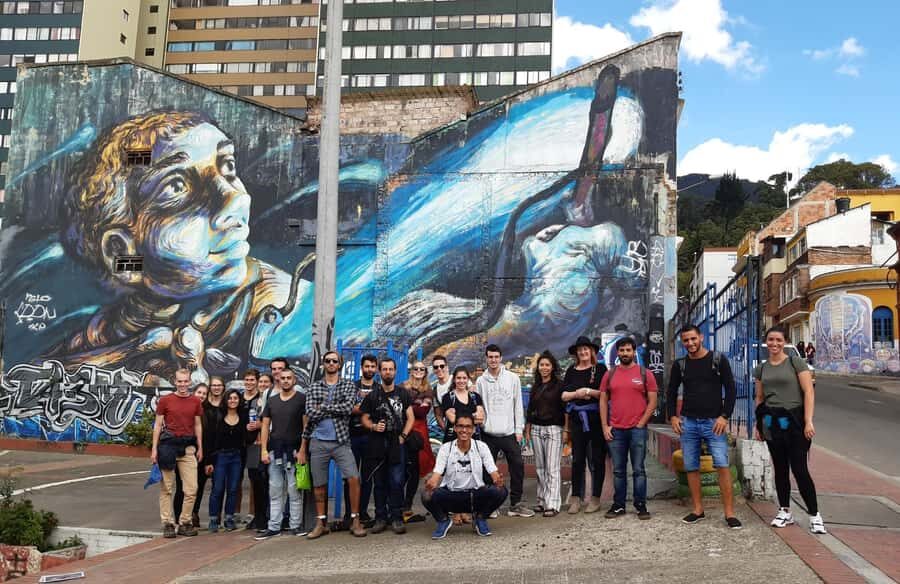
The last walking leg moves toward Journalists Park. The tour explains that in the 1960s, journalists, poets, and writers used to gather here. That’s a useful context because it links street art to broader creative culture, not just tagging and style.
As you follow the promenade, you’ll keep noticing murals along the way. The guide’s earlier groundwork makes this easier: you already know what kinds of symbols and themes to watch for.
This is also a good time to slow down. The tour timing is built so you can absorb a cluster of ideas before you hit the final stop.
Café Herencia finish: a calm landing with Carlos Trilleras
You end at Café Herencia, where you can admire more of Carlos Trilleras’ artworks. This is a smart finish for a walking tour because it gives you a place to reset. You’re not expected to sprint to the next thing—you can sit, look again, and process what you saw.
You also get a culture-friendly touch before you’re done: coca leaf tea tasting is included. It’s a small moment, but it makes the tour feel grounded. You’re not only consuming art through photos; you’re experiencing Bogotá through everyday details.
In terms of value, this ending matters too. A lot of tours drop you in a random street corner. Ending at a café gives you a logical place to linger and plan your next stop without feeling lost.
Transportation and the private-group setup: worth it in Bogotá
Price is $48 per person for a private group with hotel pickup and drop-off plus private transportation. For Bogotá, that can be more valuable than it sounds. Downtown street art areas are walkable, but getting there (and between stops) is easier and less stressful with transport handled.
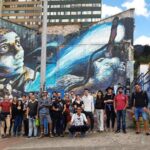
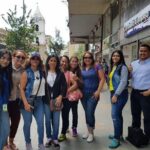
The private setup is also practical. A smaller group means you can linger at a mural without the usual “move along” pressure. It also helps when the guide is explaining symbolism—those moments work best when you can actually hear and see.
One thing to keep in mind: one group noted the driver felt a little aggressive on the road. That doesn’t mean it will happen to you, but it’s fair to mention if you’re sensitive to driving style. If you prefer calmer rides, you can ask for that expectation right away.
What the guide actually does for you (and why it matters)
This tour works because the guide doesn’t just point and name. The guide connects pieces to themes: the socio-political context of graffiti production, how artists retell local ancestry, and why certain downtown zones became identity-shaping meeting points.
The guides also tend to be flexible about your needs. In some cases, guides have shared extra help like photo-taking support for couples and even sent restaurant recommendations after the tour. You may not get those extras every time, but it’s a sign of the tour’s general “service mindset.”
Language-wise, you’ll have English or Spanish. That matters here because understanding symbolism is the whole point. If you’re comfortable in either language, you’ll get more out of the art.
The rain-or-shine reality: plan your comfort, not your mood
The tour runs rain or shine, so pack for street walking. In Bogotá, weather can change fast, and your comfort will affect how much you enjoy looking closely at murals.
Bring shoes that handle wet sidewalks. Bring a light rain layer. The tour is about walking from mural to mural, so don’t count on staying dry.
The upside: even on gray days, La Candelaria’s street art still looks strong. You just want your body to feel okay while you’re taking it in.
Value check: is $48 a smart buy?
At $48 per person for 3 hours, you’re paying for a guided art lesson plus transport and pickup. What makes it feel fair is the inclusion of insurance and private transportation, not just a guide walking behind you.
The coca leaf tea tasting is a nice bonus, but the real value is the structured route: you’re seeing major graffiti anchors and then getting the meaning behind them. If you tried this on your own, you’d likely spend money on taxis and still miss the “why” that makes the murals click.
Also, it’s private. For couples or small groups, that can turn a “tour cost” into something closer to a personalized experience.
Lunch isn’t included, so plan a meal after. Don’t schedule something tight right after the café stop unless you like rushing.
Should you book this La Candelaria graffiti tour?
Book it if you want street art with context. If you like learning how art connects to politics, identity, and community life, this tour does that job clearly. I’d also recommend it if you care about representation, since the women artists stop is a real focal point.
Pass or reconsider if you hate walking or you’re very uncomfortable with rain and wet streets. Also, if you’re especially sensitive to driving style, it’s worth knowing that at least one ride felt aggressive to a customer.
Bottom line: this is a smart way to experience Bogotá beyond the usual photo stops—especially if you want your murals to come with reasons, names, and stories you can carry home.
FAQ
How long is the graffiti tour in La Candelaria?
The tour lasts about 3 hours.
Where does the tour start?
It starts with pickup in Bogotá and includes an orientation around La Candelaria, beginning near Chorro de Quevedo Plaza.
What languages are available?
The live tour guide is available in English and Spanish.
What is included in the price?
Included are the tour guide, hotel pickup and drop-off, private transportation, coca leaf tea tasting, and insurance.
Is lunch included?
No, lunch is not included.
Does the tour run in bad weather?
Yes, the tour takes place rain or shine.